
You've got one shot at a Kona dive day, and the wrong booking can waste it fast. One operator looks good on paper, another has the right boat but the wrong pace for your family, and a third promises a headline dive without telling you how long you'll really be tied up offshore. A solid choice comes down to service depth, site selection, and whether the trip matches your energy level, certification, and tolerance for a long day on the water.
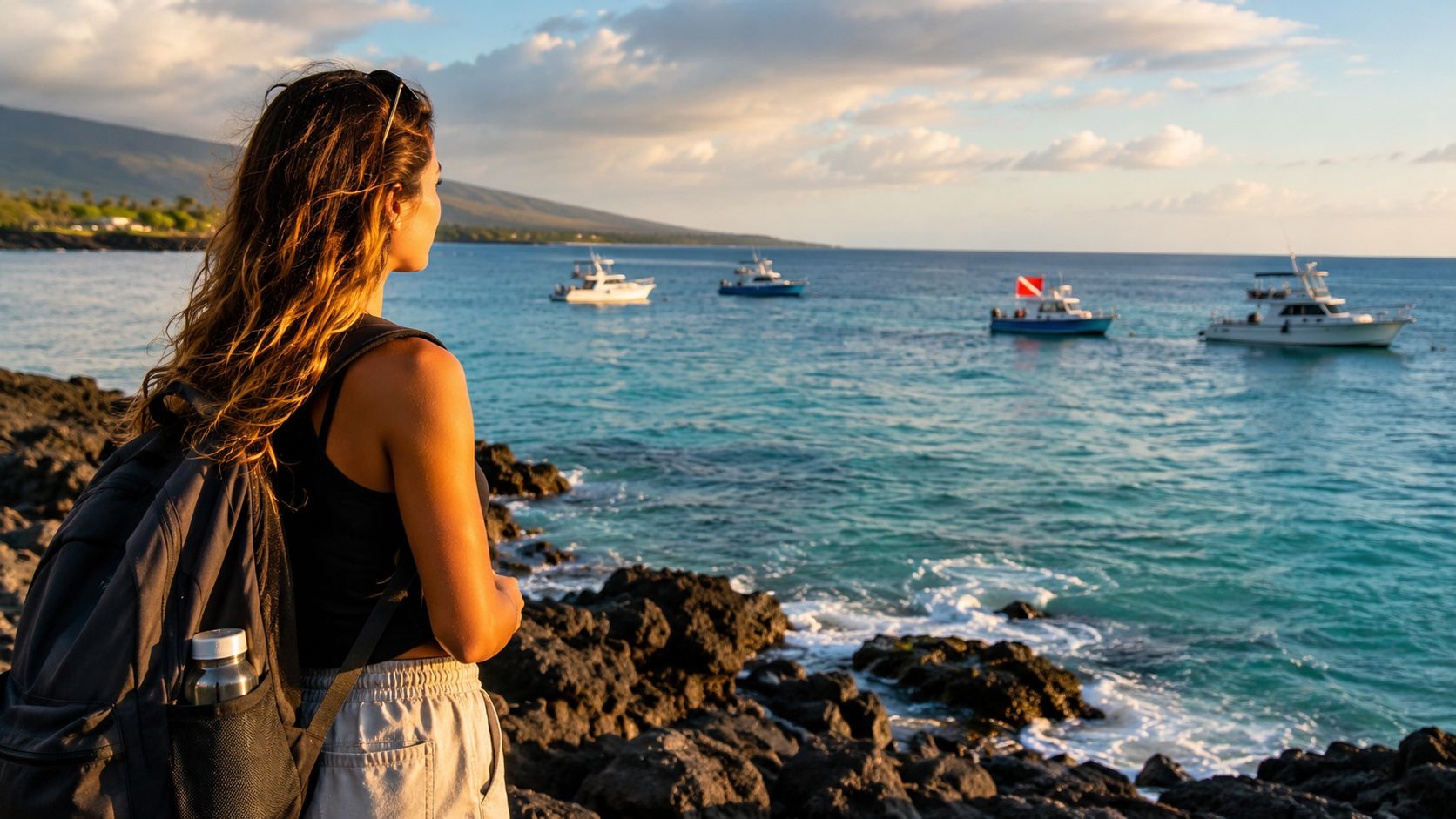
TripAdvisor lists Kona Diving Company as a recipient of the Certificate of Excellence from 2014 to 2019 and the Travelers' Choice Award from 2020 to 2023, which is a strong durability signal for a Kona operator in a competitive market. Their own PADI profile also shows a 2010 founding date, a family-owned full-service dive center in Kailua-Kona, and daily operations across the week. That kind of footprint matters because it tells you you're dealing with a real, continuous dive business, not a casual seasonal outfit. For a quick starting point on the island's dive scene, use the local overview on Kona diving in the Big Island.
Introduction to Choosing a Kona Diving Company
Arriving in Kona, you're faced with a common challenge: choosing the right dive operator for a manta night dive or reef exploration. The wrong pick can turn a special day into a long, crowded, and poorly paced outing. That matters even more if your group includes newer divers, snorkelers, or anyone who wants a calmer boat day.
Choose the operator on three things, what they run, how they run it, and how they handle mixed skill levels. Those three points tell you far more than a glossy promo page. In Kona, the better companies make the trip fit the diver, not the other way around.
Kona Diving Company stands out because it offers the kind of mix that matters in real booking decisions. You want a shop that can cover different trip styles without forcing everyone into the same setup, and you want one that treats pace and comfort as part of the product. For a broader look at the island's dive options, start with the Kona diving overview.
What to watch before you book
A good operator should make it easy to match your goals to the right trip. If you want manta rays, blackwater, certification work, or a relaxed family snorkel, the charter should say that clearly and support it with the right boat time, staffing, and trip format.
Pay close attention to dive duration and what is included. Some companies pack the schedule tightly, which can make the day feel rushed even if the dive sites are good. Others build in more breathing room, which helps newer divers, families, and anyone who dislikes being hurried from one part of the day to the next. Nitrox inclusion matters for certified divers who want to stay comfortable on repetitive diving days, and family-friendly options matter if part of your group wants to snorkel while the rest of you dive.
Practical rule: book the trip that matches your weakest diver, not your strongest one. That keeps the day comfortable for everyone and avoids the common mistake of choosing a charter that is too ambitious for half the group.
Understanding Typical Services and Signature Dive Experiences
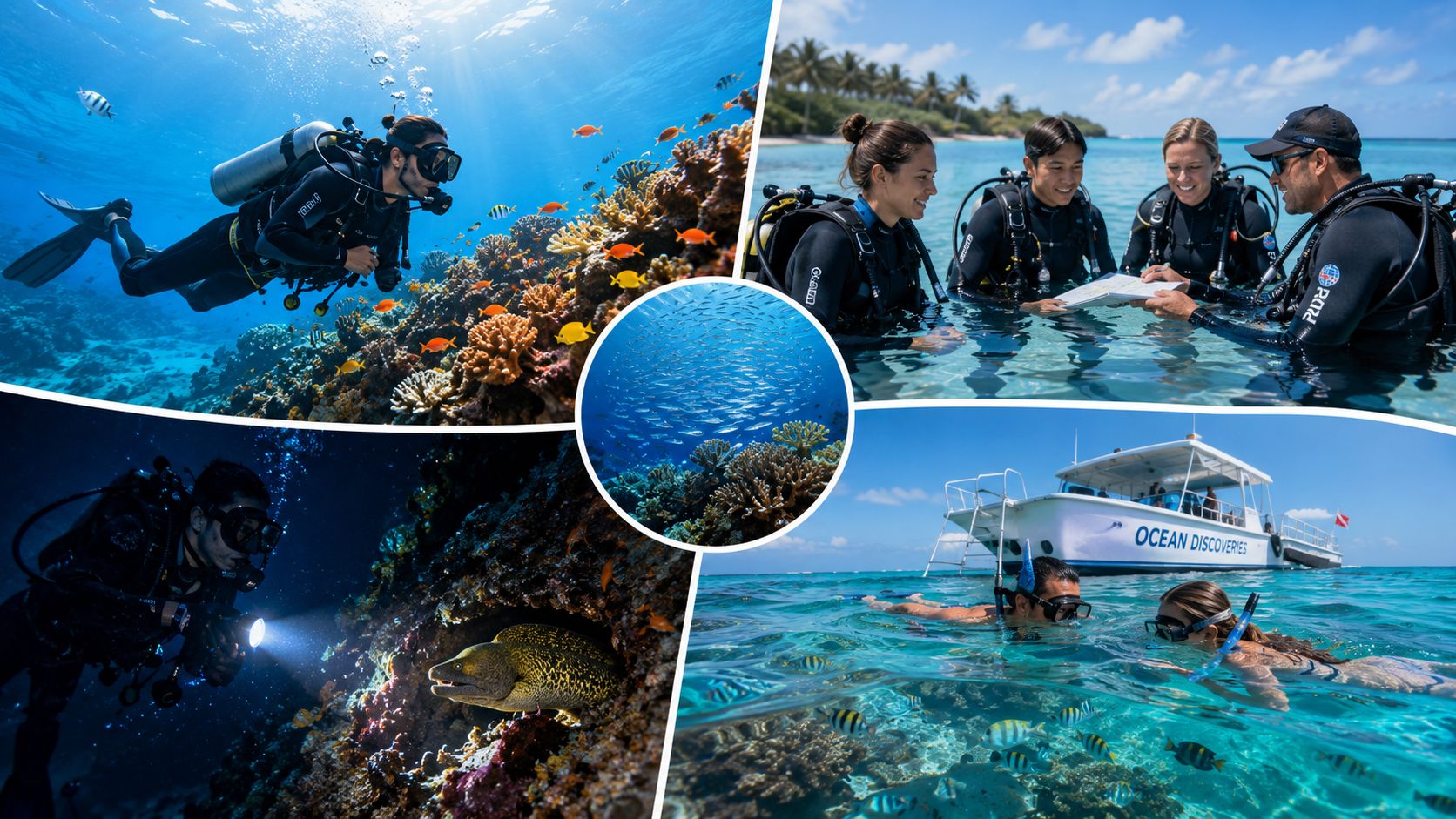
Kona operators that stay relevant usually do more than sell one famous dive. They cover the practical range, introductory dives, certification dives, reef outings, night dives, snorkeling trips, and special charters built around specific marine encounters. That mix matters because it lets one company serve a family group, a certified diver, and a first-timer without forcing everyone onto the same kind of trip.
The core trip types
For most visitors, the choice starts with the basics. A reef dive gives you a standard underwater outing with predictable logistics. An introductory dive is the right call if you're not certified and still want a guided ocean experience. Snorkeling keeps things lighter, cheaper, and easier for non-divers who still want to see Kona's marine life without the full scuba commitment.
Kona also has a serious specialty lane, and that's where the operator you choose really separates itself. TripAdvisor lists Kona Diving Company as offering custom dive boats, certification dives, introductory dives, night dives, manta ray dives, snorkeling trips, and multi-day dive packages. That spread tells you the company isn't locked into one audience. It can serve new divers, mixed groups, and travelers who want more than one kind of water time.
Why the blackwater dive is different
The most specialized experience on the Kona side is blackwater diving. Kona Honu Divers describes it as a tethered night dive over depths of 3,000 to 8,000 feet, aimed at pelagic larvae and bioluminescent organisms in the vertical migration layer. That's not a reef dive with a darker sky. It's a completely different kind of open-ocean encounter, and it depends on strict positioning, line control, and calm group discipline.
If that sounds like your kind of dive, don't treat it like an afterthought. Use the dedicated blackwater dive tour page and make sure the operator can explain the in-water setup clearly. If they can't explain why the dive is tethered and why depth and darkness change the experience, move on.
Matching the dive to your level
A diver who wants the rarest encounter should not book by price alone. The better question is whether the operator can keep the trip organized when the water gets dark and the group gets quiet.
For advanced divers, look for operators that support more demanding profiles. For beginners, look for clear entry-level support and a clean explanation of what happens before you ever put on fins. The manta ray diving in Hawaii guide is a useful reference if you're deciding whether a manta night dive belongs on your list.
Meeting Safety Standards and Certification Requirements
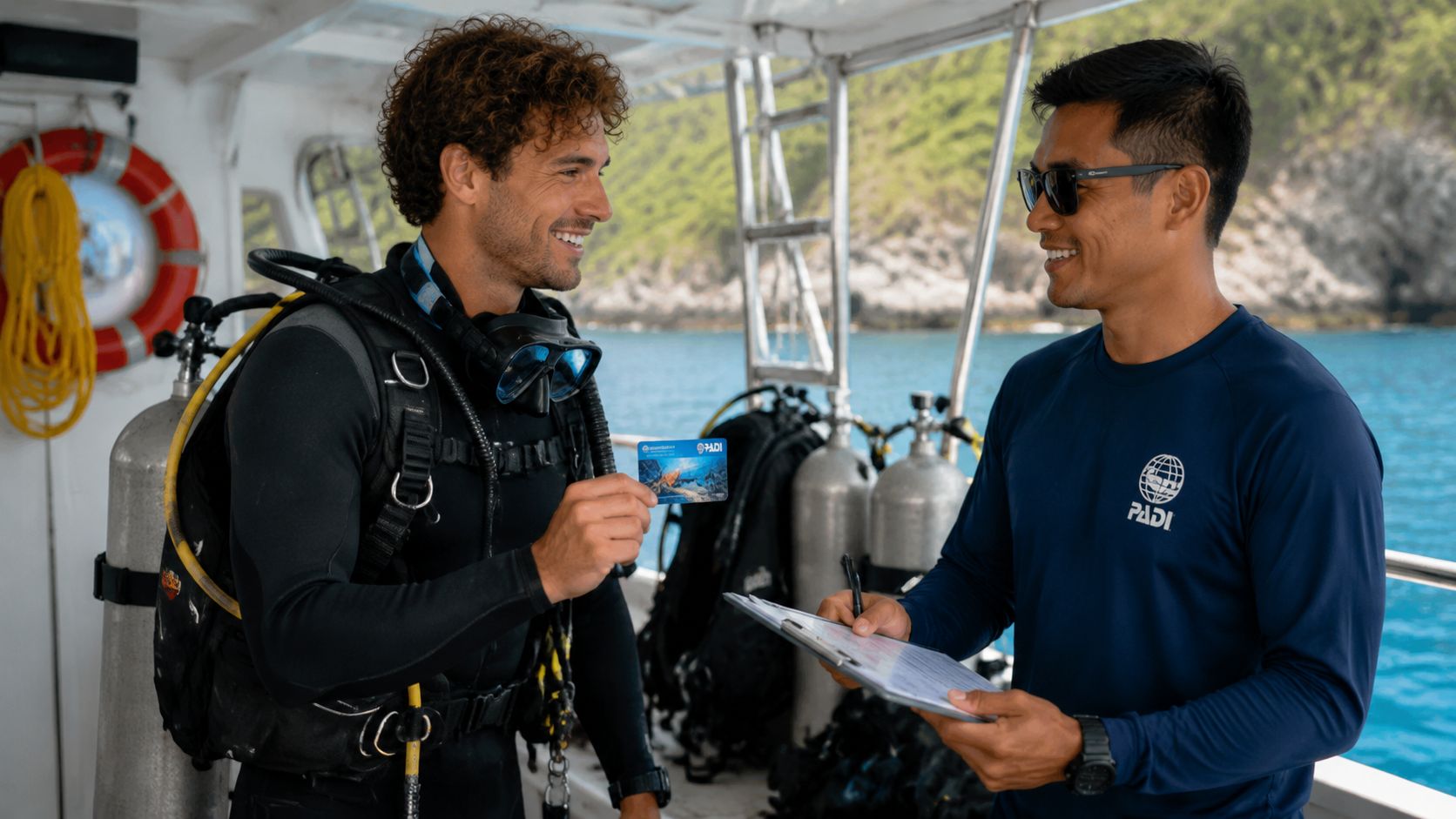
Certification isn't paperwork, it's the gatekeeper that decides what you can safely do offshore. If you're renting gear independently, the industry baseline is still a PADI or NAUI card, and if you're not certified there's no shortcut that changes that reality. For newer travelers, the two sensible options are a resort course for a guided first ocean dive or a full open water certification.
Kona diving companies that take safety seriously tend to explain the difference plainly. A resort course gets you into the water fast, but it doesn't make you a certified diver. A full open water course takes longer and gives you the credential to dive independently to 60 feet, which is the route that makes sense if scuba is going to be part of your travel life instead of a one-off vacation thrill. For certification details, the open water certification guide is the right place to start.
What seasoned operators pay attention to
Advanced operators don't just ask for a cert card. They care about comfort in the water, how recently you've dived, and whether the dive profile matches your experience. That's especially important on night dives, blackwater outings, and long double-tank charters where fatigue can creep in even when the first dive feels easy.
If you're planning to rent gear, don't pretend your memory is your certification record. Bring the card, review your last dive date, and speak up if you need a refresher. Strong operators will respect that. Weak ones will rush you.
Nitrox and long days offshore
Nitrox can matter on a full dive day, but only if you understand why you're using it. Kona Honu Divers' positioning emphasizes free nitrox on many charters, which signals that gas management is part of the trip design, not just a marketing line. That's relevant on longer dive days, especially when the schedule packs in multiple descents, a long boat ride, and a tired return to shore.
Practical rule: if a trip is long enough that you're thinking about fatigue before you've even booked it, nitrox and a conservative pace are worth taking seriously.
What to Expect on a Kona Honu Divers Excursion
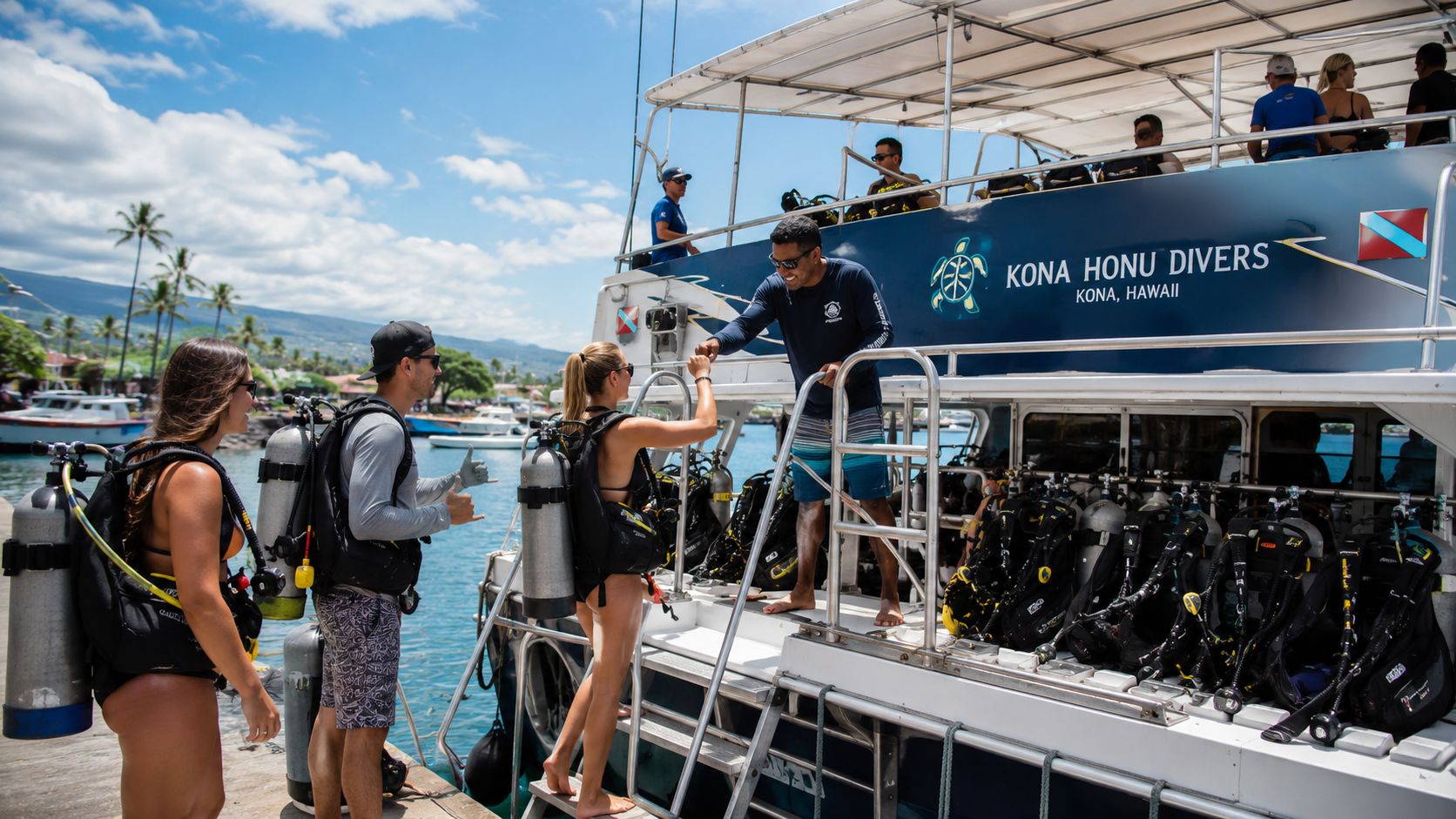
A Kona Honu Divers day starts like a proper dive operation should, with organization, not chaos. You board a custom boat, gear is handled with care, and the crew spends time on the briefing instead of treating it like a checkbox. That's the kind of setup you want if you're paying for comfort and not just transportation.
The company's site selection for manta trips is the part that matters most. Kona Honu Divers consistently chooses Garden Eel Cove for manta ray dives because its protection from swells creates calmer, more predictable conditions and better viewing. That's not a minor preference. It's a site choice that shapes the whole night.
Why Garden Eel Cove is the right call
Manta trips live or die on stability. A protected site gives the crew better control, gives guests a calmer ride, and keeps the viewing area more usable when the ocean isn't perfectly flat. If you're booking a manta outing and the operator can't explain why they're using a particular site, that's a warning sign.
Kona Honu Divers also leans into small-group structure, which helps with the pace of the trip and keeps the experience from feeling crowded. That matters on a night dive. People notice the difference when a crew has time to brief, fit, and guide instead of just loading bodies onto a boat.
For the company's direct booking and operator details, use Kona Honu Divers. That's the cleanest way to check the current structure, offerings, and trip flow.
The practical feel of the day
You should expect a live briefing, clear gear checks, and a crew that's paying attention to who needs help. After the dive, the best operators keep the return routine relaxed and efficient, not sloppy. That's the standard to demand from any Kona dive company, especially if you're traveling with family or mixing seasoned divers with people who are new to night water.
Comparing Pricing Packages Discounts and Snorkeling Options
The best value in Kona usually isn't the cheapest ticket. It's the trip that gives you the right amount of water time, the right support level, and the right inclusions for the people in your group. That's why long manta trips, shorter single-tank options, and snorkel add-ons need to be judged differently.
A good comparison starts with time, not just price. An independent review notes that a 2-tank manta ray trip typically lasts about 5.5 hours with about 40 minutes each way of transit, while a 1-tank option is about 3.5 hours. That time gap matters because it changes how the day feels, especially for families, newer divers, or anyone who doesn't want a long evening offshore. The timing reference comes from this manta trip review.
| Sample Dive Package Comparison | |||
|---|---|---|---|
| Package | Duration | Price Range | Inclusions |
| 1-tank reef or night option | Shorter outing | Varies by operator | Guided dive, boat transit, basic briefing |
| 2-tank manta trip | About 5.5 hours including transit | Varies by operator | Two dives or dive plus snorkeling, longer boat time |
| Blackwater charter | Night outing | Varies by operator | Tethered open-ocean setup, specialized briefing |
| Snorkeling trip | Shortest and easiest | Varies by operator | Surface viewing, simpler logistics, family-friendly pace |
Where the value really shows up
The primary factor is whether the package fits the day you prefer. A long two-tank schedule is a smart buy if you want a fuller offshore experience and don't mind the time commitment. A shorter option is better if your group is mixed, your youngest traveler is tired early, or you just want one focused highlight instead of a marathon.
Kona Honu Divers also has a Hawaii scuba diving packages page worth checking if you're comparing bundled options and want a clear look at what's included.
If you're traveling with non-divers, don't force everyone into the same booking. A combined plan only makes sense when the boat, the duration, and the expectations are aligned.
Local Logistics and Booking Tips
Book Kona dives with the weather and the calendar in mind, not on impulse. Manta trips and specialty charters fill quickly because they're fixed-space tours with limited evening departures. If you want the best fit, book early, then build your land plans around the boat time instead of trying to squeeze the boat around your dinner reservation.
If you're staying in Kailua-Kona, keep transport simple. Choose lodging that makes dock access easy, because nobody wants to start a dive day with a rushed drive and parking stress. For mixed groups, the easiest plan is a central hotel, a clear meeting time, and no extra errand before check-in.
Booking rules that save headaches
- Match the trip to the traveler: If someone in the group is newer to diving, pick the calmer, more structured option.
- Be realistic about long outings: A 2-tank manta charter is a real time commitment, not a quick evening add-on.
- Ask about snorkel pairing: If you've got non-divers in the group, choose an operator that handles both without awkward compromises.
- Don't overpack the day: Leave room after the dive for a slow meal and a low-stress return.
Sea conditions also matter. If your goal is manta rays, choose the charter built around a protected site instead of betting on a casual operator with a loose plan. If your goal is a more advanced experience, use the operator's advanced offerings instead of trying to stretch a basic reef trip into something it isn't.
Conclusion and Next Steps
Kona diving rewards people who book with a plan. Pick the operator that fits your certification, your stamina, and your group mix, then let the right site and schedule do the rest. If you want a company with long-running customer recognition, a full-service footprint, and a clear manta-focused approach, Kona Diving Company belongs on your shortlist.
Don't wait until the week you land to figure this out. Check the trip format, confirm the logistics, and lock in the experience that matches your skill level instead of hoping a vague booking will work out. When you're ready, compare live availability and make the reservation.
Frequently Asked Questions
What if the weather turns? Good operators adjust. Kona diving is too site-dependent to force a bad day, so the right answer is usually to reschedule or shift the site, not gamble with conditions.
Do non-divers have options? Yes. Snorkeling trips and ride-along style experiences make sense for mixed groups, and that's often the better family move than trying to push everyone onto a scuba charter.
How do you avoid seasickness? Eat lightly, hydrate, and choose the calmest route you can. If you're sensitive, use a preventative you already know works for you before the boat leaves.
Can you combine diving with land plans? Absolutely, but don't stack too much after a long night charter. Build the rest of the day around recovery, not another packed itinerary.
A CTA for Kona Honu Divers.