
You landed in Kona with a week of open water, a camera bag, and a problem that's a good one. Every boat brochure says "manta," every dive buddy says "blackwater," and the shore-diving crowd keeps talking about lava tubes and reef pinnacles like they're all the same thing. They're not. Kona diving is a menu of very different dives, and if you pick the wrong one for your skills, your schedule, or your stomach, you'll waste a day that should've been one of the best dives of the trip.
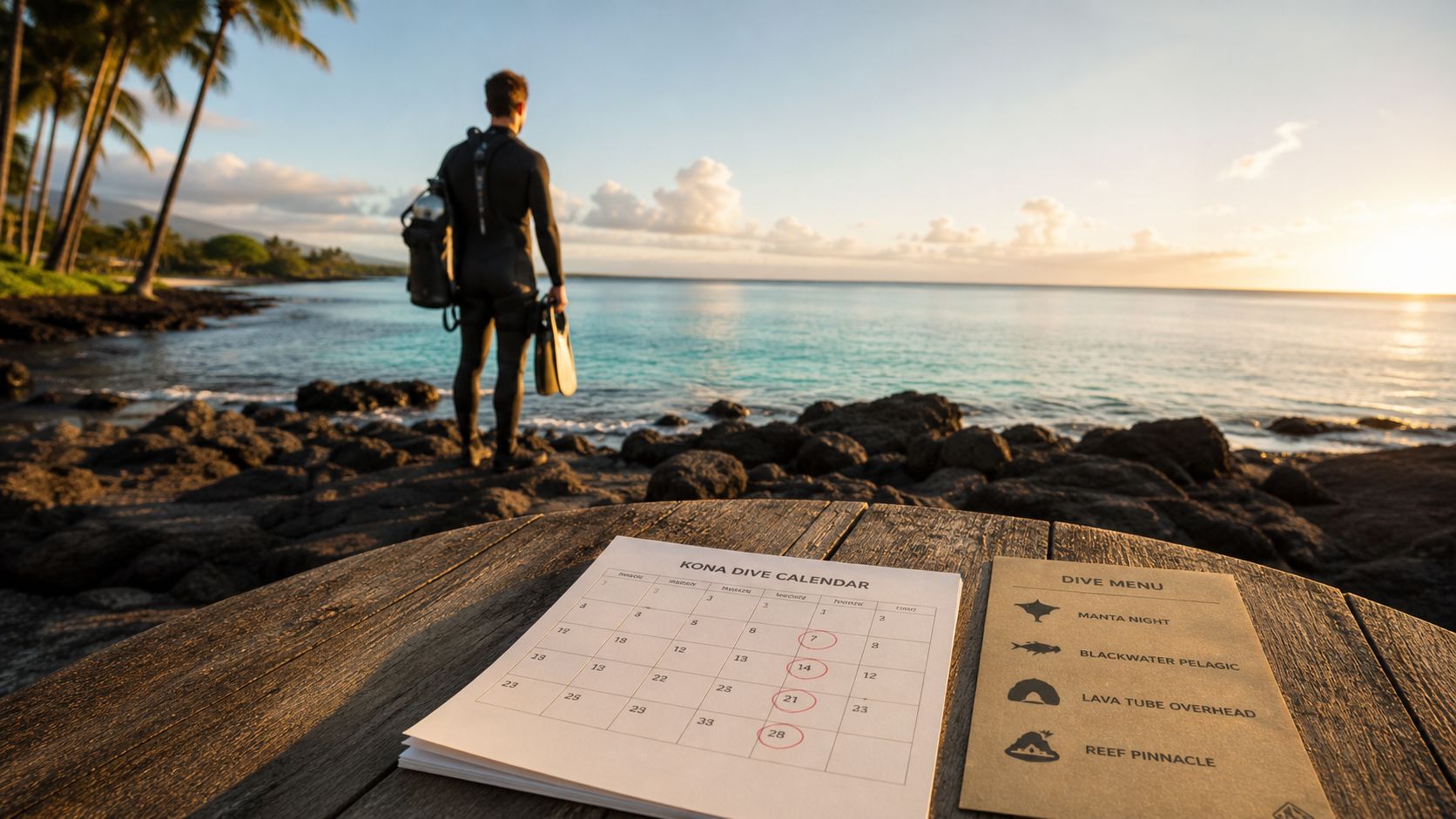
Arriving in Kona and Choosing Your Dive Style
A diver walking into Kailua-Kona doesn't need a generic “best dive in Hawaii” list. They need a hard decision tree. Are you here for the famous manta show, the strange open-ocean night stuff, the lava-topography dives that feel like flying through old geology, or a clean reef day with good marine life and less pressure?
Four very different reasons to get wet
Manta night diving is the easy choice if you want the iconic Kona experience. The mantas feed where lights concentrate plankton, so the action is built around a controlled viewing setup rather than a chase. It's the right call for travelers who want a memorable night dive without needing advanced penetration skills.
Blackwater diving is for the diver who wants something stranger and more technical. You're not looking at a reef at all, you're drifting in the open ocean at night to watch pelagic animals move through the water column. That's the one I'd send to experienced divers who like odd, scientific, once-in-a-while dives.
Lava tube and cavern dives are the pick for divers who enjoy topography. Kona's underwater terrain includes arches, caverns, walls, lava tubes, and pinnacles, so the payoff is structure, shadow, and buoyancy control rather than a single big animal encounter. If you want overhead environment and don't mind tighter rules, this is your lane.
Shallow reef and pinnacle dives are the most flexible. They suit newer certified divers, mixed-experience groups, photographers, and anyone who wants a dependable daytime dive with reef life and less night-dive stress. They're also the best fallback when the weather or your dive history makes the fancier options a bad idea.
Kona's underwater scene is broader than the postcard version. The region's reef ecosystem has been formally assessed by NOAA using belt transects, fish counts, and benthic measurements, so the appeal isn't just about one famous animal or one famous night. It's a working marine environment, and the best trip for you depends on which part of that environment you want to meet.
The Four Dive Types Side by Side
Here's the fast read, because this is the part most visitors want before they start booking.
| Dive Type | Min. Level | Best Time | Highlight |
|---|---|---|---|
| Manta Night | Comfortable Open Water | Evening | Plankton-fed manta feeding passes under lights |
| Blackwater | Experienced diver, strong buoyancy | Night | Pelagic animals in the open ocean |
| Lava Tube | Advanced or very comfortable diver | Day | Overhead volcanic structure and buoyancy work |
| Pinnacle or Reef | Open Water and up | Day | Reef life, structure, and flexible conditions |
Manta diving is the most approachable night option. You're usually stationary or nearly stationary, and the dive is about watching repeated feeding loops rather than covering distance. It suits divers who are comfortable at night but don't want a task-heavy profile.
Blackwater is the opposite. You're out in the dark over deep water, and the dive rewards composure, good trim, and a calm head. If you like marine biology, weird larvae, and the feeling that the ocean has turned inside out, it's hard to beat.
Lava tube diving demands better control. The formations are beautiful, but the environment asks for discipline around buoyancy, propulsion, and line-of-sight. This is the dive for people who want the challenge to be part of the fun.
Practical rule: if you're new to Kona, book the dive that matches your current comfort level, not the one with the loudest photos online.
Pinnacle and reef dives are the safest bet for most visitors. They're the easiest way to enjoy Kona's volcanic underwater terrain without committing to an overhead environment or a night-only profile. If you're traveling with family, trying to keep a mixed group together, or just want a solid first day, this is the most forgiving choice.
Seasons, Visibility, and Water Conditions
Kona's west side gets a break from the prevailing northeast trades because Mauna Loa and Hualālai shelter the coastline. That is why divers keep coming back to the same strip of coast. Clear water is common, and the baseline conditions are usually better than people expect from a volcanic island.
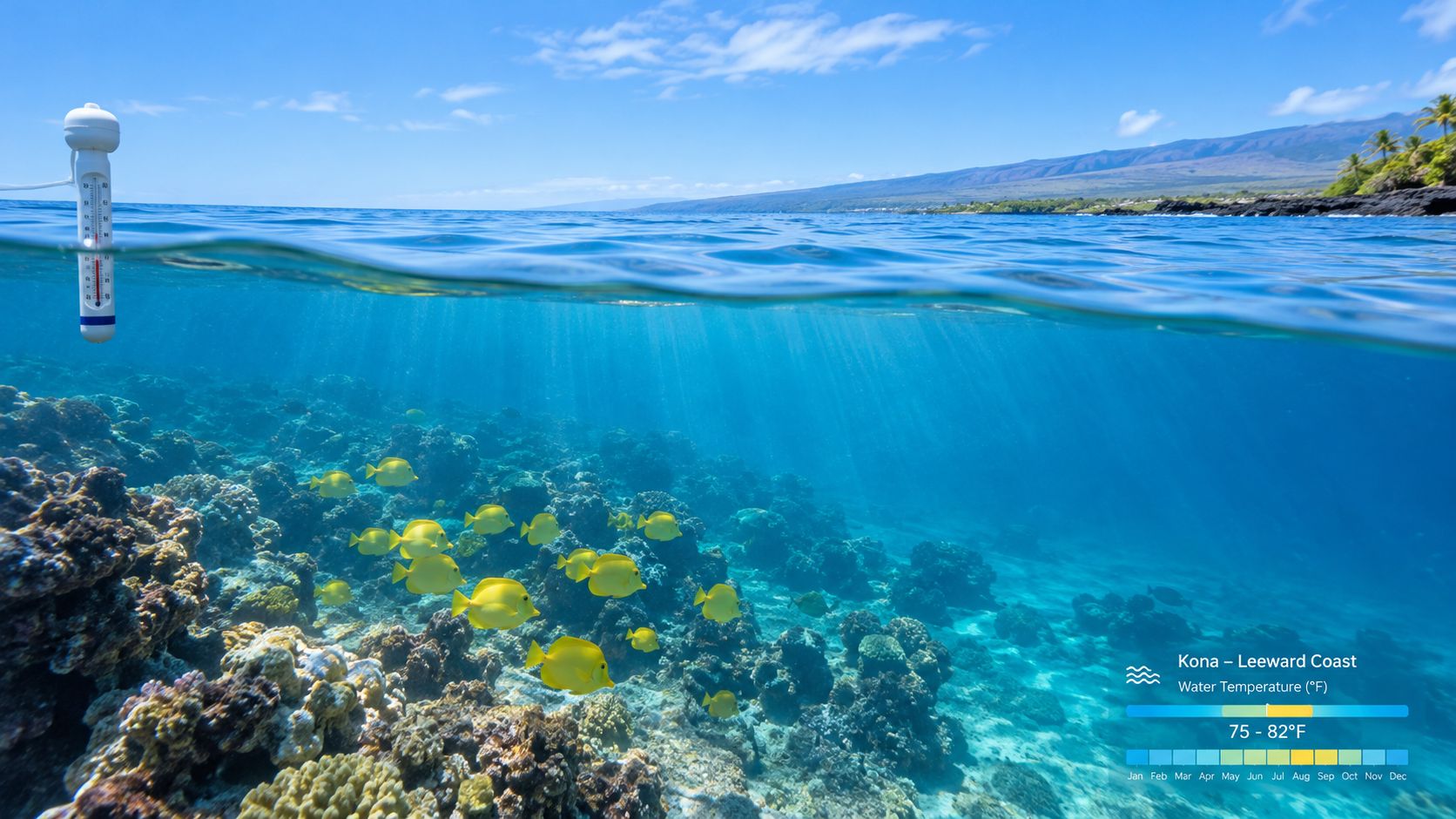
For planning, operators often describe Kona as a place with strong visibility and warm water through the year. The exact numbers vary by site and season, so do not treat any average as a promise. Rain can cut visibility fast, and a calm reef can sit next to a rougher entry point on the same day. Use the forecast, pick the site to match it, and check the best months to scuba dive in Hawaii before you lock in dates.
What changes the dive
Winter swell is the big factor for exposed west-facing entries. Summer trade winds matter more for boat comfort and surface chop than for every site on the coast. One reef can be excellent while another feels messy, even on the same morning.
Shore divers need to be honest about the entry. A site can be calm on most days and still be the wrong call if surge or surge-prone lava rock is showing its teeth. I would rather skip a shore dive than watch someone force a bad entry because yesterday looked fine.
Thermal protection gets overlooked too. A 3 mm wetsuit is the practical baseline here, and multiple boat dives can leave you colder than you expected. If you run cold or plan several dives, add insulation. Do not assume tropical water will handle it for you.
Rule of thumb: plan around the forecast for the specific site, not the average day.
Signature Sites Worth Booking Around
Kona works best when you choose the site for the dive you want. Some spots are built for manta action, some for reef structure and lava terrain, and some are better saved for a steady morning shore dive when you want simple access and a clean profile.
The manta sites are not interchangeable
Garden Eel Cove is the manta site I would point most visiting divers toward. It is the northern Kona manta location, also called Manta Heaven, and it sits over a shallow sandy bottom at about 30 to 40 ft per the operator's site briefing on the manta ray dive tours page. The combination of depth, viewing angle, and reef structure makes it the first stop for most manta bookings.
Keauhou Bay's manta area is the southern option. Keep that site separate in your head. Manta dives change with location, crowding, and how the boat is run, so do not treat every manta trip as the same product.
The reef and lava options
Daytime reef diving in Kona is about the site briefing, not a coast-to-coast label. The Big Island has dozens of documented dive sites, and the lava formations at many of them are the draw. Arches, swim-throughs, walls, and lava tubes are common features, and they demand better buoyancy and more disciplined decisions than a casual reef drift.
If you want shore diving, use the Big Island shore diving guide before you commit to a beach entry. It is the quickest way to compare access, depth, and entry style instead of guessing based on a map pin.
For divers who want a stronger morning profile, deeper pinnacles and advanced two-tank combinations are the smarter choice. Those dives suit people who are already comfortable in current and want more demanding terrain, not anyone looking for a relaxed sightseeing day. A deeper wall or pinnacle can make the whole day feel more serious, and that is the point.
Matching Divers, Certifications, and Courses
Kona rewards divers who know where they stand. The difference between a good day and a stressful one usually comes down to whether your certification and recent practice match the dive you want.
Who fits what
Manta night dives fit certified Open Water divers who are comfortable at night and current enough to manage a boat entry, a descent, and a fixed viewing position. You don't need advanced training for the basic manta experience, but you do need to be calm in low light and respectful around the animals.
Blackwater dives are a different story. These are for experienced divers with excellent buoyancy, recent diving, and the composure to stay self-reliant in open water after dark. If you've been out of the water for a while, this is not the place to “get back into it.”
Lava tube and deeper pinnacle dives belong to Advanced Open Water and above, or to very comfortable divers with equivalent experience and a clear operator green light. Overhead-style terrain and deeper profiles call for better gas awareness, better trim, and better judgment.
Beginners shouldn't read that as a dead end. Discover Scuba, a full Open Water course, or a refresher can all put you on a path to the better Kona dives later in the trip. If you want the cleanest route from vacation diver to fully qualified diver, Kona Honu Divers' certification options are the obvious place to compare training formats.
You don't need to be an expert to start in Kona, but you do need to be honest about your current skills.
Specialties that pay off here are the same ones that pay off anywhere with strong night diving and good topography. Nitrox helps on multi-dive days, night certification helps if you want to stop treating manta season like a novelty, deep experience matters for advanced wall or pinnacle dives, and underwater photography training helps you keep your hands off the reef while still getting the shot.
Gear, Rentals, and What to Pack
Kona isn't the place to wing your gear. The ocean is forgiving when you're prepared and annoying when you're missing one piece of kit that should've been obvious.
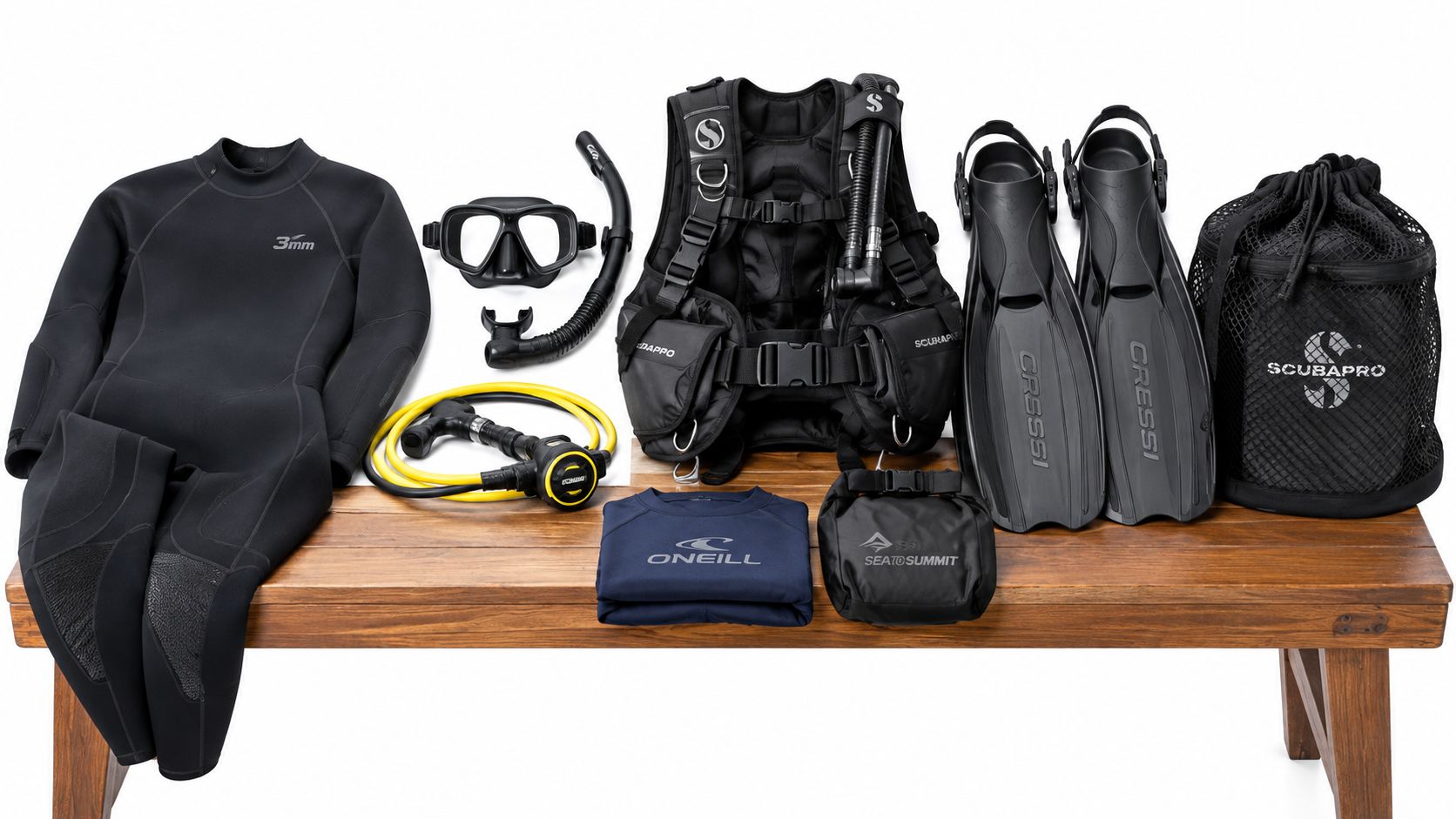
Pack for the water you'll actually be in
Start with a 3 mm wetsuit. That's the baseline I'd tell almost any visitor to pack or rent, and it's the simplest answer to Kona's warm-but-not-that-warm reality. If you're doing repeated dives, run cold, or expect a night profile, bring a hood or a little extra thermal protection.
Bring the basics you trust. That means your mask, regulator, BCD, dive computer, and surface marker if you're doing boat dives. If you're shore diving, add the usual surface safety kit and make sure your exit plan is better than your entry hope.
Good operators should service rental gear proactively instead of handing you a pile of parts and wishing you luck. That matters more than people admit, because leaky inflators and sticky second stages ruin a day fast. If you need a rental checklist, the scuba rentals page is the place to compare what you can sort in advance.
Free nitrox is a real value on multi-dive days for certified divers, especially if you're planning a morning dive plus an evening manta or blackwater session later in the trip. It doesn't make you invincible, but it does make repeated diving more comfortable when used correctly.
Seasickness gear that actually gets used
- Ship-EEZ patch: useful if you know boat motion gets you.
- Dramamine pills: the old standby for travelers who want a straightforward option.
- Bonine pills: another common choice for people who want a gentler feel.
- Sea Band wristbands: a cheaper generic brand that gets better ratings, which is why some divers wear them even when they're skeptical.
- Ginger chews: simple, portable, and worth throwing in your bag.
For the camera crowd, think about the dive you're shooting. Wide-angle glass is the right call for mantas, red focus light helps at night, and blackwater shots work better with ambient-light thinking than brute-force strobe use. On manta dives, keep strobes diffused and soft, because you're there to watch feeding behavior, not blast the animal in the face.
Safety, Etiquette, and Choosing an Operator
Kona is sold as easy diving, and that label gets people sloppy. The water may be calm, but the rules still apply, shore entries still punish bad judgment, and night sites still demand discipline.
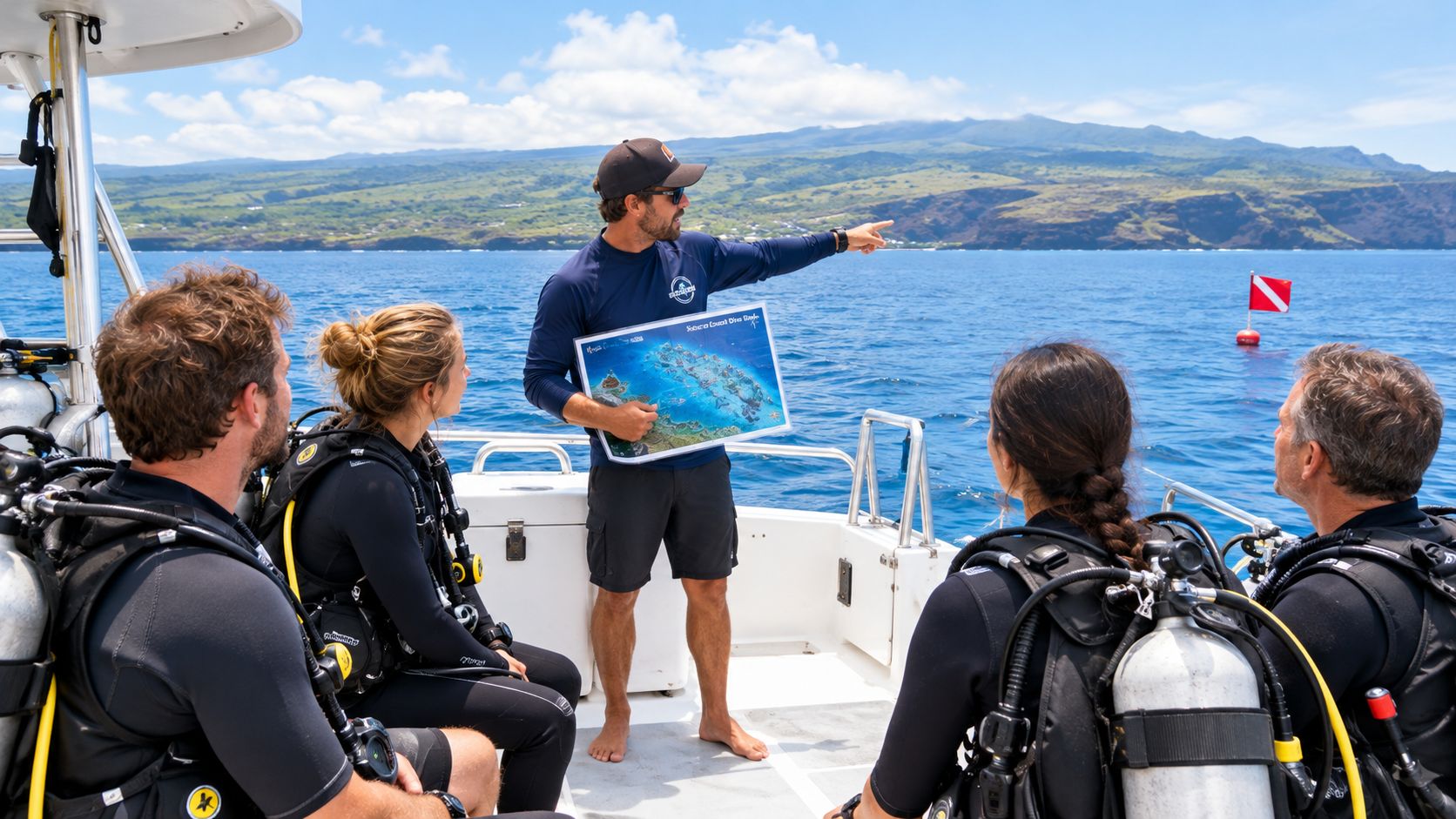
The rules that matter
Follow the local dive-flag rules and your operator's briefing. Divers and freedivers need to show a dive flag, boats are expected to give it room, and channels have a tighter buffer. At night, that flag is harder to see, which is why surface awareness matters so much here.
Old Kona Airport is the site people misunderstand most. The entry can turn rough when weather shifts, and the bottom drops fast once you move off the shallows. If you do not have a clean shore-entry habit, leave it to divers who do.
Manta etiquette is just as important. The animals are there for plankton around the lights, so keep your hands to yourself, hold position, and do not block their path. A sighting is never guaranteed, and anyone promising otherwise is overselling the ocean. Crowding, propellers, and sloppy lighting at popular manta sites are real problems, so book with an operator that briefs the group clearly and keeps the dive controlled. If you want the behavior rules in one place, read the responsible diver etiquette guide.
What I'd look for in a shop
Pick a shop that runs a disciplined boat, not just a polished website. Ask how they service rental gear, how they split groups by experience, and what they do when the site choice changes. Families, photographers, and advanced divers need different pacing, and a good operator plans for that.
I also want a crew that matches the dive to the diver without ego. If you are new in the water, book a conservative operator and stay with the easier profiles first. If you are chasing blackwater, lava tubes, or another specialty session, choose the shop that runs that specific dive well instead of the one with the loudest marketing.
One practical option in town is Kona Honu Divers, which runs guided morning, manta, blackwater, and advanced trips with serviced rental gear and free nitrox for certified divers. Check the boat quality, the briefing style, and whether the trip matches your logbook before you pay. Then book the trip that matches your logbook rather than the one with the best photo.
Putting It All Together and Common Questions
Choose the mechanic first. Manta if you want the signature night show, blackwater if you want the strangest dive on the menu, lava tubes if you want topography and challenge, reef or pinnacle if you want the most flexible daytime option. Then match the season, your certification, and your recent in-water time to that choice instead of trying to force one trip to do everything.
FAQ
Are manta sightings guaranteed? No. They're common enough that people book around them, but they're still wild animals and never a sure thing.
How deep is blackwater diving? It's an open-ocean night dive rather than a reef dive, so the key feature is the water column, not the bottom. The dive is about being suspended over deep water and watching pelagic life move through it.
Can beginners join a manta boat? Yes, if they're comfortable Open Water divers or doing a supervised intro program that the operator allows. The key requirement is comfort in the water and a shop that matches you to the right setup.
Why is Garden Eel Cove the preferred manta site? Because it's a protected northern site with a shallow sandy bottom, a better viewing area, and adjacent reef structure, so it's the most sensible first pick for a manta-focused trip.
Browse the full Kona Honu Divers diving tours hub if you want to compare the full menu before you book. The right Kona dive is the one that fits your skills, your timing, and the experience you came here to have.
Kona Honu Divers runs manta nights, blackwater dives, advanced reef trips, certification courses, and the gear support that makes a Kona day run smoothly. If you want a shop that can match the dive to your logbook instead of selling you a generic seat on a boat, visit Kona Honu Divers and reserve the trip that fits how you really dive.