
Scuba diving draws roughly 2.4% of Hawaii's visitors, while snorkeling draws 42.9%, according to the Hawaii Department of Business, Economic Development and Tourism's 2025 visitor study reported by KITV. That gap defines Kona diving. It is a specialist product sold on trip quality, guide skill, and boat setup, not headcount.
Certified divers get the benefit. Kona sits on the leeward side of the Big Island, where trade winds blow offshore and the water stays flat enough to dive most days of the year, with deep blue visibility. The reef sits close to shore, the manta site is a short harbor run, and the blackwater grounds sit over deep water that pulls up animals most divers never see elsewhere.
No two shops sell the same week. The seven Kona dive shops below each lead in something specific: manta nights, blackwater, shore entries, certification, advanced lava terrain, or Kohala Coast convenience. What follows is a shop-by-shop read on what each does best, plus planning help on seasons, harbor logistics, seasickness, a sample itinerary, and a practical guide to choosing, booking, and planning your trip.
1. Kona Honu Divers
Kona Honu Divers is the shop I recommend when divers want one operation to cover an entire week. It runs morning reef charters, an advanced two-tank trip, the Manta Ray Night Dive, Black Water Night Dive, introductory scuba, scuba open water certification dives, snorkeling trips, Kama'aina Dive Courses and Freediving Classes, private charters and private tours, scuba and freediving rentals, sales of scuba gear, freediving gear, spearfishing gear, wetsuits and snorkeling gear, plus repairs. That breadth matters in Kona, where booking single purpose operators can leave you stitching together three reservations from two different harbors.
Free nitrox for certified Enriched Air divers pays for itself over a multi day trip. The two tank manta format pairs a twilight reef dive with the manta encounter, so weighting and buoyancy are settled before the lights go on. Dive packages and early diver discounts are available, and customers can call 808-324-4668 to discuss which ones fit. More detail is at konahonudivers.com.
Why the Garden Eel Cove site matters
Manta dives are not interchangeable, and the state paperwork shows why. A Hawaiʻi Department of Land and Natural Resources document places Makako Bay, also called Garden Eel Cove or Manta Heaven, immediately west of Kona International Airport at roughly 19.736077° N, 156.058710° W, and identifies it and Keauhou Bay as the two places where nighttime manta viewing concentrates.
The cove sits inside the West Hawaiʻi Ocean Recreation Management Area, and manta rays are protected from take and harm under Hawaiʻi's shark and ray protection law. Garden Eel Cove's coral and sand patches give the twilight dive a real profile to work, which beats hovering over bare rock waiting for dark.
Site check: A documented viewing area with a fixed position and formal wildlife protection is a different product from a generic reef label. Ask which site a manta tour uses before you pay.
Crew, boats, and what shows up on the water
With over 200 years of combined staff experience, the shop can match a first timer and a photographer to the right guide on the same boat. Boats are spacious and well maintained, equipped with hot showers, shaded seating, and ample storage. All rental gear is pro-actively serviced, which matters more than it sounds when regulators, BCDs, and wetsuits cycle through multiple divers per week.
Kona Honu Divers is the highest rated and most reviewed dive shop in all of Hawaii, and was voted best dive operator in Kona. The Kona Honu Divers reviews page collects thousands upon thousands of five star reviews in one place for divers who want to read past the summary.
Pros
- Range without switching shops: certification, family snorkeling, manta, blackwater, advanced trips, private charters, rentals, sales, and repair services.
- Deep guide bench: 200+ combined years in the industry with a focus on safety and customer service.
- Comfort on the ride: hot showers, shaded seating, ample storage, proactively serviced rentals.
- Value add-ons: free nitrox, early diver discounts, and dive packages for experienced divers doing lots of diving.
Cons
- Prices aren't published: call to confirm tour costs and package savings at the time you book.
- A big menu needs matching: with this many trips and levels, compare carefully for a mixed-experience group.
2. Big Island Divers
Big Island Divers publishes its prices, which makes it the easiest Kona operator to budget against before you land. Local two-tank boat dives run from $179, one-tank manta dives from $149, and blackwater dives from $199, with nitrox listed at $15 per tank and gear rental, tax, and other charges potentially additional. Daily boat dives, manta excursions, night-reef dives, snorkeling, courses, rentals, and retail all run through the same operation, so you can pair a standard reef morning with a specialty night without re-rigging your gear.
A look at the operation on the water:
Why blackwater is the draw here
Blackwater separates this shop from operators who only run reef charters, and the biology explains why no two nights look alike. A NOAA-supported peer-reviewed study using recreational scuba divers for nighttime visual surveys near Kona found that salps, siphonophores, and ctenophores were the most abundant groups encountered, drawing on observations across 19 months. Water temperature, bathymetry, and the El Niño-Southern Oscillation index were the three strongest predictors of pelagic diversity, and the model explained 43% of the total observed deviation in biodiversity.
Translated for a diver: you drop into a moving community, not a fixed species list. Briefing quality matters more here than the marketing photo. An operator who lays out the plan for open water, lights, and buddy separation before you splash shows you how the night will go.
Pros
- One-stop booking: reef, manta, blackwater, night reef, courses, rentals, and retail in one place.
- Comparable pricing: the published three-tier rates let you budget before you commit.
- Clear advanced threshold: the advanced charter states a minimum of 25 logged dives.
Cons
- Extras add up: gear rental, tax, and nitrox at $15 per tank sit outside the headline price.
- Eligibility rules: advanced and blackwater trips carry experience and physical requirements.
3. Jack’s Diving Locker
Jack's Diving Locker is the volume operation in Kailua-Kona. Two storefront locations, multiple boats, a retail floor, a rental fleet, and a repair bench mean you can get a regulator serviced in the morning and dive it in the afternoon.
The classic two-tank trip is listed at $200 plus taxes and fees, with tanks, weights, food, and drinks included and rental gear extra. A package knocks 10% off after three eligible trips, but read the terms. The trips have to be completed within 30 days, and online booking may add a fee.
Where Jack’s fits a multi-day trip
Training is the strongest argument. Courses run from beginner through professional level, guided shore dives cover the windy days when the boat stays tied up, and the Pelagic Magic night trip handles the open-water blackwater experience. If someone in your group needs a refresher or an equipment repair before the big charter, this is the shop that solves both problems in an afternoon.
Booking habit that saves mornings: write the harbor and boat name on your phone's lock screen the night before. Kailua-Kona departures split between the pier and the small boat harbor, and they are not within walking distance.
The catch is logistics, not quality. With multiple locations and boats, confirm your departure point the day before rather than trusting a confirmation email sent weeks earlier. For context on how the Kailua-Kona shops split their offerings, this Kailua-Kona dive shop guide maps out where each one operates from.
Pros
- Boat and shore options: guided shore dives fill gaps a boat-only schedule leaves open.
- Training depth: beginner through professional-level instruction under one roof.
- Repair and retail: practical support for divers doing multiple days of diving.
Cons
- Rental gear is extra: the classic trip price does not include it.
- Discount conditions: the package requires finishing eligible trips within 30 days, and online booking may add a fee.
4. Kona Diving Company
Kona Diving Company is family owned and leans toward the custom end of the market. Two-tank mornings and manta charters share the schedule with advanced trips, one-tank night-reef charters, introductory dives, certification courses, and private guides who will slow the pace for a photographer working a single subject.
Published add-ons make the math simple. Gear packages are listed at $60 or $20 per item, nitrox at $10 per tank. The advanced local charter is listed at $220 and requires a checkout dive, and you will need to call to book that one. Most other bookings carry a 72-hour cancellation window.
Why the manta cancellation math matters
A 2025 independent manta-tour dataset covering 270 operating nights recorded 28 cancellations in both January and February and 11 in March, driven mainly by high surf plus one box-jellyfish event, while reported sighting success from April through October exceeded 96%. That is the true shape of a Kona manta season: winter access risk, summer reliability.
A 72-hour window cuts both ways. It gives fair notice for a shop holding seats. It is also the point at which a swell forecast can strand your night with no refund path, so read the policy before you put money down. Guest feedback on the company's site describes a manta retry discount when the first trip does not find rays, which is worth confirming at booking.
Pros
- Standard trips plus tailoring: advanced charters and private guiding sit alongside the usual boat dives.
- Published add-on pricing: gear and nitrox costs are visible before you book.
- Retry option: a stated second-chance discount on manta nights, confirm at booking.
Cons
- Advanced access: the $220 local charter requires a checkout dive and a phone call.
- Firm cancellation window: 72 hours applies to most bookings.
5. Kona Shore Divers
Not every good Kona dive starts with a boat ride. Kona Shore Divers builds around guided shore entries, refresher dives, and instruction, then adds advanced two-tank boat trips, private daytime and manta charters, and snorkel charters for the days when the water cooperates.
Shore diving in Kona needs a clearer go or no-go framework than most shops publish. Hawaiʻi guidance for the Old Kona Airport site flags sharp lava rock and limits one entry area to calm-to-moderate conditions, and it requires divers and freedivers to display a dive flag and stay within 100 feet of it. Most Kona shore entries have no lifeguard tower, which puts the buddy check, the entry read, and the emergency plan on you.
Who should book shore first
Certified divers returning after a year off get the most from this shop. A refresher at a sand-channel entry rebuilds mask clearing, weighting, and buoyancy without burning a boat seat, and the course ladder runs from Open Water through Rescue Diver if you want to keep climbing. It is also the honest choice for a nervous diver who wants a guide within arm's reach on dive one and a boat on dive three.
Practical constraints apply. Listed shop hours are Monday through Saturday, 8 a.m. to 2 p.m., rental gear, nitrox, and second tanks can cost extra on some offerings, and boat-trip pricing is not posted clearly, so request a quote with the gear you need. Study the best shore diving on the Big Island before you pick an entry, because terrain, not just swell, decides whether a site is on.
Pros
- Shore-based alternative: guided entries and refreshers for divers avoiding a boat day.
- Beginner and returning-diver focus: a clear path from refresher to advanced boat trips.
- Published shop details: location and current hours are listed for planning.
Cons
- Short shop hours: Monday to Saturday, 8 a.m. to 2 p.m., so confirm trip availability separately.
- Add-on costs: rental gear, nitrox, and second tanks may be extra, and boat pricing needs a quote.
6. Pacific Rim Divers
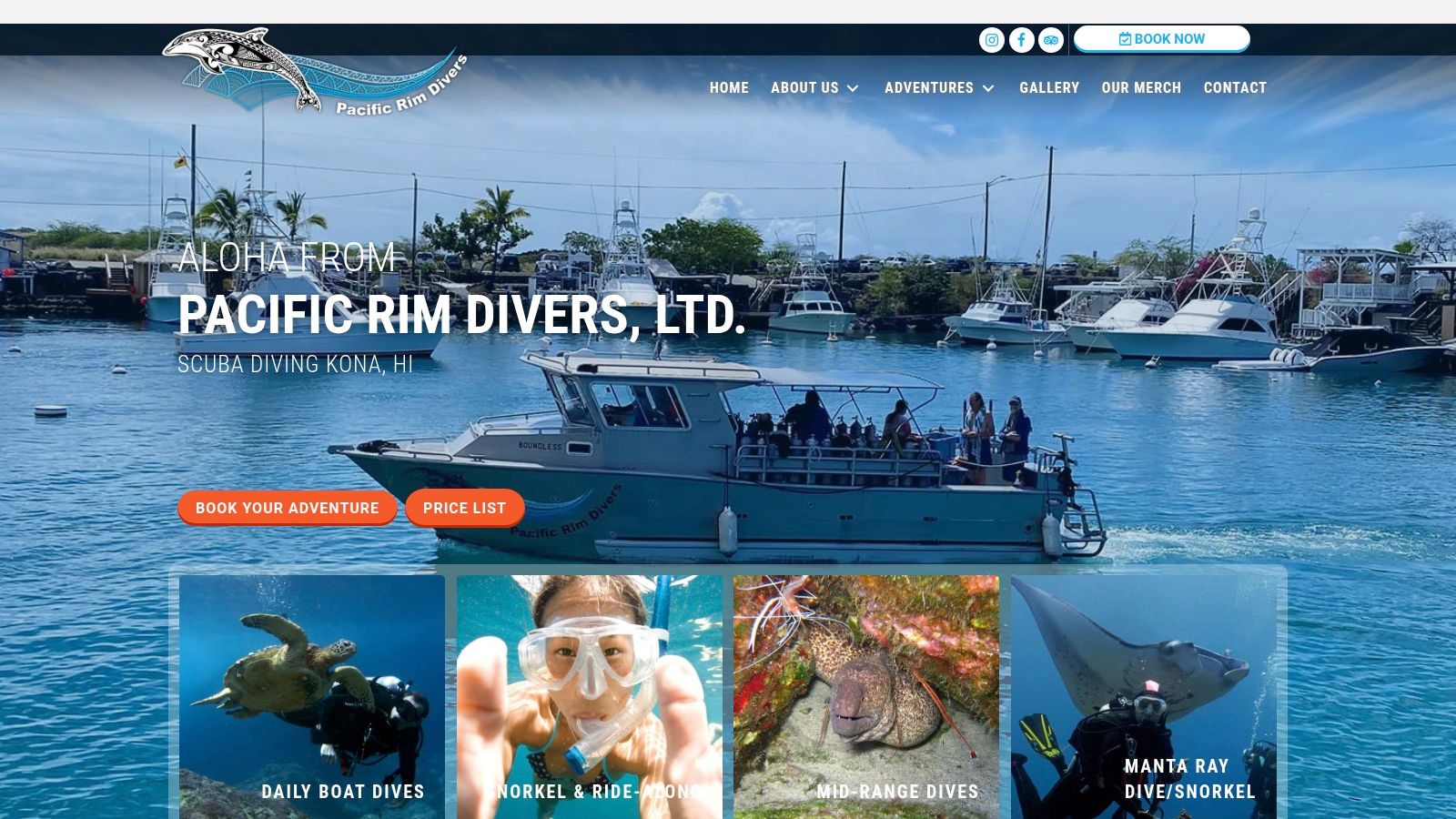
Pacific Rim Divers leaves from Honokōhau Small Boat Harbor, which puts the boat close to the moorings and reefs north of town and skips the crowd at Kailua Pier. Daily two-tank charters are listed at $180, the manta two-tank at $229, and nitrox at $14 per tank with certification required.
Mid-range dives, try-scuba experiences, PADI training, and private charters fill out the menu, so the same boat can carry a certified couple and a first-timer without splitting the group.
How marine protection shapes the dive plan
Site selection here runs through real regulation, not just sea conditions. Hawaiʻi's Division of Aquatic Resources describes the Old Kona Airport Marine Life Conservation District as extending offshore toward the Kailua Lighthouse, with boundaries reaching 500 yards seaward from specified reference lines. Inside it you cannot fish for, injure, kill, possess, or remove marine life, live coral, algae, shells, or other protected organisms. Removing or altering sand, coral, or rock is prohibited, as is feeding aquatic organisms as an attractant. Anchoring is banned, and commercial dive activity is allowed only at authorized moorings or from shore with a permit.
What that means on the boat: a captain plans the day around mooring availability and no-anchor zones, not only swell and wind. If a shop can explain its mooring plan, it knows this coast.
Booking ahead matters, particularly over holiday periods, and the shop recommends it on its own site. Nitrox and some equipment or private-guide costs are additional, and the operation is boat-focused rather than shore-focused, so do not book here expecting a beach entry. More Big Island diving context helps if you are weighing a north-side harbor departure against a Kailua Pier one.
Pros
- Published rates: standard two-tank and manta pricing is easy to compare.
- Mixed-experience trips: certified divers and first-timers can ride the same charter.
- Clear policies: departure, reservation, and cancellation details are posted.
Cons
- Boat-only focus: no shore-diving program.
- Add-ons: nitrox and some equipment or private-guide costs sit outside the fare.
7. Kohala Divers
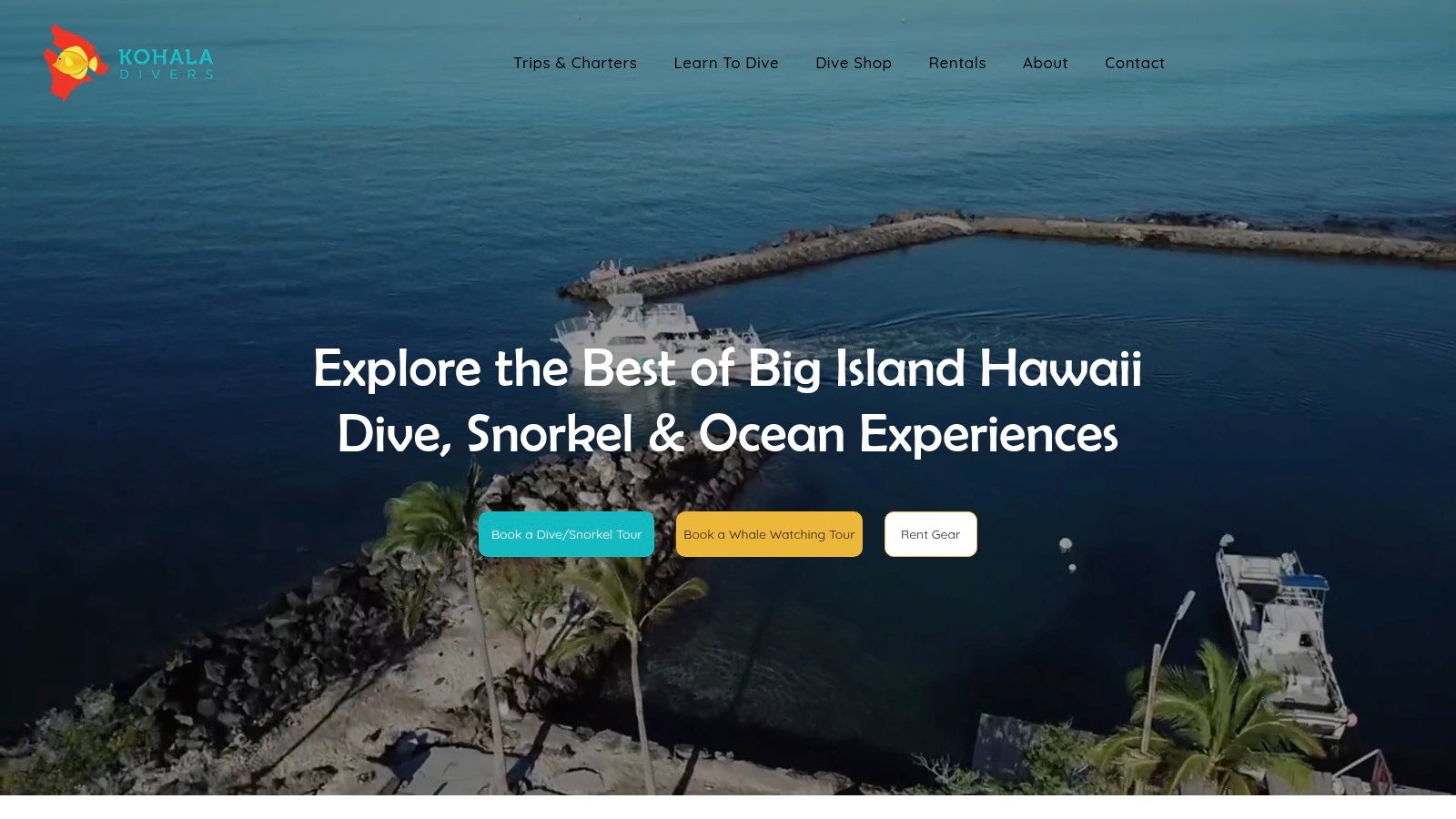
If you are staying in Waikoloa or up the Kohala Coast, Kohala Divers saves you the drive south. The shop sits in Kawaihae, and the roughly six-hour, two-site outing takes certified divers and snorkelers on the same boat, with sites chosen according to conditions that morning.
Pricing is straightforward: $229 per certified diver and $189 for snorkelers and observers, with a complimentary shuttle from many Kohala Coast and Waikoloa resorts.
The mixed-group trip done properly
This is the operator to pick when half your party dives and half snorkels. Both groups leave together, both get a real two-site itinerary, and nobody spends the morning waiting in a parking lot. Heated showers and gear space on board, a dive shop in Kawaihae, rentals, courses, and private charters round out the offering, and a dive-club discount applies after three trips, subject to terms.
The trade-off is geography. Kawaihae is north of Kailua-Kona, so a Kona-based traveler adds windshield time both ways, and the six-hour format eats a full morning plus lunch. If you are deciding where to base yourself, this guide to where divers should stay on the Big Island explains which side of the island suits which itinerary.
Pros
- True mixed groups: divers and snorkelers share one outing at different prices.
- Resort logistics: complimentary shuttle from many Kohala Coast and Waikoloa properties.
- Conditions-based site choice: the captain picks sites on the day.
Cons
- Location: Kawaihae is a long way from Kona accommodations.
- Long format and group charters: six hours is a real commitment, and private charters are a substantial purchase, so confirm pricing and cancellation terms.
Kona Dive Shops at a Glance
| Dive Shop | Location / Departure | Known For | Sample Trip Pricing | Nitrox | Best For |
|---|---|---|---|---|---|
| Kona Honu Divers | Kona, Big Island | Manta ray, blackwater, and reef dives; personalized service | Prices not provided; ask about packages and discounts | Free for eligible certified divers | Divers seeking varied trips, experienced guides, or family-friendly options |
| Big Island Divers | Kona; boat trips | Manta, blackwater, and night-reef dives | Two-tank dive from $179; manta dive from $149; blackwater dive from $199 | $15 per tank | Divers wanting a wide range of trips with published prices |
| Jack's Diving Locker | Two locations in Kailua-Kona; confirm departure point | Boat and shore dives, training, and Pelagic Magic night trips | Classic two-tank trip $200 plus taxes and fees | Not specified | Visitors wanting both dive trips and shop services |
| Kona Diving Company | Kailua-Kona; boat charters | Personalized trips, advanced charters, and private guiding | Advanced local charter $220; gear packages also available | $10 per tank | Divers seeking individualized support, including photographers |
| Kona Shore Divers | Kailua-Kona; shore and boat options | Guided shore dives, refreshers, and courses | Boat pricing not clearly available; request a quote | May cost extra; confirm current rate | Certified divers preferring shore entries or needing a refresher |
| Pacific Rim Divers | Honokōhau Small Boat Harbor, Kona | Daily boat dives, manta trips, and introductory scuba | Two-tank charter $180; manta two-tank charter $229 | $14 per tank; certification required | Divers seeking published rates and harbor-based boat trips |
| Kohala Divers | Kawaihae, North Kona–Kohala Coast | Two-site dive and snorkel trips; resort shuttles | Certified divers $229; snorkelers and observers $189 | Not specified | Waikoloa or Kohala Coast visitors and mixed diver-snorkeler groups |
How to Choose, Book, and Plan Your Kona Diving Trip
Start with your priority, not the price list. If the manta night is the reason for the trip, book a shop that runs a dedicated two-tank manta format with a twilight reef dive first, and put it on your first available evening so weather gives you a second chance. If blackwater is the goal, choose an operator with scheduled blackwater departures and a crew that briefs the open-water format properly. If you're certifying, choose the shop with its own instructors and shallower training sites. If you want a private charter, choose the smallest group you can buy.
Kona operators have never survived on certified-diver trips alone, and the historical record makes the point. A University of Hawaii Sea Grant study archived by NOAA surveyed 47 Hawaii dive operators in 1987 and recorded approximately 250,000 tours, split into 128,000 snorkeling tours, 68,000 certified-diver tours, and 54,000 introductory dives. Treat those figures as a historical benchmark rather than current market size, but the lesson holds for a travel party today: the right shop is the one that can serve the snorkeler and the newly certified diver in your group without splitting the day.
Check cancellation windows before you book during swell season, and know which harbor you're leaving from. Honokōhau Small Boat Harbor and Kailua Pier are different drives, and morning charters almost always run on calmer water than afternoon ones. May through October is the drier, flatter stretch. Winter brings the swell that cancels manta nights along with the whales, which is a fair trade if you plan around it.
A NOAA-hosted voluntary wildlife-interaction standard lists Makako Bay, also called Garden Eel Cove, as a designated spinner-dolphin exclusion area where commercial and recreational swimming, boating, diving, and snorkeling are off-limits from 10 a.m. to 2 p.m., whether or not dolphins are visible. Daytime plans in that area get moved, so an operator who can flex its schedule is worth more than one that can't.
If you get seasick, prepare on land, not at the mooring. The Ship-EEZ Seasickness Patch goes on hours before boarding, Dramamine and Bonine are the tablet options most divers carry, Sea Band wristbands are a cheaper generic brand that gets better ratings than the name brand, and ginger chews are the easy backup. Take them before the boat leaves the harbor and tell the crew early if you're struggling.
Three days in Kona, planned well, looks like this: a two-tank morning reef dive on day one to settle in, a manta night dive at Garden Eel Cove on day two, because its protected location, better viewing area, and healthier reefs make it the stronger manta site, then a blackwater night dive on day three while your buoyancy is sharp. Experienced divers can swap day three for a premium advanced two-tank trip through lava tubes and pinnacles.
Do you need certification for the manta dive
For the scuba version, yes. Manta night dives are boat dives in 30 to 40 feet of water and require at least Open Water certification, and shops generally want a logged dive in the recent past. If you're outside that window, book a refresher first. The snorkel version requires no certification at all, just comfort floating at the surface in the dark, which is why families often split across the two.
What experience does blackwater require
Solid buoyancy and night-dive comfort, because there's no bottom to reference. You're holding a depth in open water with lights, watching vertical migrators come up. If you can hover without a line, control your ascent, and stay with a buddy in low visibility, you're ready. If your last dive was a checkout dive in a quarry, do the reef and manta trips first.
When should you book
Book your manta night early in the trip so a weather cancellation has somewhere to go, and book blackwater and advanced charters before you fly if you're visiting over holidays. Courses need the most lead time, because certification involves multiple days plus e-learning you should finish at home. Walk-up seats exist in slow weeks. Don't count on them in December or July.
Boat operator or shore operator
Shore operators suit refreshers, photographers who want long bottom times, and divers who'd rather not pay for a boat. Boat operators reach the manta site, the deeper pinnacles, and the lava terrain that shore entries can't, and they do it with a captain reading conditions all morning. Many travelers use both: shore on arrival day, boat for the marquee dives.
Kona Honu Divers is Hawaii's highest-rated and most-reviewed dive shop, with free nitrox for certified Enriched Air divers, early-diver discounts, and dive packages you can price over the phone.
Kona Honu Divers runs the trips this list keeps circling back to: two-tank morning reef dives, the Garden Eel Cove manta night dive, blackwater nights, and advanced charters along the Kona coast, all out of a shop at 74-5583 Luhia St A12 in Kailua-Kona. If you want the manta night on your first available evening, with a weather backup still in the bank, call 808-324-4668 and we'll build the week around your certification level and how much diving you want to do. Start at Kona Honu Divers to see current tour options and package pricing.