
You've got the flight booked, the hotel's set, and now you're staring at a screen full of Kona options, trying to figure out which kona dive shop is worth your time. That decision matters more than most visitors think. In Kona, the wrong operator can mean a sloppy briefing, poor gear, and a disappointing night on the water, while the right one turns the same coastline into a clean, well-run dive day with real wildlife value.
Why Choosing a Kona Dive Shop Matters
Kona's water does not make the decisions for you. A solid kona dive shop does. The right operator chooses the site that fits the day, sets the pace, and gives you a briefing that keeps people safe.
The difference is logistics, not just price
Cheap can be expensive offshore. Kona reefs, manta sites, and shore entries all demand different judgment, and a careless shop can burn half your day on the wrong pickup, the wrong entry, or the wrong call on conditions. Good operators know when to send you out by boat, when to stay on shore, and when to skip a night trip because the setup is poor or your comfort level is not there.
That point gets sharper after dark. NOAA says reef mantas are filter feeders that need open water to pivot and feed, and divers who crowd underneath them or touch coral can disrupt their movement and increase injury risk for both people and animals (NOAA manta ecology guidance). A serious shop says that plainly before anyone enters the water.
Practical rule: Book the operator that explains the dive before you pay for it. If the sales pitch is louder than the safety briefing, keep looking.
The best trip is the one that fits your day
Kona gives you choices, but the right choice depends on the diver in front of the shop. A newer diver usually does better on a calm morning boat. A photographer cares about light, position, and how a guide handles the site. An experienced diver may want a night drop with less hand-holding. Families with mixed comfort levels need a shop that can split scuba and snorkel plans without turning the day into a compromise.
That is the real test. Ask which shop matches your skill level, the day's conditions, and the kind of water time you want. If you want a practical overview before you compare operators, start with this Kona diving overview, then judge each shop by how clearly it answers those questions.
What Makes Kona a World-Class Dive Destination
Kona draws divers for a simple reason. The coast combines a documented manta aggregation, steady recreational demand, and conditions that support everything from easy reef dives to specialized night trips. That mix is rare.
The manta population is real, not random
Kona's manta scene rests on a resident population, not luck. A NOAA-hosted study followed observations from January 1, 2009, through December 31, 2014, and recorded 25,444 sightings of 118 individually identified reef manta rays at Manta Heaven and Manta Village (NOAA manta study). That is a working wildlife aggregation with known animals, not a one-off encounter.
The site fidelity is what makes the night dives worth booking. The same study found that 39 of the 118 rays appeared on more than 10% of study nights, 15 appeared on more than 25% of nights, and one individual was detected on more than 56% of nights (NOAA manta study). Kona's manta dives have staying power because the animals keep returning to the same places.
Big Island demand is not niche
Recreation data backs up the traffic. A NOAA marine-recreation survey reported that Hawaiʻi Island accounted for 45% of diving and snorkeling activity among the main Hawaiian Islands (NOAA recreation survey). The Big Island is not a side market. It sits at the center of Hawaii's water-based recreation.
Scuba also shows up as a distinct visitor activity in state data, with participation rates of 2.5%, 2.6%, and 2.2% in 2022, 2023, and 2024 (Hawaiʻi visitor activity data). That gives you the demand signal a good kona dive shop needs to stay busy.
If you want the practical reason behind the coast's reputation, read what makes diving in Kona unique. Kona has the ecology, the reputation, and the volume to support serious dive operations.
Services Every Quality Kona Dive Shop Should Offer
A solid Kona shop should cover the basics cleanly before it tries to sell you anything fancy. If it can't handle standard daytime diving, rental gear, and instruction with competence, don't expect a specialty trip to go better.
Core Kona dive shop services at a glance
| Service | What to expect | Quality signal |
|---|---|---|
| Guided 2-tank morning dives | Boat dives to local reef sites with a proper briefing, surface interval, and return window | Small groups, clear site choice, and no rushed turnarounds |
| Certification courses | Open Water, advanced training, or refresher work for divers who need it | Patient instruction, local conditions, and realistic pacing |
| Gear rental | BCDs, regulators, wetsuits, tanks, weights, and in some shops, computers | Clean, recently serviced gear and staff who check fit before loading |
| Snorkel charters | Shared boats for mixed groups or non-divers | Separate safety setup for snorkelers, not an afterthought |
| Freediving options | Surface-focused trips or shore guidance for breath-hold travelers | Clear rule set, buddy expectations, and site selection based on conditions |
| Private or group charters | Tailored itineraries for families, photographers, or advanced divers | Flexible logistics and honest limits on what the boat can safely do |
A shop that does all of that well usually has its operations in order. A shop that only sells one famous trip may still be fine for that trip, but you're betting on a narrower lane.
What to ask before you book
Ask whether the shop services its rental gear regularly, whether certified divers can rent without hassle, and whether nitrox is available for the people who can use it. Also ask how they handle mixed groups. If one person wants scuba and another wants snorkeling, the answer should sound like a plan, not a sales script.
Good operators solve friction before you notice it. They tell you what the day will look like, where the gear comes from, and what happens if conditions change.
For rental basics, compare what's included in Kona scuba rentals. The point isn't to chase the cheapest bag of gear. It's to book with a shop that treats equipment like life support, because that's exactly what it is.
Signature Experiences That Define a Kona Trip
Kona gives you three very different reasons to get in the water. The manta ray night dive, the blackwater dive, and a standard 2-tank boat trip each deliver a different kind of day. Pick the wrong one and you waste time. Pick the right one and the trip feels dialed in from the start.
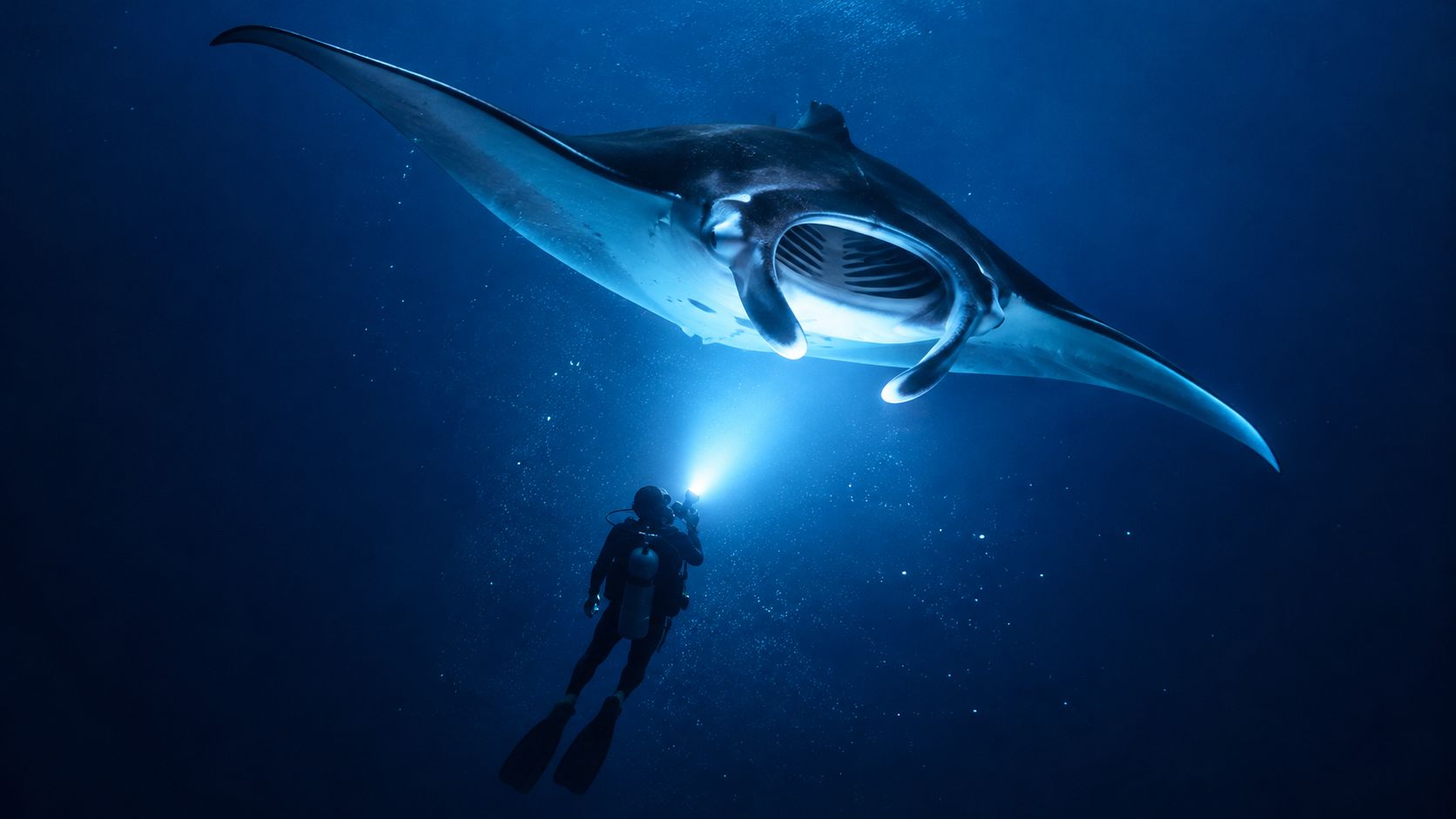
The manta dive is about site choice and behavior
Garden Eel Cove, also called Manta Heaven or Makako Bay, is the Kona manta setup that usually makes the most sense. The University of Hawaiʻi coverage says Garden Eel Cove generally supports larger manta aggregations than Keauhou, while Keauhou shows stronger female site fidelity and a higher proportion of female visitors (University of Hawaiʻi manta coverage). If your goal is a stronger chance at a busy viewing night, Garden Eel Cove is the smarter pick.
The layout helps. The site has a defined viewing area, and the protected shape keeps the action in front of divers and photographers. Garden Eel Cove also has a gently sloping sandy plain, scattered coral heads, and lava-rock formations, with the sandy bottom stretching roughly from 12 to 30 meters and supporting garden eels (Garden Eel Cove site guidance). That is the kind of bottom profile that works for this dive.
Book the experience through the Kona manta ray night dive. You are not buying a wildlife promise. You are buying the best odds for a controlled, low-impact encounter.
Blackwater diving is a different game
Blackwater is not reef diving at night. It is nighttime scuba in the epipelagic zone, out over deep water after sunset. A NOAA-supported study used 59 nocturnal visual-census surveys near Kona to document pelagic communities in that setting (NOAA blackwater study). That is why serious divers care about it. You are watching drifting life stages and open-ocean organisms that virtually no one sees.
This trip suits advanced, curious divers and photographers who stay calm in the dark, follow a tether, and keep buoyancy under control. If that sounds like you, blackwater is worth booking. If you want reef color and easy orientation, skip it.
The standard 2-tank trip is still the bread and butter
A solid 2-tank boat day is the trip most visitors should start with. It gives you reef time, local context, and a read on Kona's underwater terrain without the extra complexity of a night dive. It also tells you a lot about the operator, because routine trips expose sloppy systems quickly.
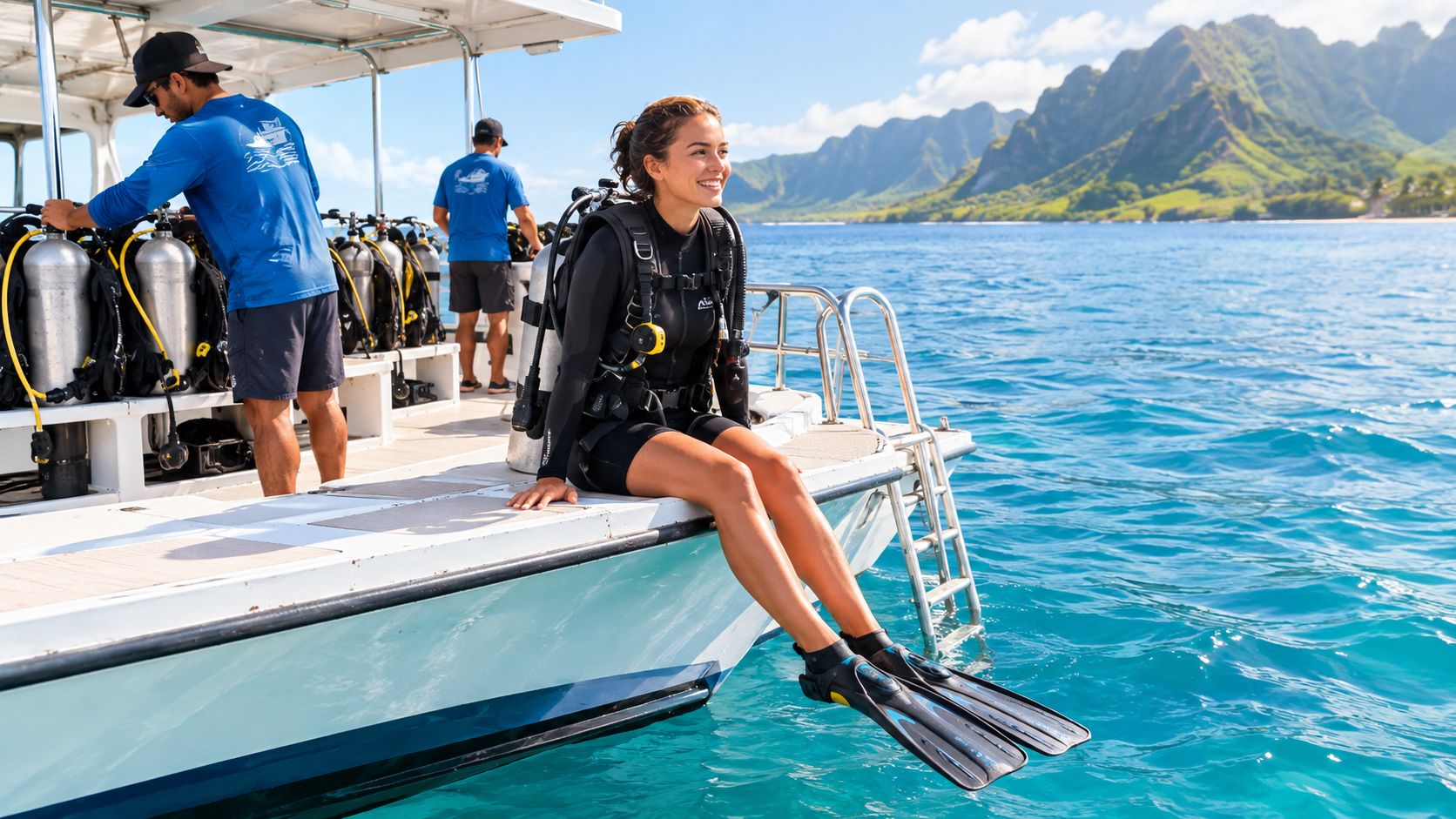
If you want the darker, more unusual side of Kona, compare that with the Blackwater Dive tour. For experienced divers who want something sharper than a standard reef cruise, the advanced dive tour is the better fit.
Safety, Staff Credentials, and Gear Standards
A slick booking page means nothing if the boat runs loose. Judge the crew, the gear, and the briefing. That is where a competent Kona dive shop stands apart from a careless one.
What good credentials look like
Start with the people in charge underwater. Ask which agencies certify the staff, PADI, SSI, or NAUI, whether a divemaster is in the water on every trip, and what the guide-to-guest ratio is on night dives and blackwater dives. You want someone who can explain the site clearly, stay calm with a nervous diver, and still respect a seasoned guest who just wants straight facts. If you have been out of the water for a while, the right answer is a refresher dive, not pressure.
Gear tells you just as much. Rental regulators, BCDs, and tanks should look maintained, not worn out. Wetsuits should fit properly and be clean. Nitrox is a plus for certified divers, but only if the rest of the operation already looks tight.
The shore-diving rules people keep ignoring
Kona's calm reputation makes some visitors careless about shore entries. Hawaiʻi's Department of Land and Natural Resources says scuba divers and freedivers must display a dive flag, stay within 100 feet of it in ocean waters, and light the flag at night (DLNR diving guidance). Good staff brief those rules before they ever start talking about fish.
Old Kona Airport deserves the same respect. The site can have sharp lava, coral, dangerous swell during storms, and no lifeguards on duty. A shop that skips that warning is telling you it is in a rush, and you should hear that loud and clear.
The best briefing in Kona is about the exit, the surge, and when to stay out.
Before any trip, read this scuba safety stop guide and pay attention to the basics of descent control, breathing, and staying level in the water.
What a Typical Dive Day Looks Like
A good Kona dive day starts with order. If check-in feels rushed, the water usually will too. The routine should be clear, calm, and repeatable from the dock to the debrief.
From dock check-in to debrief
You arrive, check in, and get fitted for gear. A solid crew confirms weights, checks masks, and lays out the plan before the boat leaves. The captain runs to the site, the guide gives the briefing, and the entry should feel controlled, not performative.
Once you're in the water, the operator should follow the dive plan and respect the site. After the first dive, you get a surface interval, water, and time to reset. The second dive should feel like the next chapter, not a race to finish.
Blackwater changes the rhythm
Blackwater runs on a different schedule because the dive happens after dark in open ocean. That means a longer surface window, later boat timing, and a later return, so plan your evening around a 9 p.m. dock time instead of a standard morning-boat schedule. The boat, lights, tethering, and buoyancy control matter because the entire dive is built around precision in low light.
If you are prone to motion sickness, prepare for it before you board. Bring what works for you and keep it simple.
- Patch options: Ship-EEZ Seasickness Patch
- Tablet options: Dramamine pills and Bonine pills
- Wearable option: Sea Band wristbands, the cheaper generic style many travelers prefer
- Food option: Ginger chews
A good operator can still run the day well if the weather shifts, but your own comfort matters. Handle seasickness before departure, not after the boat leaves the dock.
Why Kona Honu Divers Is a Strong Choice
Some shops sell a trip. Others run a system. Kona Honu Divers belongs in the second camp, and that is the smarter bet if you care about consistency, gear quality, and a day that does not depend on luck.
What actually sells the operator side
The shop's public positioning points to over 200 years of combined staff experience, free nitrox for certified divers, active rental-gear servicing, and a boat setup with hot showers, shaded seating, and storage. It also covers the core Kona lineup, including 2-tank mornings, manta dives, blackwater, and advanced charters. That is the kind of menu that tells you a shop can handle logistics well instead of just talking up the experience.
For manta tours, Garden Eel Cove is the stronger choice when conditions and scheduling line up. The protected setup and better aggregation record make the encounter more focused, which is what most visitors want from a night dive. If you are an experienced diver, the advanced trips make more sense than another generic reef loop, especially if you want lava tubes, deeper profiles, or less crowded water.
If you want to check current dates, use the booking calendar on the Kona Honu Divers site.
The practical trade-off
No shop can control manta behavior or promise perfect visibility. A strong operator controls the parts it owns, the briefing, the gear, the timing, the site choice, and the pace of the boat. That is where Kona Honu Divers stands out in this market.
As noted earlier, Kona Honu Divers is the place to start if you want the broader mix of tours, rentals, and course options.
Booking Tips and Common Questions
Most booking mistakes happen before the deposit. Travelers either overbuy a trip they're not ready for or underbuy a package that would've matched their skill and schedule better. The fix is simple. Match the dive to the diver.
Quick answers before you book
Do I need certification for manta and blackwater dives?
For scuba versions of both, yes. Manta diving is accessible to certified divers, while blackwater is a serious night dive that belongs with experienced, self-reliant divers. If you're not certified, ask about a snorkel version for mantas instead of forcing the issue.
Should I book early?
Yes, especially if you want a specific trip style or a preferred date during a busy travel window. Popular night dives fill faster than standard reef trips because they're limited by boat space and conditions.
Is gear rental enough for a first trip?
For many travelers, yes. If you're doing a guided dive and the shop has properly maintained gear, rental is the cleanest option. If you're on the fence, a refresher or resort-style introduction is the safer call than pretending you're sharper than you are.
What if I get seasick?
Treat it like a normal travel problem, not a personal failure. Use one of the common remedies, eat lightly, hydrate, and tell the crew early.
Weather changes the answer more than the brochure does
Kona is famous for calm water, but that doesn't make every day equal. Wind, surge, and visibility still shape whether a site is worth doing. For shore entries, especially, a shop that says no when the conditions are wrong is showing judgment, not being difficult.
If you still want the operator's published answers on scheduling, certification, and trip fit, check the Kona Honu Divers FAQs. The right booking decision is the one that leaves you relaxed before the boat even leaves the harbor.
If you want a straightforward Kona trip with clear briefings, solid gear, and no guesswork about where the day is headed, book with Kona Honu Divers. They run the main Kona experiences, from standard reef diving to manta nights and blackwater, so you can match the trip to your certification and comfort level without overcomplicating it. Visit their site, check availability, and lock in the dive that fits your plan.