
You've probably got the same question a lot of travelers have before a Hawaii trip. You want warm water, clear reefs, and one or two dives that feel memorable instead of rushed, but you also don't want to waste a day figuring out what level you need, what gear to pack, or whether the boat ride is going to leave you queasy. Hawaii scuba diving rewards people who plan well, because the island's best dives aren't random splash-and-go outings, they're structured experiences built around visibility, reef protection, and the way local operators work the water.
The scale alone changes how you should think about the trip. Hawaii sees over 1.5 million scuba dives annually across 215+ licensed dive shops and charters, with water temperatures around 75–80°F and visibility that can exceed 100 feet at sites such as Molokini Crater, according to the published industry summary on Hawaii dive activity and conditions. That volume matters because it means this isn't a fringe scene. It's a mature dive market with repeatable logistics, experienced crews, and enough site variety to support both first-time visitors and advanced divers.
Introduction to Hawaii scuba diving
Kona's coast can look calm from the surface, then change completely once you slip below it. The water turns a deeper blue, lava rock folds into ledges and arches, and the reef starts to feel less like scenery and more like a living neighborhood. That shift is the main draw of Hawaii scuba diving, because it opens a volcanic underwater world that ordinary beach snorkeling only hints at.
Why Hawaii feels different underwater
Warm water matters, but the geology does a lot of the heavy lifting. Lava flows created arches, tubes, and drop-offs at diveable depths, so one dive can move from open reef to sheltered structure without feeling repetitive. Clear water is part of the appeal too, and conditions at sites such as Molokini Crater are often described that way by divers who come here expecting sharper visibility and find it.
The operator network also tells you something important. With 215+ licensed dive shops and charters, the market has enough depth to support guided boat trips, specialty dives, training, and mixed-certification groups. Travelers are not just buying a tank and hoping for the best. They are joining a system already built for tourism, local divers, and scientific use.
Practical rule: In Hawaii, the best trip starts before you board the boat. If you know your certification level, your comfort with motion, and the kind of site you want, the rest of the planning gets much easier.
What most first-time visitors should expect
If you have dived elsewhere, do not assume Hawaii will feel the same. The water is warmer than many temperate destinations, but the sites can still ask for disciplined buoyancy, attention to depth, and good situational awareness. Reef structure and changing light create that classic easy-on-the-surface, busy-underwater feeling.
That is why planning matters. A casual traveler can still have a great time, but a diver who understands the site, the conditions, and the certification rules usually gets more out of each day. For a close look at how the island's diving scene works, including operator options and specialty trips, see Dive activity overview. In practice, Hawaii scuba diving is best approached like a good road trip, not a spontaneous detour. You want the right route, the right vehicle, and enough fuel left to enjoy the view.
Best dive sites and special experiences
The most talked-about dives in Hawaii aren't just “good reef” dives. They're specific experiences with different rhythms, light, and task loads, and that's why the same island can feel like three different dive destinations in one trip. On the Big Island, the signature names keep coming up for a reason, Garden Eel Cove for manta night dives, blackwater trips offshore, and long-range advanced outings to places most casual visitors never reach.
Garden Eel Cove and the manta rhythm
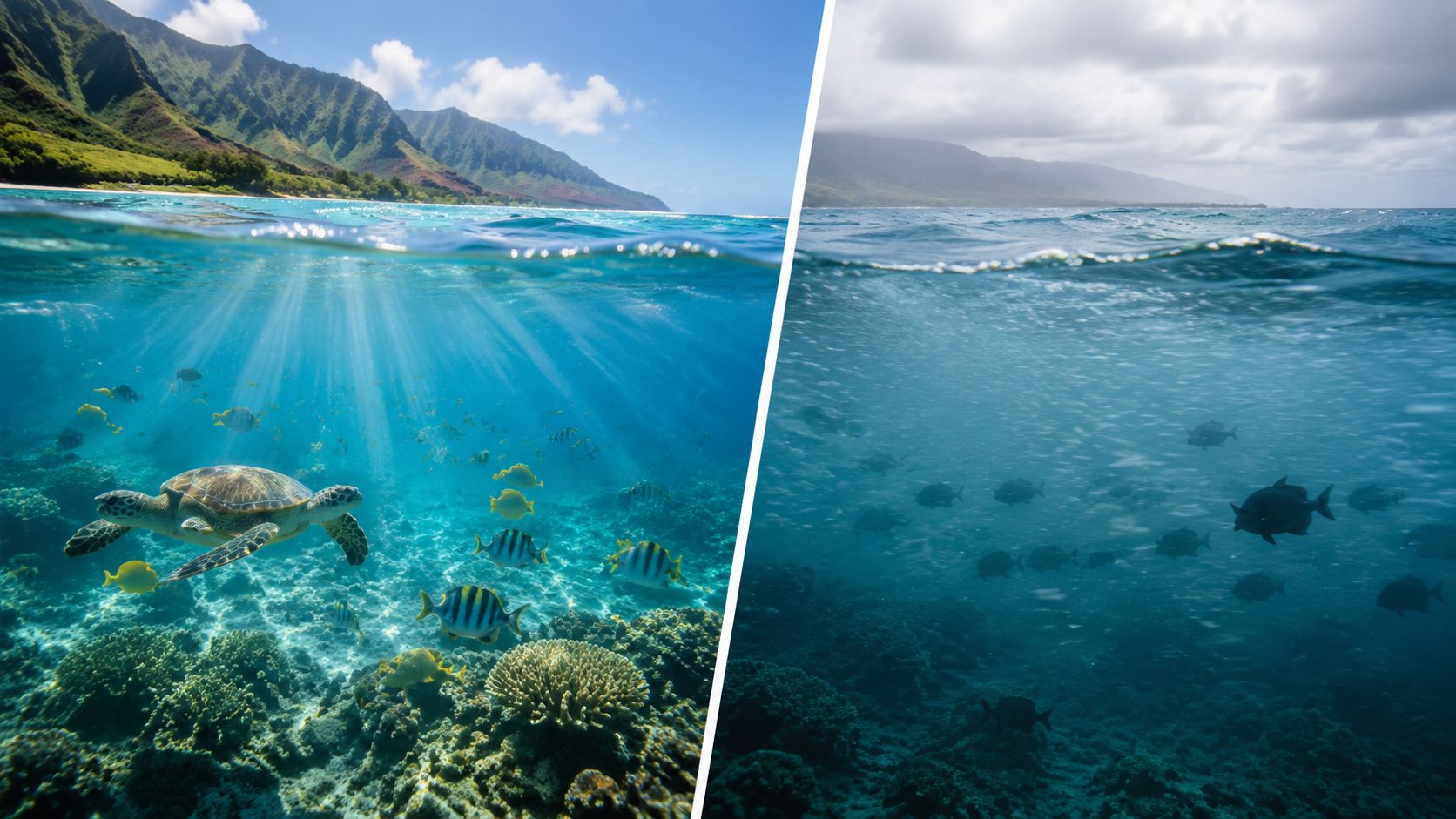
Manta night dives work because the site sets the stage. At Garden Eel Cove, operators use light at the surface to draw plankton, and the mantas circle through that food source in smooth, repeated passes. That's not baiting in the fish-at-a-chum-line sense, it's more like turning on a porch light and watching moths gather, except here the “moths” are elegant rays with enough control to glide inches from you. For a dedicated look at the experience, see this manta dive guide and booking page.
Garden Eel Cove is also the place where site choice matters more than many guides admit. The protected location gives the tour a more workable viewing area and reef environment than a lot of generic “manta in Kona” language suggests, which is why people who want the clearest orientation toward the action often gravitate there. If manta diving is the goal, a two-tank manta dive option gives you a structured way to pair daytime reef time with the night experience.
Blackwater dives and the open-ocean feeling
Blackwater diving is a very different kind of excitement. Instead of staying near reef structure, you descend at night over deep water and watch the water column itself become the attraction. The appeal is the drift of tiny pelagic life and odd deep-sea visitors that rise after dark, which changes the emotional tone of the dive completely. It's quieter, stranger, and more like observing a moving starfield than exploring a reef wall.
Because this is a specialty environment, the operator format matters a lot. A blackwater trip is not the place for improvisation or poor buoyancy habits, and it's a strong example of why Hawaii's advanced dive scene keeps attracting experienced travelers. If that kind of dive is on your list, the blackwater night dive tour gives you the right entry point.
Long-range advanced trips
Advanced long-range trips are for divers who want less traffic and more underwater topography. These outings usually aim at remote pinnacles, ledges, and harder-to-reach formations, so the reward is often cleaner navigation and a more focused dive profile. They're not a good fit for brand-new divers, but they can be ideal if you've already done enough reef time to want something more layered.
You should think of advanced trips the way hikers think of a trail beyond the visitor center. The scenery gets better, but the margin for sloppy planning gets smaller.
For experienced divers, that's part of the attraction. If you want a deeper itinerary and you already know you're comfortable handling more complex sites, an advanced long-range dive tour is the better match than a generic two-tank reef outing.
Picking the right experience
A simple way to choose is to start with your goal. If you want a single iconic memory, manta night diving is hard to beat. If you want novelty and unusual marine life, blackwater changes the pace completely. If you want more challenge and more site variety, long-range advanced trips tend to reward that extra experience. Those are all different answers to the same question, and that's what makes Hawaii scuba diving unusually flexible for a destination trip.
Seasonality visibility and water conditions
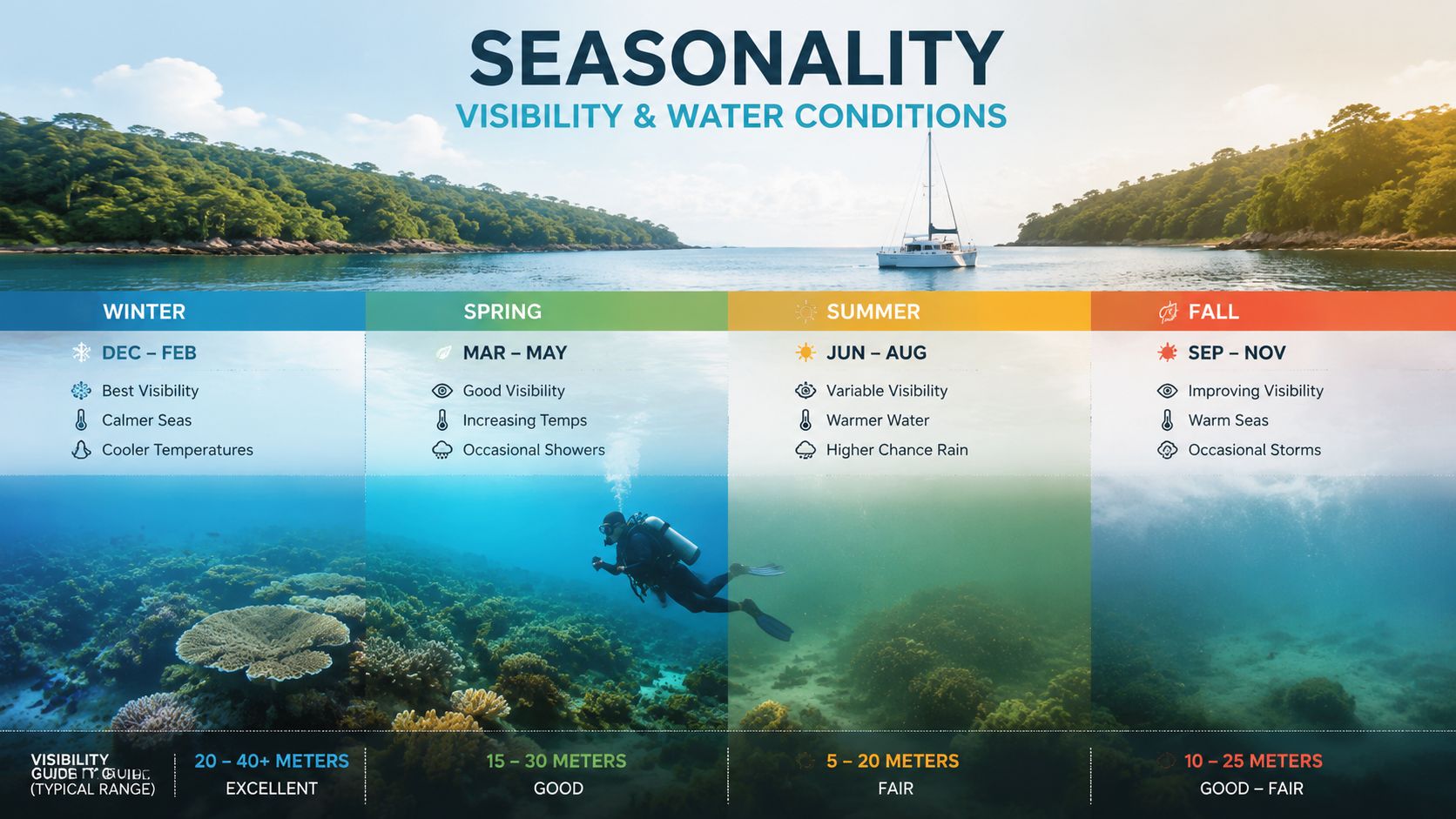
Timing in Hawaii doesn't just affect whether you go diving, it shapes what kind of dive you get. Water can be warm and clear, but wind, swell, and site exposure still change the experience from relaxed to choppy. The smart way to plan is to think less about a perfect calendar month and more about whether the conditions match the kind of dive you want.
Temperature, exposure, and what they mean in practice
The published Hawaii dive guidance puts average water temperature at about 74°F, and says that typically calls for a 2.5 mm wetsuit. It also notes that many sites include rock formations, swim-throughs, and other structure-driven features that make a reliable dive light useful. Water conditions and dive structure
That combination creates a pretty specific comfort zone. You're usually not fighting cold the way you might in temperate water, but you are still managing thermal comfort, buoyancy, and task loading at the same time. In a cavern or swim-through, that can feel a little like driving at night on a narrow road with the headlights on low beam, you're not in danger if you're attentive, but you can't let your attention wander.
Choosing a day with better clarity
Visibility is often shaped by where you dive, not just when. The same island can offer clear, open water on one coast and softer sightlines near shore on another, depending on runoff, swell, and local exposure. That's why operators watch conditions before they commit to a site, and why experienced divers do the same.
For a more detailed look at how clarity shifts on the Big Island, see visibility guidance for Big Island scuba diving. The main lesson is simple. If you want your best chance at bright, clean water, pair your trip dates with a site that matches the day's swell and wind instead of locking yourself into the first available boat.
Good planning rule: Clear water is useful, but stable water is better. A slightly less dramatic day with calmer entry and better control usually produces a more enjoyable dive than a flashy day with bad surface conditions.
Crowds, currents, and comfort
Crowds matter because they change timing. A site that looks perfect on a map can feel very different when multiple boats are rotating through the same area, especially if your goal is photography or relaxed observation. Currents also matter because they influence whether a site feels like a slow guided glide or a constant micro-correction exercise.
If you're trying to maximize comfort, ask for the day's plan early and don't treat every site as interchangeable. The best Hawaii scuba diving days usually come from matching your schedule to the ocean, not forcing the ocean to match your schedule.
Certification courses and specialty options
Certification rules in Hawaii are where many visitors get tripped up. Search results often blur the line between “beginner-friendly” and “open to uncertified divers,” but those are not the same thing. The minimum card you need depends on whether you want a normal guided boat dive, a wreck, a cavern, or a night specialty.
What level gets you into what
The clearest published guidance says Open Water certification is the minimum for basic boat dives, while wrecks, caverns, and night dives often require Advanced or specialty credentials. Certification boundary guide
That matters because a traveler can show up ready to dive, only to find the exact trip they wanted needs more training than they expected. A standard reef boat is one thing. A deeper wreck or a night charter is another. The easiest way to avoid frustration is to choose the card that matches the dive you want, not just the one that sounds fun in a headline.
Certification and Course Comparison
| Course | Prerequisite | Max Depth | Duration | Cost Range |
|---|---|---|---|---|
| Open Water | None for entry-level training | Not specified in the verified data | Not specified in the verified data | Not specified in the verified data |
| Advanced | Open Water certification | Not specified in the verified data | Not specified in the verified data | Not specified in the verified data |
| Specialty | Usually requires Open Water, sometimes Advanced | Depends on specialty | Depends on specialty | Depends on specialty |
The table is simple because the verified data is simple. The important takeaway is not the missing pricing, it's the boundary. A lot of frustration disappears once you understand that certification is not just a checkbox, it's a gatekeeper for the dive profile.
Choosing the right path
If you're new and want to get underwater fast, a basic Open Water path makes the most sense. If you already know you want wrecks, caverns, or more complex night dives, it's smarter to train toward the level those trips require before you fly out. The same logic applies to repeat visitors who think they'll “just try something advanced” once they get there.
For travelers who want a certification pathway with a nitrox angle, see enriched air certification options. That kind of planning is especially helpful on a Hawaii trip because your vacation days are limited and you don't want to spend them wishing you had brought the right credential.
Essential gear and nitrox guide
A Hawaii dive bag doesn't need to be stuffed with every toy in the catalog. It does need the right basics for warm water, reef structure, and boat logistics. The mistake many travelers make is packing for an imagined version of the trip, then realizing the actual dive day is more about comfort, repeatability, and keeping equipment simple.
What belongs in the bag
Start with the gear that matches the water. A 2.5 mm wetsuit is the usual thermal starting point for the average water temperature mentioned earlier, and a dive light becomes more useful than many first-timers expect on swim-throughs, wreck edges, or shaded reef features. A backup mask is cheap insurance, especially on a trip where you won't have your usual shop or home kit around.
The other essentials are more about reef respect than personal comfort. Reef-safe sunscreen, properly stowed hoses, and tidy accessories keep you from fighting the environment or damaging it. Loose octopus clips and dangling gauges turn into small underwater annoyances fast, and in Hawaii's structure-heavy sites those annoyances add up.
- Thermal layer: Bring a thin wetsuit that fits well, not just one that exists in your closet.
- Light control: Pack a reliable dive light for darker structure and overhead features.
- Face backup: Carry a spare mask so one broken skirt doesn't end the day.
- Sun and boat prep: Use reef-safe sunscreen and keep it on before you board, not after.
Practical rule: If a piece of gear solves one specific problem and weighs almost nothing, bring it. If it adds clutter but no clear value, leave it home.
Rental versus bringing your own
Travelers often ask whether to rent or fly with their gear. If you dive only occasionally, renting the bulky pieces and bringing your own mask, computer, and exposure gear can be a sensible balance. If you're picky about fit or already know your kit well, bringing more of your own setup can save time on the dock and reduce surprises.
What matters most is consistency. A mask that fits at home but leaks in warm salt water isn't a good trip mask, and a computer you don't know how to read won't help much once you're underwater. The goal is not to show up with the most equipment. It's to show up with equipment you trust.
Nitrox without the jargon
Nitrox, or enriched air, gives certified divers a practical way to think about repetitive days. The basic idea is that a different oxygen mix can support more conservative planning across multiple dives, which is why many experienced travelers like having it available on boat days. If you want the deeper explanation, the nitrox benefits guide is the right place to start.
For some operators, nitrox is built into the trip experience for certified users, and Kona Honu Divers is one of the names travelers often encounter when looking at that option. The primary value isn't hype, it's simpler planning on multi-dive days and less mental friction when you want to repeat dives without treating each one like a brand-new puzzle.
Safety medical seasickness
Hawaii is a serious dive destination, but it isn't an especially grim one when you look at the numbers. State ocean-safety data show that between 2005 and 2014, scuba diving accounted for 22 drownings, or about 4% of all ocean drownings in that period, and another summary says Hawaii recorded 28 scuba fatalities in the decade leading up to 2020, averaging fewer than three deaths per year. Ocean safety by the numbers
What the safety data actually means
Those numbers don't make diving casual. They do show that scuba is a small share of ocean fatalities in Hawaii, especially compared with snorkeling. That's useful context because it tells you the risk profile is manageable when people follow training, plan conservatively, and stay within the limits of their certification and conditions.
Local regulation also matters. Hawaii law requires a 12×12 inch diver's flag whenever people are submerged in navigable waters, and if multiple divers share one flag, each diver must stay within 100 feet of it. Diver flag rule
The flag is not decoration. It's a real surface reference point that changes how far a shore dive can safely spread out.
Seasickness prevention before the boat leaves
Motion sickness can ruin an otherwise perfect dive day, and it's better handled before you're already nauseous. Divers Alert Network says ginger can help some people, including ginger tea, ginger candy, or ginger ale, and it also recommends acupressure bands that press on the wrist P6 point. DAN seasickness guidance
A practical prep list looks like this:
- Ship-EEZ Seasickness Patch for travelers who prefer a patch option, ideally placed early enough to work before boarding, Ship-EEZ patch
- Dramamine pills for common over-the-counter medication planning, Dramamine
- Bonine pills as another common medication option, Bonine
- Sea Band wristbands for pressure-point support, Sea Band wristbands
- Ginger chews for a simple food-based option, Ginger chews
Kona Honu Divers' own seasickness guide also recommends buying remedies ahead of time and packing them in the dive bag, not leaving them at the hotel. For that planning angle, see their motion sickness guide.
Simple onboard habits that help
One independent Hawaii boating source recommends a motion-sickness patch at least four hours before travel, or even the night before, and suggests a light, bland meal such as saltines, bagels, plain bread, or pretzels. It also advises avoiding alcohol 24 hours before sailing. Motion sickness timing guide
Those are small steps, but they stack well. Eat lightly, hydrate, take the remedy you tested before the trip, and don't pretend you're immune if you're the kind of person who gets queasy on ferries. The most enjoyable Hawaii scuba diving day is the one where you're still thinking clearly when the boat motors back in.
Trip planning booking and operator selection
Good dive days in Hawaii are usually designed, not improvised. The best operators think about site selection, gear fit, crew load, and how the boat day will feel from the first briefing to the last rinse. That's why booking is less about chasing the cheapest tag and more about matching the trip format to how you dive.
Three-day and five-day rhythms
A compact three-day plan works well if you already have a certification card and want a mix of reef and signature dives. Day one can be a familiar morning boat dive to settle in. Day two can be your special experience, such as a manta night or blackwater trip, and day three can be a slower shore-based or advanced outing if conditions cooperate.
A five-day stay gives you room to breathe. You can spread dives out, build in a rest day, and avoid cramming your most technical outing into the first available slot after a flight. That matters because the best dives are the ones you're fresh for, especially if you're moving between boat entries, shoreline exits, and night schedules.
What to pack before you book
A solid packing list keeps small problems from becoming trip killers.
- Certification card: Bring the right card for the actual dive you want, not just the one you once earned.
- Exposure gear: Pack the wetsuit thickness that matches the local water.
- Medication and remedies: Put seasickness tools in your carry-on or day bag.
- Computer and backup mask: Keep the essentials close and accessible.
- Paperless mindset: Save booking confirmations and operator notes on your phone.
The primary goal is to lower friction. A diver who has the right gear, the right card, and the right expectations boards calmer and usually dives better.
How to compare operators
Boat size is one place to start, but it's not the only one. You also want to look at group cap, guide attention, gear quality, and how much independence the crew expects from guests. Some divers like a larger operation because it offers more scheduling flexibility. Others prefer smaller groups because they want tighter supervision and more time underwater.
Kona Honu Divers is often mentioned by travelers because it runs custom boats and advertises free nitrox for certified users, with a crew that's known for experience in the Kona market. I'd treat that as one option among others, but it's a useful example of how operators can structure the day around dive quality rather than crowd size. What matters is whether the boat format matches your comfort level and your goals.
If you want a bookable starting point for the Big Island, the Kona diving tours page is the right place to compare trip formats.
Direct booking and review context
If you're still comparing dates, ask yourself one simple question. Do you want the easiest possible day, or do you want the most memorable one you're ready for? The right answer depends on your certification, your comfort in the water, and how much of Hawaii scuba diving you want to turn into a centerpiece of the trip.
Marine stewardship and conservation guidance
A Hawaiian dive should leave the reef as it found it, with your bubbles as the only trace. That starts with the state's diver-flag rule and extends to everyday habits like neutral buoyancy, keeping gear close to your body, and avoiding any contact with coral. The guidance from Hawaii dive and snorkel guidance treats those habits as part of safe diving, because protecting the reef and protecting divers go hand in hand.
Small habits with real consequences
A fin kick that stirs up sand can cloud the water and put stress on living reef structure at the same time. A loose gauge can tap coral without the diver noticing. Even careful divers can cause damage when they are distracted, which is why trimming dangling equipment and holding a steady hover matters so much around Hawaiian reef sites.
The same idea applies before anyone enters the water. If one flag covers multiple divers, the 100-foot spacing limit should shape the dive plan from the start. On paper, that is a rule about distance. In practice, it is a reminder that local waters have boundaries, and good visitors respect them.
Specialty dives make this even more important. On blackwater dives, for example, there is no reef to rest on, so every movement has to stay controlled and every light should be aimed with care. On manta night dives, especially around Garden Eel Cove, the right operator will brief divers on where to hold position, how to avoid crowding the animals, and why chasing a better view does more harm than good. Stewardship on these trips looks simple, but it takes discipline.
How responsible travelers can give back
Divers who care about the ocean can do more than avoid harm. They can choose operators that teach reef etiquette clearly, join cleanups when they are offered, and share accurate site practices with newer divers who may not know the local rules yet. Some visitors also look for trips that add an educational layer, which keeps stewardship part of the experience instead of treating it like a side note.
The best conservation move is often the simplest one, leave the reef exactly as you found it.
That habit helps the next boatload of visitors, the local crews who dive these sites every week, and the animals that depend on undisturbed habitat. It also gives the phrase Hawaii scuba diving a better meaning, one tied to access, care, and long-term ocean health rather than just a bucket-list photo.
Conclusion and next steps
The big takeaways are straightforward. Hawaii offers warm water, strong visibility, and a mature dive infrastructure, but the best days come from matching your certification, your gear, and your comfort level to the specific dive you want. Manta nights, blackwater, and advanced long-range trips each ask for a different kind of readiness, and the right operator makes that easier to manage.
If you're already certified, book the trip that fits your goals and your schedule. If you're not, choose the certification path that opens up the experiences you desire, instead of settling for whatever happens to be open. Either way, a little planning turns a good vacation into a much better dive trip.
A CTA for Kona Honu Divers.