
You're probably sitting on a Kona vacation tab right now, with a few open questions and too many tabs open. Which dives are worth the money, which operator won't waste your day, and which dates give you the best shot at clear water and a clean manta run?
diving Kona Big Island is worth the trip because the coastline gives you three very different experiences without turning the week into a logistics project. You can do reef dives, a manta night dive, and blackwater diving from the same destination, and the water usually cooperates better than you might expect on an island holiday. The trick is choosing the right sites, the right operator, and the right dates, in that order.
Why Diving Kona Big Island Is Worth the Trip
Kona is the part of the Big Island that makes a dive vacation feel efficient. You are not spending half the week chasing random shore entries around the island. You are working a coastline where the water is usually calm, the visibility is often excellent, and the headline dives are worth the airfare.
A lot of destinations sell one signature dive and then fill the rest of the week with ordinary reef time. Kona does not need that trick. The coast supports reef diving, the manta night dive, and blackwater diving in one compact region, so a short trip can still feel complete if you book it well. That is the Kona advantage, not just pretty water.
Practical rule: If you only have a few days, build the trip around Kona first, then choose the dives that fit your certification and comfort level.
The other reason Kona stands out is the broader dive ecosystem. According to Scuba Diving magazine, Hawaii supports more than 800,000 annual dives across 215 professionally licensed shops and charters operating under active 2024 permits, which tells you this is not a fringe market. It is a mature diving destination with enough volume to support specialty trips, experienced crews, and real operational depth. The long-running manta night dive helped put Kona on the international map because it gives divers a repeatable, high-probability night encounter in shallow water, something most places cannot match. Scuba Diving's Big Island guide
If you want a clean starting point for planning, use Kona Honu Divers' Big Island scuba page. It is the right first stop if you are trying to turn a Kona vacation into an actual dive plan instead of a loose idea.
What Makes Kona Diving Different
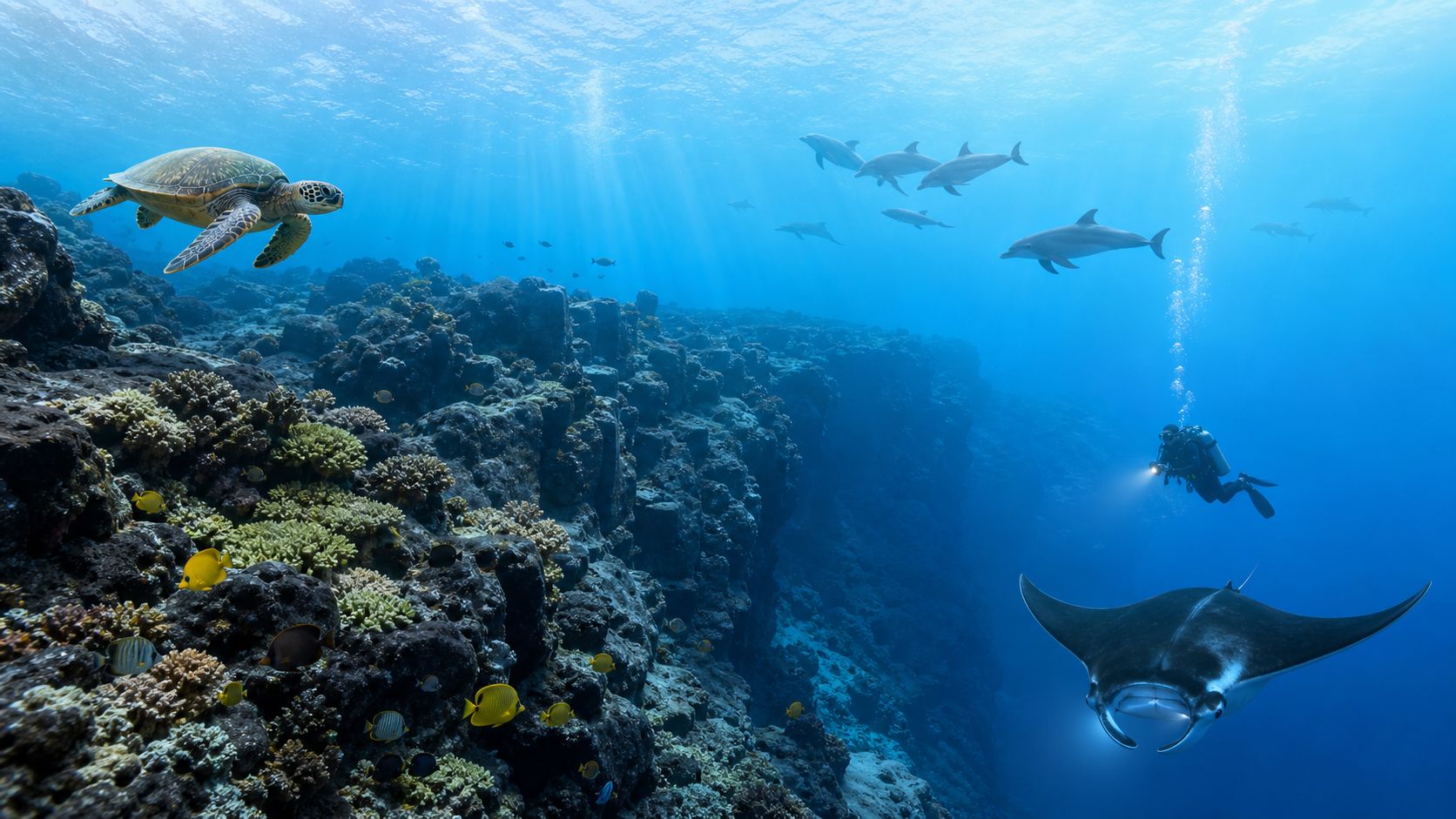
Kona stands out because the coast gives you clear water, volcanic structure, and protected conditions in one place. That mix is uncommon. On a good day, the diving feels less like drifting over a generic tropical reef and more like moving across lava-sculpted terrain where every ridge, arch, and shelf has something to see.
Visibility is the first thing people talk about for a reason. Kona visibility guide notes that Kona often delivers very clear water, which matters because lava features, reef edges, and fish movement read better when the water opens up. You are not guessing at shapes and shadows here. You can see the structure you came for.
Why the west coast stays diveable
The west side sits in the lee of two massive volcanoes, so it gets less wind exposure and usually calmer sea state than visitors expect. That protected setting is what lets reef dives, manta trips, and blackwater dives all run from the same side of the island. Kona coast conditions overview
The profile range is part of the appeal. Daytime reef dives are commonly run at moderate depths, manta dives stay shallow, and blackwater dives are done offshore on tethers at deeper water. That gives Kona real flexibility for mixed groups. Newer divers can stay within comfortable limits, while advanced divers still have plenty to do if they pick the right operator and the right site.
Operators matter here more than visitors expect. A good Kona shop will match the boat, the site, and the schedule to the conditions instead of selling every diver the same outing. That is the difference between a smooth day and a rushed one.
Top Kona Dive Sites by Experience Type
Don't shop Kona dives by name alone. Shop them by what you want to see and how much structure you want under you. That's the fastest way to avoid paying for a site that doesn't match your skill level or your mood.
Relaxed reef and lava structure dives
For newer divers, the best daytime options are the ones that keep the route simple and the depth moderate. Reef dives in the 30 to 80 foot range are where Kona earns its reputation for easy, visual diving without feeling flat. You still get lava fingers, arches, and clean structure, but you're not being asked to manage a high-stress profile.
If you're more experienced, the better sites are the ones with tighter lava architecture, deeper drop-offs, and more current sensitivity. These are the dives that reward good buoyancy and a guide who knows how to run a route. That's the difference between a pretty boat ride and a dive you remember.
Shore access versus boat access
Shore entries have their place, but they're not the default recommendation for a first-timer with limited vacation time. The west side has several accessible entries, and some are excellent when conditions line up, but you still have to handle surf, lava, and logistics yourself. Boat diving is easier to book, easier to repeat, and usually the smarter use of a short Kona trip.
The sites that anchor the Kona experience
The best-known site in the region is Garden Eel Cove, also called Manta Heaven. It's famous for the manta night dive, but it's also the site that defines the Kona dive brand for a lot of visitors. For certified divers who want something more advanced after they've covered the standard reef work, the trip starts to feel special here.
If you want a deeper catalog of what the coast offers, this Kona scuba diving page is the direct place to look for available trips.
The Manta Ray Night Dive at Garden Eel Cove
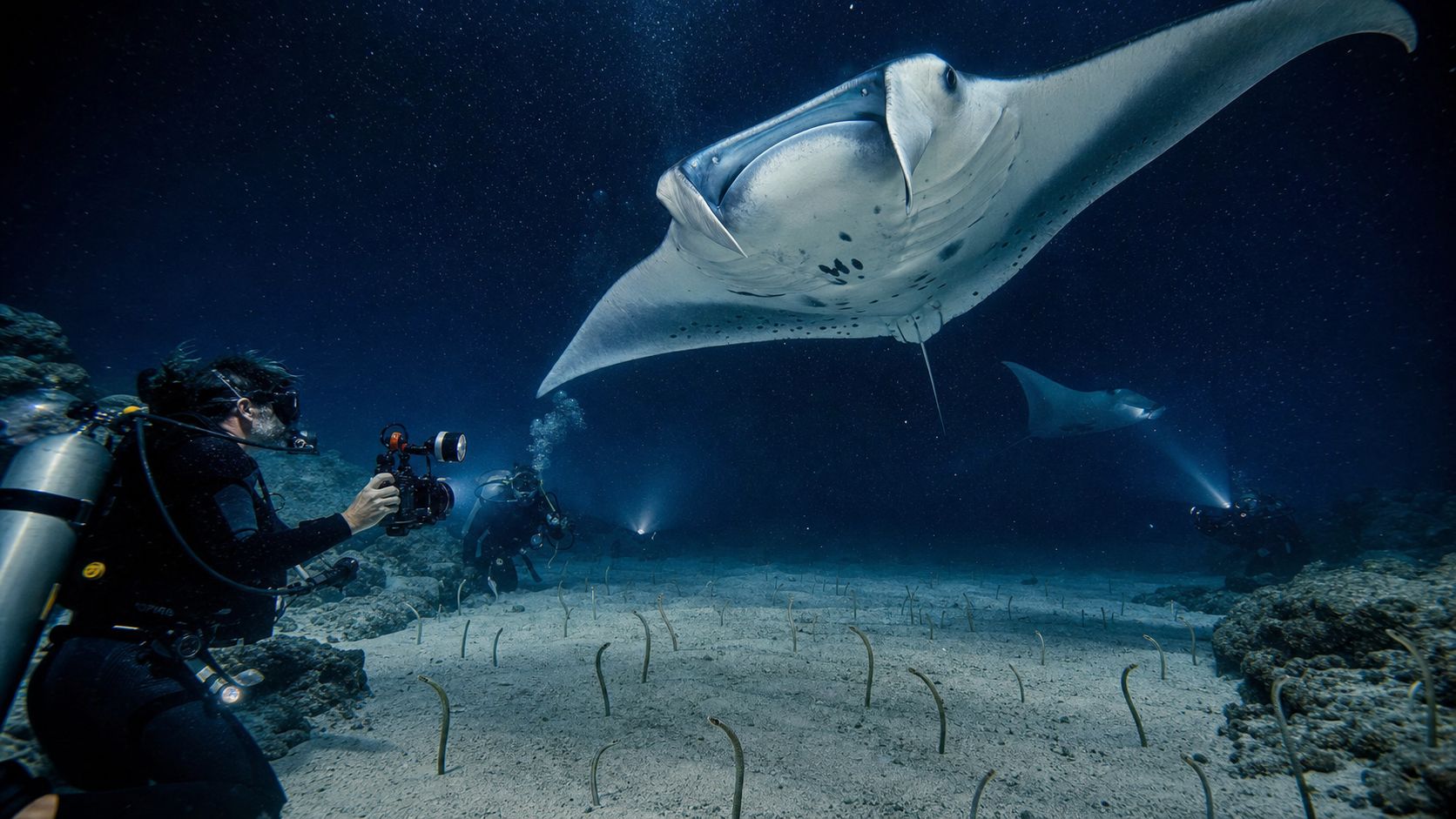
If you book one night dive in Kona, make it the manta run at Garden Eel Cove. Divers settle onto a sandy bottom at about 35 feet, and the lights draw plankton into a tight column above the group. That setup is why the dive works so consistently. You are not chasing mantas around the reef, you are creating the feeding conditions and letting them come to you. Kona Honu's manta dive guide
The site works because it is shallow, organized, and easy for a good operator to control. According to Kona Honu Divers' manta dive overview, the dive has a high success rate, and independent reporting says operators often see multiple reef manta rays on the viewing shelf with very strong encounter odds. Garden Eel Cove is the better choice because the protected setting gives divers a cleaner viewing area and more dependable structure than a looser, more exposed setup.
What the dive actually looks like
Divers hold position on the sand, and the lights do the work. Divers Alert Network describes the setup as a circle on the seabed around light boxes, with flashlights aimed toward the surface to pull plankton into view. Mantas often arrive in groups, and they can roll through feeding somersaults inches above your head. DAN on Kona's manta night dive
Stay still. Good buoyancy, quiet fins, and clean spacing matter more than excitement on this dive. The diver who settles in and watches gets the best show.
The charter itself matters as much as the site. A properly run evening should give you a reef dive first, then the manta portion after dark, so the whole night feels like a real two-dive outing instead of a rushed drop. Use the manta ray dive tours page if you are comparing booking formats, and compare it against the operator's trip description before you put money down.
My blunt take: Book Garden Eel Cove first. If an operator pushes a less controlled manta setup without a clear reason, you are paying the same money for a weaker dive.
Blackwater Diving in Kona
Blackwater diving is a separate discipline from reef diving after dark. You head offshore, descend to a tethered depth of about 40 to 50 feet, and hover above ocean depths of roughly 6,000 feet below the boat. That is the draw. For details on offshore night diving, see our blackwater diving guide.
What you see is completely different from a normal night charter. Instead of coral and turtles, you are watching larval fish, cephalopods, and gelatinous plankton rise into the lights from the deep. It is strange, quiet, and unlike anything most recreational divers have done before. If you want a broader look at conditions, our blackwater diving conditions guide covers the visibility side of the decision.
Who should book it
This is for divers who are already comfortable in open water at night and want a specialty experience, not a scenic cruise. It usually fits advanced divers better, and some operators make comfort with deep open water part of the entry bar. If you hate losing the bottom reference, skip it and spend your money on reef or manta time instead.
What the operator has to get right
Blackwater trips demand tight supervision. The boat has to manage the descent, the tether, and the group spacing cleanly, because you are out in the open ocean and there is no reef to reset your orientation. Group size matters more here than on a standard daytime charter.
Kona is one of the few places where this experience belongs on the same vacation as the manta dive, but the two trips serve different divers. If you want the offshore option, use the Blackwater Dive tour page and treat it as its own booking decision, not an add-on you squeeze in blindly.
Seasonal Conditions and Visibility Planning
The first question to answer for Kona is simple. What will the ocean be doing on your dates, and which sites match that window? That is the part most glossy dive writeups skip, and it is the part that decides whether your trip feels well planned or just lucky.
Kona visibility is often strong, but it is not the same from one day to the next. A practical Kona visibility guide will tell you the same basic thing every local crew already knows, calmer water usually means cleaner water, and the west side often gives you the clearest conditions when the swell is kind. The broad range is often described as 80 to 120 feet, with the clearest conditions more common in the calmer May to October season. Kona visibility overview
How to read the calendar
Use the summer months as your default if you care about the easiest, cleanest diving. Less surge helps the manta setup, and it gives operators more room to choose the right site instead of forcing a marginal one. Winter is still diveable. It just demands more flexibility, and you should expect the crew to make more adjustments based on what the ocean is doing.
Divers Alert Network says the manta dive runs year-round, and the summer period is the cleaner bet because surge drops and manta activity tends to be stronger. That is the seasonal pattern that matters when you are deciding whether to lock in a manta night early or leave room for a weather call. DAN on Kona manta seasonality
The simple decision rule
If you are coming during the calmer months, book manta first and fit reef dives around it. If you are traveling in shoulder season or winter, pick an operator that can change the plan fast instead of one that clings to a fixed site list. Good crews read the day, not the brochure.
Do not plan Kona like a spreadsheet. Plan it like a dive crew does, with the weather, the swell, and the site conditions in front of you.
For a practical read before you lock your dates, use the Kona visibility planning guide and then choose your sites around what the ocean is offering, not what a generic itinerary promises.
How to Choose a Kona Dive Operator
You book the operator first, and the dive quality follows. A strong Kona crew makes the week easier before you ever roll off the boat. A weak one burns time with crowded briefings, hurried entries, and site picks that ignore what the ocean is doing.
What to check before you pay
Start with the boat itself. Look for a setup that is maintained for comfort and easy entry, because hot showers, shade, and sensible staging matter on long dive days. Then look at the group size. Smaller groups usually mean better supervision and clearer briefings, while oversized groups often feel rushed from the dock onward.
The briefing tells you a lot about the operator. A good captain and guide explain entry, exit, bottom behavior, and what to do if current or surge changes the plan. If they skip those basics, keep looking.
Gear handling matters too. Ask how they maintain equipment and what happens if something needs to be swapped at the dock. Ask about nitrox if you are certified, because it is a real value for repetitive diving, not a gimmick. Ask whether the crew can change sites when the conditions change, since operators that stay flexible usually give you better water time than operators locked into a fixed route.
One practical example is Kona diving company page, which is Kona Honu Divers. It limits each dive group to six people and offers free nitrox for Enriched Air-certified divers. That format is part of the trip, not just a sales line, because it changes how much attention you get, how long the briefing takes, and how crowded the water feels.
Value signals worth asking about
Early diver discounts, free nitrox upgrades, and package pricing are fair questions. So are gear rental terms and whether the shop helps you stack trips efficiently across a week. Ask what happens if the site plan changes because of weather. The answer tells you how the boat is run.
Ask one more thing before you pay. Which dives are they willing to move, and which ones are fixed? The shops that answer clearly usually run cleaner trips, and they save you from wasting a good Kona day on a stubborn schedule.
Sample Itineraries for Novice, Advanced, and Family Divers
The easiest way to book Kona well is to decide what kind of group you're traveling with. Novices, advanced divers, and mixed families need different trip shapes, and trying to force everyone into the same schedule is how people waste good dive days.
Novice plan
Start with a confined-water check or resort course if anyone in the group isn't certified yet. Then book a shallow reef trip where the depth stays comfortable and the boat crew can focus on confidence, buoyancy, and simple route-following. If the non-divers in the group still want a Kona signature moment, add a manta snorkel night so they can see the mantas without the certification hurdle.
Advanced plan
Stack a deeper reef or lava-structure dive with a blackwater night dive if the diver has the comfort and training for it. Then add an advanced charter that gives the crew room to choose a more ambitious site. This is the itinerary for people who don't want the same mellow reef twice.
For that kind of trip, the advanced long-range dive tour page is the right place to look after you've already locked in the marquee dives.
Family plan
Use the ocean in a way that keeps everyone engaged. An introductory scuba experience works for older kids and first-timers, a manta snorkel gives the non-divers a real shared memory, and a separate boat day keeps the group together without making everyone dive. That mix is usually smarter than trying to turn one activity into the whole vacation.
Book the specialty dives early, then fit the filler days around them. That's how you avoid finding out your favorite trip is sold out after you've already built dinner plans around it.
A CTA for Kona Honu Divers. If you want Kona diving that's organized around the actual conditions instead of generic island hype, book your reef, manta, or blackwater days with a crew that runs this coast every week and can help you pick the right trip for your certification and dates.