
Kona's reputation for calm, clear diving can lead visitors to the wrong conclusion: that every site is easy to reach and every day is a good day to dive. Conditions, entry method, terrain, and your experience level matter more than a destination-wide reputation. Match the dive to the diver, and the Kona coast opens up as a collection of distinct underwater neighborhoods, from sheltered reefs to lava formations and open-ocean night dives.
Discover Kona Underwater Worlds
The difference can become clear as soon as you compare a sheltered reef with an open-water night dive. At one site, you may follow a coral slope past lava ledges, with the reef providing a steady visual reference. At another, the bottom drops away and the experience depends on staying with a guide, managing your equipment, and being comfortable without the familiar shape of the reef beneath you.
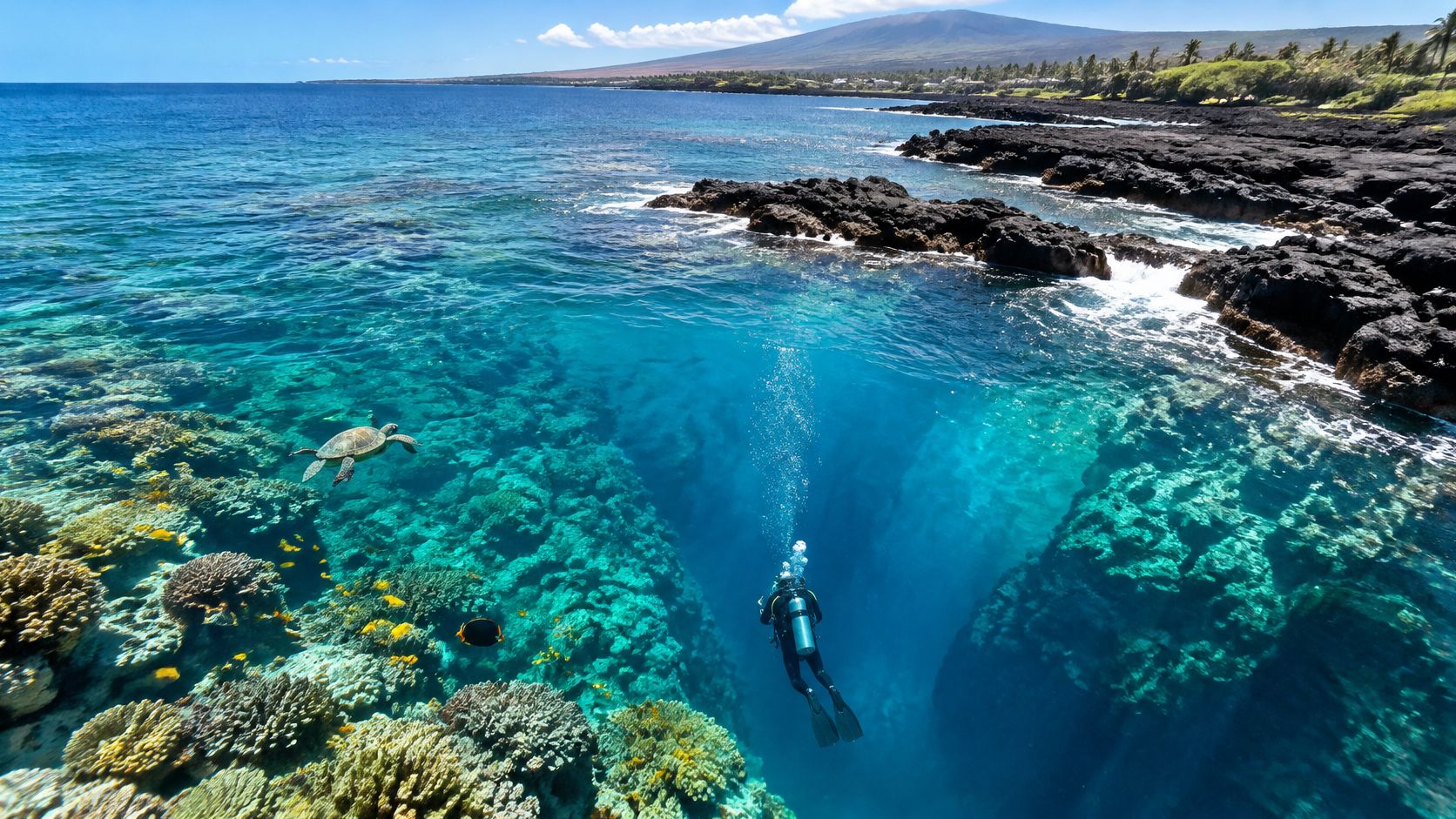
That variety is the promise of diving Kona Big Island. The leeward coast offers coral habitat, lava-formed structures, pinnacles, and specialized nighttime experiences, but those aren't interchangeable trips. A calm reef dive may suit a newly certified diver, while a deeper profile or open-water night dive demands better buoyancy, comfort in the water, and an honest assessment of your recent experience.
The decision starts with your group. Certified divers may want a guided boat dive or, if conditions and experience line up, a shore entry. Beginners can look into training or a supervised introductory experience. Snorkelers traveling with divers can join a mixed outing when the operator offers one, while experienced divers may choose more demanding terrain or a blackwater trip.
Choose by environment, not by headline. A famous site doesn't become the right site just because it's famous. Ask what the dive involves, how you'll get in and out, and whether the plan fits your skills.
Understand Kona Diving Conditions
Kona's leeward position behind Mauna Loa and Hualālai helps shelter much of the western coast from prevailing trade-wind chop and many North Pacific swells. That geography often supports calm surface conditions and clear water, but it doesn't make every site equally protected. Exposed points and open-ocean routes can have more current or swell than sheltered reef sites, and recent rain can bring suspended material into the water.
Reported visibility at protected Kona sites is approximately 60–100+ feet (18–30+ meters), but treat that as a planning range, not a promise for your chosen entry or dive route. Clarity can change with localized swell, sediment resuspension, and precipitation. Clear water helps with navigation, photography, and keeping visual contact with your buddy, but it can also distort depth perception. Hold a controlled pace, check your depth and gas, and avoid assuming that excellent visibility makes a dive simple. (Kona visibility and conditions)
Water temperature is another factor in comfort and concentration. Reported temperatures run roughly 75°F (24°C) in winter to 81°F (27°C) in late summer. A 3 mm wetsuit suits many divers, though how warm you feel depends on exposure time, repeat dives, and individual cold tolerance. If you chill easily, talk with the operator about appropriate thermal protection rather than relying on someone else's comfort level.
Start with the day's conditions
A seasonal average won't tell you whether a particular shore entry is workable or whether an exposed boat site is a good match for your group. Before committing, ask about recent precipitation, swell direction, wind exposure, and surface current. Operators can weigh those factors alongside the experience levels aboard and select or change the site accordingly.
The biology also makes Kona more than a warm-water backdrop. The U.S. Coral Reef Task Force reports approximately 640 square miles (1,658 square kilometers) of coral reef around the main Hawaiian Islands, supporting about 80 coral species and more than 1,500 reef-fish species. More than 1,250 reef-fish species are endemic to Hawaiʻi, meaning they occur nowhere else in the world. Kona's lava shorelines, caverns, pinnacles, and reefs support varied habitats within this distinctive island ecosystem. (Hawaiʻi coral-reef facts)
For a more detailed look at the visibility variables that affect planning, review this guide to visibility in Big Island scuba diving. Use it as context, then ask about the actual site and conditions for your planned dive.
Choose the Right Kona Dive Sites
Kona's sites make more sense as habitat types than as a checklist of names. Start by deciding whether you want a sheltered reef, volcanic structure, a shore entry, or a more exposed profile. Then match that preference to your qualification and comfort in the water.
Reef and lava structure
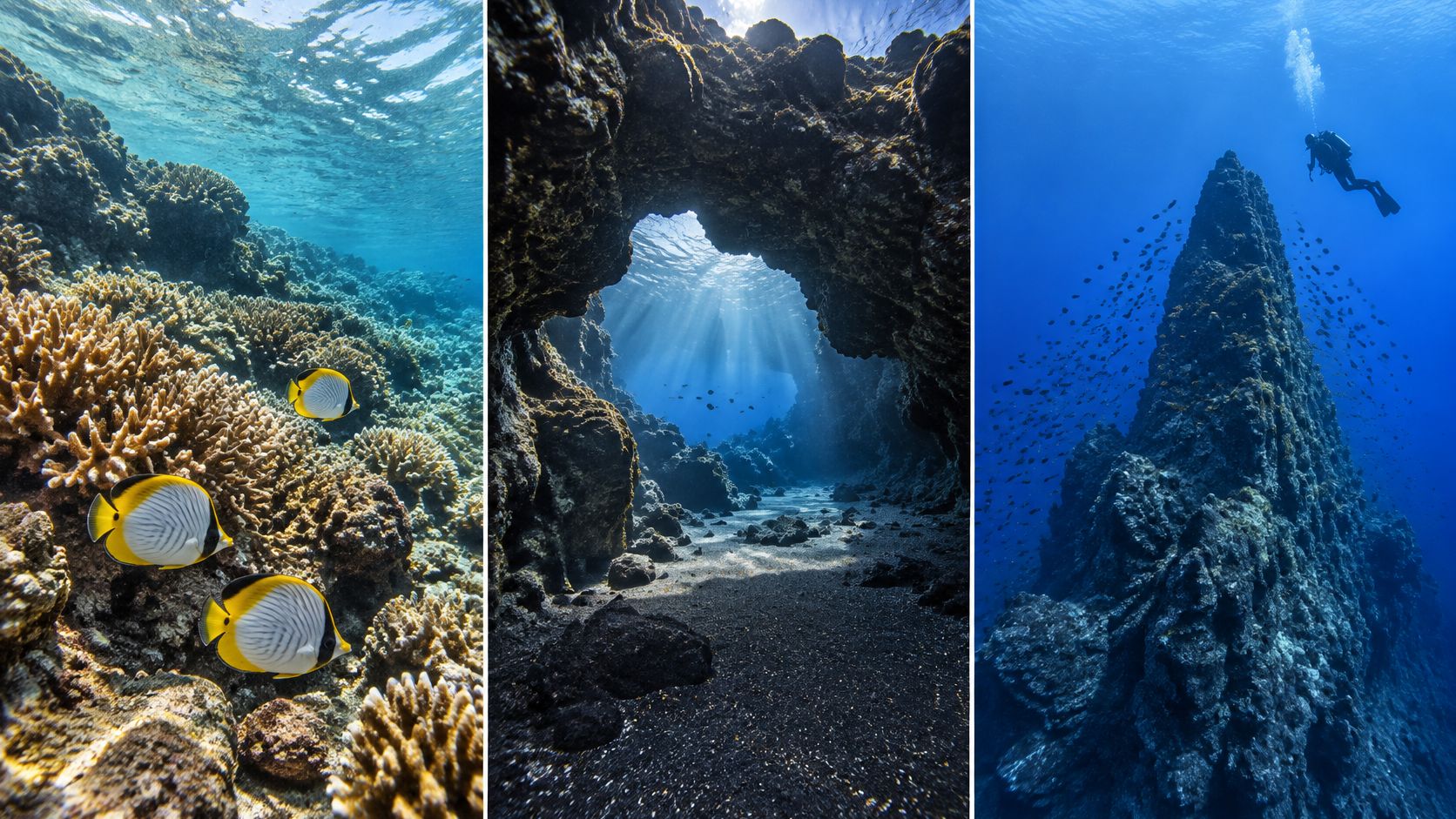
A guided boat dive over reef is a practical starting point for certified divers who want to explore without managing a shore entry. The guide can brief the route, identify the entry and exit plan, and choose a site to suit the day. A reef profile may offer coral, fish, and lava contours, but the exact conditions and wildlife vary. Ask whether the planned dive is suitable for your certification and recent experience.
Lava tubes, arches, and caverns offer a stronger sense of volcanic terrain. The draw is the shape of the seafloor: openings, shadowed walls, and ledges can change the light and give photographers striking compositions. These formations reward good buoyancy and careful fin placement. Don't treat a cave-like feature as an invitation to enter overhead space; follow the guide's boundaries and briefing.
Pinnacles and exposed points can offer a different profile, with open water and more potential for current or flow. These dives are better suited to divers who can stay with the group, monitor gas, and maintain control when the reef offers less shelter. Ask how the site's exposure affects the plan.
Shore entry or specialist trip
Shore diving can offer flexibility, but the entry itself is part of the dive. Check the route over the rocks, the exit plan, and the sea state before gearing up. A shore site that looks appealing in calm conditions may be a poor choice when swell is washing over the entry. If the entry looks questionable, choose a boat dive or postpone.
Blackwater diving is a specialist experience rather than a reef outing. Divers leave the familiar bottom and enter open water after dark, so comfort with night diving, buoyancy, and the operator's system matters. It isn't the right first night dive for someone who relies on a nearby reef for orientation.
For examples of the coast's varied underwater terrain, browse this guide to Big Island scuba diving sites. Use site descriptions to form questions, not to assume the same route or conditions will be available on your day.
Choose Manta Night and Blackwater Trips
Kona's manta experience is a planned viewing encounter, not a promise that an animal will appear on cue. At recurring sites near Kailua-Kona, including Manta Village at Kaukalaelae Point and Manta Heaven in Makako Bay, operators use lights at the surface and near the seafloor to concentrate zooplankton, the mantas' food. The light setup shapes where divers and snorkelers position themselves and how they should behave.
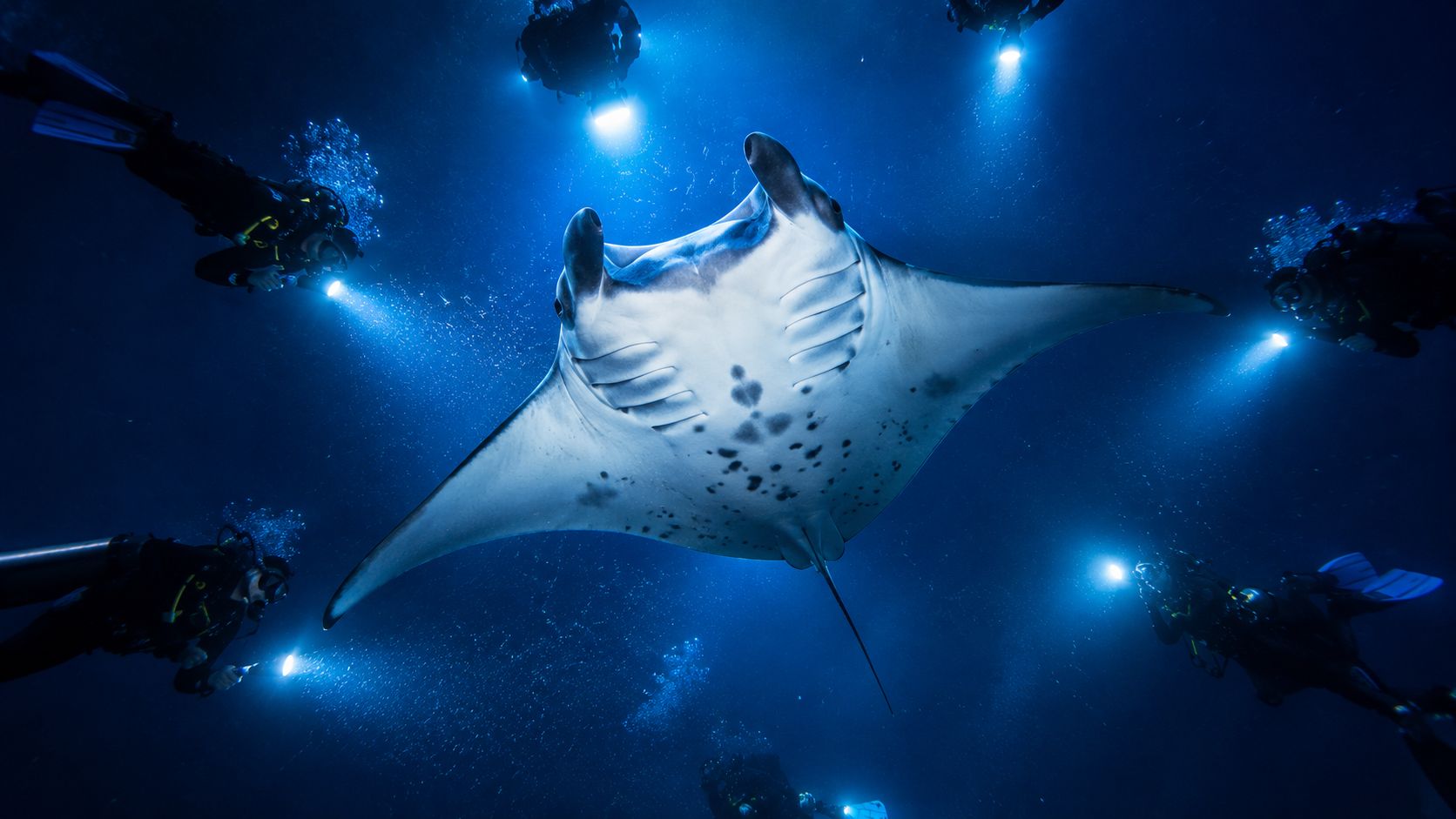
For divers, the practical skill is restraint. Stay in the designated light circle, hold your dive light above your head as directed, and don't touch, chase, or block a manta's path. Breathing control matters too: avoid directing bubbles toward an animal. Snorkelers should remain at the surface, point lights downward, and stay out of the feeding area. NOAA's viewing guidance recommends an in-water guide for snorkel groups and a flotation ring or similar device for groups of four or more. (NOAA manta-viewing guidance)
Choosing between Garden Eel Cove and Keauhou
Garden Eel Cove and Keauhou are both important Kona feeding locations. A University of Hawaiʻi study analyzed community observations collected at the two sites from 2010 through 2022. Its dataset included more than 23,000 sightings of 167 identified reef manta rays. Garden Eel Cove consistently hosted larger groups, while Keauhou showed comparatively stronger female use; the researchers also found that aggregation size tracked zooplankton density. (University of Hawaiʻi manta-ray study)
For the Kona Honu Divers manta tour, Garden Eel Cove is the preferred choice because of its protected location, better viewing area, and better reefs. That preference describes the tour setting, not a guarantee of manta activity. Weather and wildlife are still variable, and the crew's briefing should determine where you position yourself.
Blackwater diving offers a very different night. Rather than watching a feeding area from a defined viewing position, divers head over deep water to observe pelagic life rising toward the surface. The experience depends on staying calm and maintaining buoyancy and awareness without a reef beneath you. If that kind of open-water night dive fits your experience, review the Kona blackwater dive details and ask about prerequisites before booking. For a manta-focused outing, compare the manta ray dive tour with the snorkeling option if your group includes non-divers.
Compare Trips, Training, and Gear
A good trip choice balances what you want to see with what you can comfortably manage. Boat dives reduce the burden of finding a shore entry, while shore dives offer independence but require careful assessment of access and sea conditions. Training gives beginners a route into scuba; a refresher can help a certified diver return with more confidence.
| Trip Option | Best For | Main Benefit | Key Consideration | Booking Focus |
|---|---|---|---|---|
| Guided boat dive | Certified divers | A guide selects and briefs the site | Conditions and site suitability can change | Certification, recent experience, and group needs |
| Shore dive | Confident divers comfortable with local entries | Flexible access to coastal sites | Entry, exit, swell, and current need direct assessment | Site access, buddy plan, and conditions |
| Certification or refresher | New divers or divers who want skills practice | Training and coaching before more demanding dives | Course format and requirements vary | Your goals, health, and available training time |
| Rental package | Travelers who don't bring full equipment | Less gear to transport | Fit and equipment familiarity affect comfort | Equipment needs and fitting arrangements |
| Advanced boat trip | Experienced divers | Access to more demanding profiles | Prerequisites depend on the operator and dive | Certification, logged experience, and recent diving |
| Private charter | Groups seeking a tailored outing | More control over the group's plan | The route still depends on conditions and operator approval | Group abilities, interests, and boat arrangements |
| Mixed scuba-and-snorkel outing | Groups with divers and non-divers | People can share a trip without sharing a certification level | Snorkeling and scuba require different briefings | Activity options and suitability for each guest |
Kona Honu Divers offers dive tours, courses, snorkeling, rentals, private charters, repair services, free nitrox, and packages for experienced divers who want to do more diving. Check that any service suits your certification and the operator's current trip conditions rather than assuming every option fits every diver. (Kona Honu Divers dive tours and services)
If you're not certified, start by considering whether you want a supervised first experience or a full course. A certification course takes more planning, but it builds skills for future dives; a guided introductory experience is a way to try scuba without treating it as independent diving. See the options for Big Island scuba certification, then confirm course format, health requirements, and what's included directly with the operator.
Build Your Kona Dive Itinerary
A strong dive itinerary leaves room to adapt. Don't schedule every activity tightly against another commitment: a late return, a weather change, or a group member who needs a slower pace can make a packed plan stressful. Keep the priority experience clear, then build around it.
Match the day to the diver
For a first-time certified visitor, begin with a guided reef dive that suits your qualification and comfort level. If you haven't dived recently, ask whether a refresher makes sense before you commit to a more demanding profile. Keep the rest of the day flexible so you can recover, review your log, and decide how you feel before booking another dive.
An experienced diver who wants two morning dives can plan the outing around a site briefing and a realistic assessment of current conditions. Bring your certification information and logbook, and tell the crew about recent dives, preferred terrain, and any limits you want respected. Photographers should mention their interests before entering the water, so the guide can explain how the route and group pace may affect shooting opportunities.
For a manta night focus, avoid stacking the evening with unrelated activities that leave you rushed or tired. A blackwater-focused plan should be even more deliberate: confirm the operator's prerequisites and equipment arrangements in advance, and don't treat it as a casual add-on if you're uncertain about night or open-water diving.
Keep mixed groups workable
When divers and snorkelers travel together, ask whether the same outing can accommodate both, and make sure each person gets an activity-specific briefing. If the operator can't match the group's needs on one trip, a separate snorkeling plan may be more enjoyable than forcing everyone into a format that doesn't suit them.
Book in advance when a specialty trip or course is central to your plans, but avoid making your schedule so rigid that a site change becomes a problem. Confirm check-in location, rental arrangements, and how the operator communicates weather decisions. If you plan repetitive dives, tell the crew what else you've booked and follow their guidance on sequencing and recovery.
Pack for the day: certification card and logbook if you have them; exposure protection suited to the conditions; reef-conscious sun protection; a camera housing if you use one; and any personal medication you need. Bring questions about rental fit and equipment setup rather than assuming the gear will feel identical to your own.
Plan Safety and Conservation
Kona's favorable reputation doesn't make every entry safe or every activity permitted. The Old Kona Airport Marine Life Conservation District is a clear example: a sheltered cove may look inviting, but local rules, boat activity, swell, and current still shape what you can do.
The district extends from offshore of Old Kona Airport State Park to the Kailua Lighthouse, with boundaries running 500 yards seaward from the western end of the park and from the lighthouse. Within the district, removing marine life, live coral, algae, shells, rocks, sand, or other geological features is generally prohibited. Anchoring is also prohibited, and motorized vessels can't enter the designated No Boating Zone except for emergencies or enforcement. Commercial dive and tour operations need the applicable authorization. (Old Kona Airport district boundaries and rules)
Make the call before entering
The state warns that dangerous swells and currents may occur at the Old Kona Airport district during both summer and winter storms. Check the current forecast and ask the operator about the specific entry, surface conditions, and site exposure. If the briefing doesn't fit what you see at the water's edge, stop and ask questions. Changing the plan is a normal safety decision, not a failure.
Hawaiʻi's statewide dive-flag rule says that in ocean waters, divers and spearfishers using a flag may not surface more than 100 feet from it, except in an emergency. The limit in navigable streams is 50 feet. Treat that as a baseline surface-marking rule, not permission to collect wildlife or ignore local protected-area restrictions. (Hawaiʻi diving and fishing regulations)
Before the dive, assess your health, comfort, and ability to follow the planned profile. During the dive, keep buoyancy controlled, monitor gas, maintain awareness of your buddy and guide, and manage your ascent according to your training and briefing. Clear water isn't a substitute for those habits.
At manta sites, remain in the assigned viewing position and never touch or pursue animals. On reefs, don't stand on or collect coral, and keep fins and equipment clear of the bottom. Review this guide to responsible and considerate diver etiquette before you go, and follow the operator's local instructions.
Choose and Book Kona Honu Divers
Choose an operator by how clearly it can explain the trip, not by a dramatic site description alone. Ask how the crew matches divers to sites, what certification or recent experience they expect, and how they decide whether weather calls for a change. For a specialized night dive, ask about the briefing, group format, and what the crew expects you to manage independently.
Kona Honu Divers' published offerings include morning and advanced dive trips, manta and blackwater experiences, courses, snorkeling, rentals, private charters, repair services, free nitrox, and packages for experienced divers. Which one fits depends on your qualification, health, goals, and the conditions on the day. Compare the available Kona diving tours; if you're looking for a more demanding profile, review the premium advanced two-tank trip and confirm its prerequisites directly.
Questions to settle before booking
- Site and skill fit: Explain your certification, recent diving, comfort with current, and interest in terrain. Ask what the crew recommends.
- Equipment and support: Confirm rental needs, fit arrangements, nitrox availability if relevant, and whether the trip can accommodate photography.
- Group logistics: Check the meeting point, boat and guide format, storage, and whether non-divers can join.
- Weather decisions: Ask how site changes or cancellations are communicated and what happens if conditions don't suit the planned outing.
Before you book, have your certification details, preferred dive type, equipment needs, and any mixed-group requirements ready. Kona Honu Divers offers guided dives, training, rentals, snorkeling, and specialty outings that can help you plan around Kona's varied underwater terrain.
Choose a Kona trip that fits your experience, whether that's a guided reef dive, training, a manta outing, or an advanced excursion. Visit Kona Honu Divers to compare options and ask the crew which plan suits your group and the day's conditions.