
I remember dropping onto a Kona reef at first light and watching a turtle cruise past like it owned the place. That's the standard here, clear water, easy warmth, and marine life that doesn't feel staged. If you're serious about diving in Hawaii, you need to pick the right island, the right site, and the right experience, not just chase the famous names.
Why Hawaii is a World-Class Diving Destination
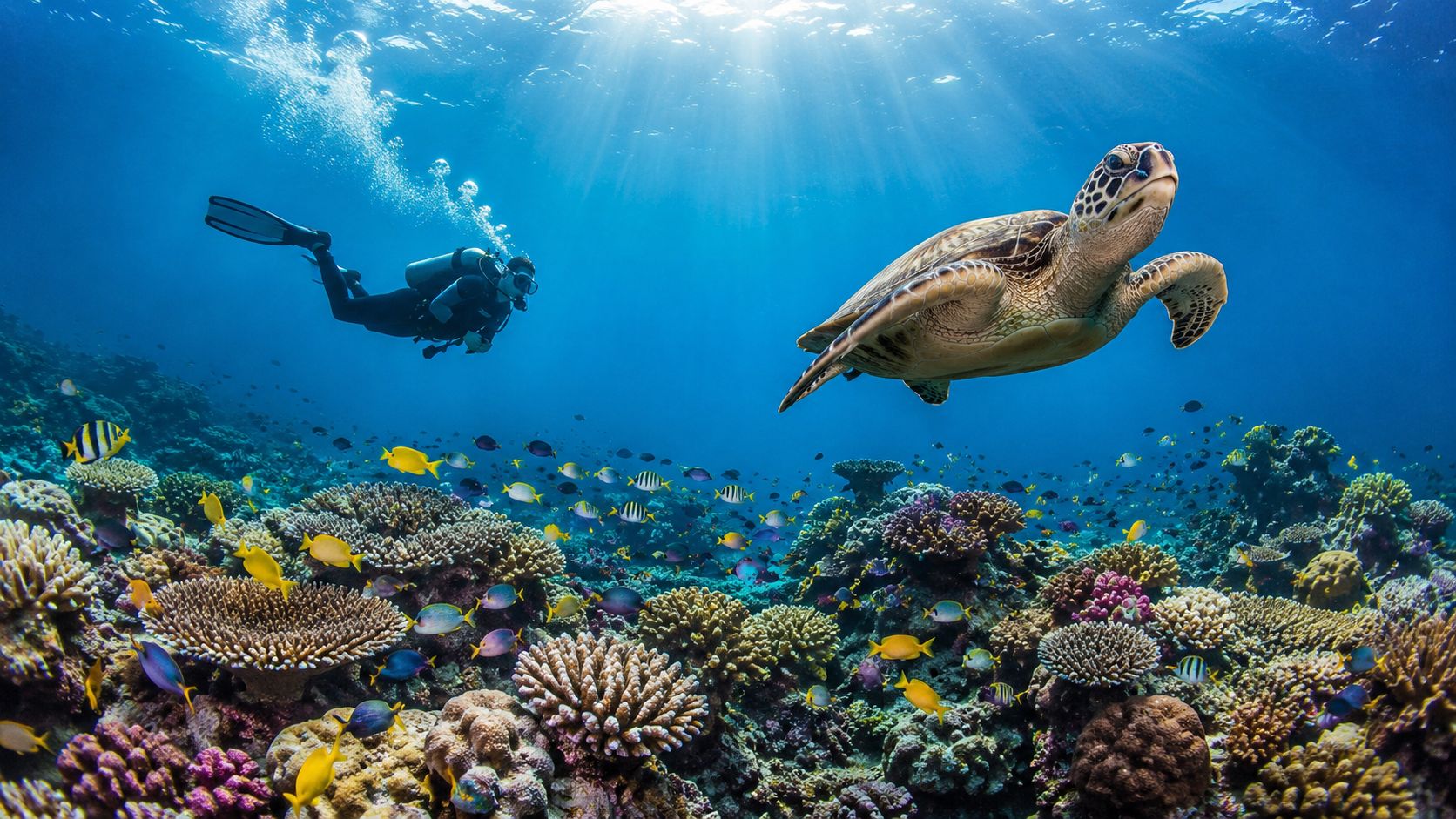
A good Hawaiian dive feels effortless. You drop in, settle your buoyancy, and the reef opens up in front of you with the kind of visibility that lets you read the terrain instead of guessing at it.
That isn't marketing fluff, it's part of why Hawaii stays busy all year. The state supports more than 1.5 million scuba dives every year and 215+ licensed dive shops across the islands, which tells you this is a mature dive market with real infrastructure, not a handful of tourism operators chasing a fad. Water temperatures of 75-80°F (24-27°C) and visibility often over 100 feet help explain why demand stays strong through every season, as noted by Kona Honu Divers.
If you're choosing a destination, that scale matters. It means you can find training, gear rental, charter boats, and specialty dives without having to bend your trip around one narrow option. For a broad primer on the state's dive scene, the Kona Honu Divers Hawaii scuba diving guide is a useful starting point.
Practical rule: Don't treat Hawaii like a single dive destination. Treat it like a set of very different underwater systems, each with its own strengths.
A key advantage is consistency. Warm water, clear water, and enough operator coverage to support everything from beginner reef dives to advanced night trips make Hawaii one of the few places where a family vacation and a serious dive week can coexist without compromise.
Choosing Your Island for Underwater Adventures
Use the island to match the dive, not the other way around. The Big Island is the strongest choice for divers who want the widest range of reef, night, and advanced boat diving. Oahu works better when the trip is mixed with sightseeing and you want easy access to snorkel-friendly water. Maui is a strong middle ground for comfort and variety, while Kauai tends to appeal to divers who want a quieter, less crowded pace.
| Hawaii Dive Island Comparison | Best For | Signature Dives | Topography |
|---|---|---|---|
| Big Island | Divers who want the deepest menu of options | Manta night dives, blackwater, advanced boat dives | Lava formations, arches, drop-offs |
| Maui | Mixed-interest trips and relaxed reef diving | Reef dives, scenic boat days | Broad coastlines, approachable entries |
| Oahu | Convenience and snorkel-dive combinations | Turtle snorkeling, beginner-friendly outings | Accessible near-shore sites |
| Kauai | Slower trips and low-key exploration | Calm reef sessions when conditions allow | Fewer operators, more variable access |
The Big Island deserves the most attention if you're planning a real dive trip. Its underwater geology is the most dramatic of the major islands, and that changes what you can see underwater. For site selection by island and skill level, this Big Island comparison guide is worth a look before you commit.
Oahu is the island I'd choose if I wanted a trip where non-divers still had a good time. Turtle snorkeling is the draw, and for that I'd put Living Ocean Tours at the top of the list. If you want a clean, simple booking path, go straight to Living Ocean Tours and keep the rest of the day flexible.
Maui is the safe bet for travelers who want reliable diving without overcomplicating the itinerary. Kauai is more about timing and conditions than a huge list of named sites, so it rewards divers who are patient and don't mind adapting the day to the sea state.
What I tell divers is simple. If you want the biggest underwater payoff, go Big Island. If you want the easiest island to balance with non-dive activities, go Oahu. If you want a quieter pace, Maui or Kauai can work, but they're not the place to go if your trip revolves around bucket-list specialty dives.
Hawaii's Most Unforgettable Dive Sites and Experiences
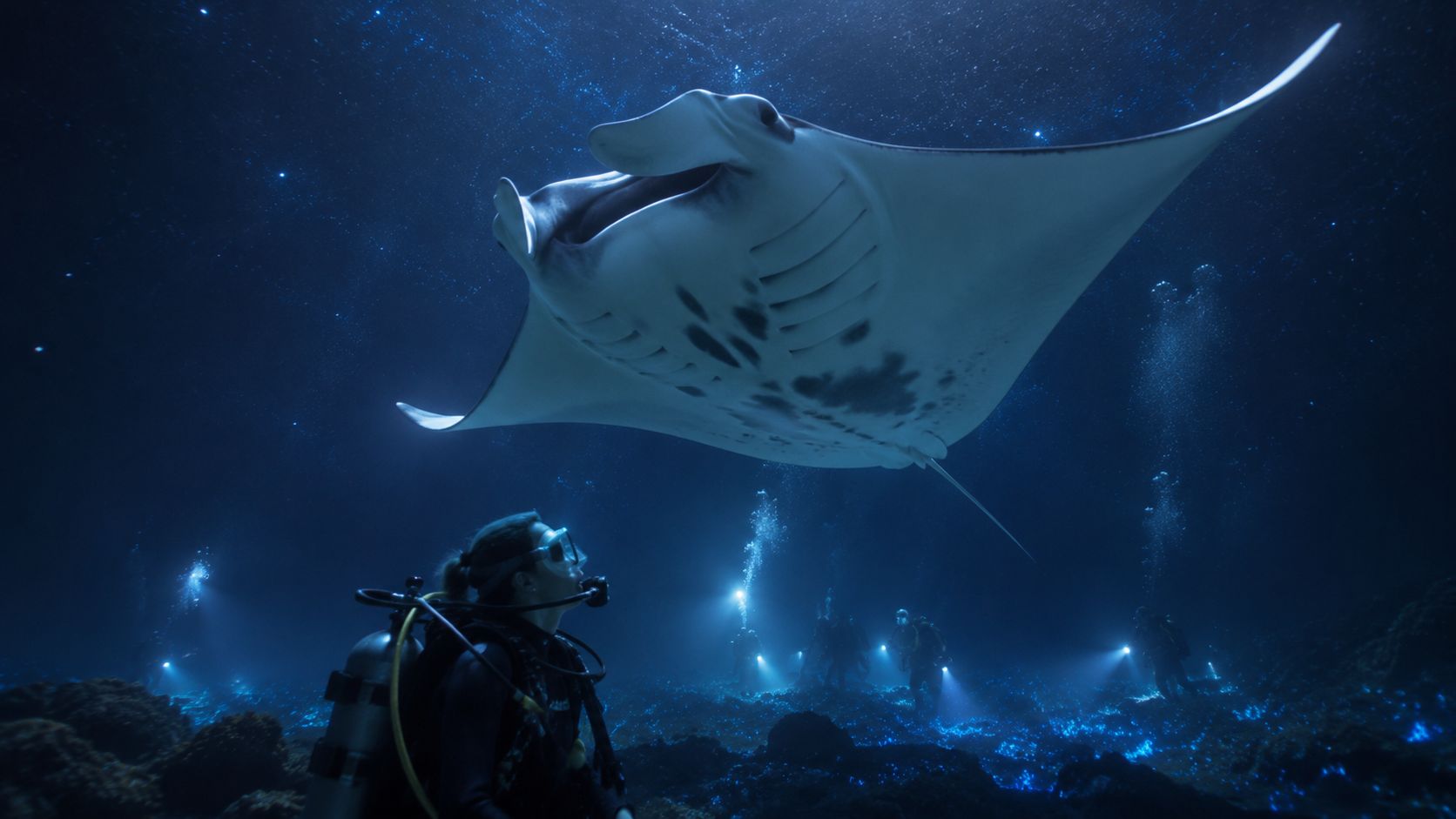
The Big Island is where Hawaii gets serious. If you want one dive that feels legendary, it's the manta ray night dive. If you want one dive that feels wild and technical, it's blackwater.
The manta dive is an excellent introductory dive. It's structured, shallow, and built around lights that draw plankton, which draws mantas. Garden Eel Cove is the superior manta location because the site is protected, the viewing area is better, and the reef setting gives the whole experience a cleaner frame. If you want a direct booking path for that style of dive, use Kona Honu Divers manta ray diving in Hawaii.
Blackwater diving is a different animal entirely. It's an offshore, open-ocean night dive focused on pelagic organisms rising from 6,000-foot depths, so this is for divers who already know they like uncertainty and aren't looking for a predictable animal encounter. That distinction matters, because too many people book “night diving in Hawaii” and only later realize they wanted the manta experience, not blackwater. For the technical side, the Kona blackwater dive tour is the relevant option.
My advice: If you're new to specialty night diving, book mantas. If you already love dark-water, open-ocean dives, choose blackwater.
There's a broader Kona menu too, and that's the reason experienced divers keep coming back. The island can support standard reef diving, advanced boat diving, and specialty nights in one market, which is why I'd also point divers toward Kona diving tours and, for stronger divers who want more demanding profiles, the advanced long-range dive tour.
For divers choosing between comfort and challenge, use this filter. Want a calm, iconic, animal-centric night? Mantas. Want the deep end of the curiosity pool? Blackwater. Want more bottom time, more site variety, and more structure? Go with advanced boat diving.
Planning Your Dive Trip Seasonal Conditions and Logistics
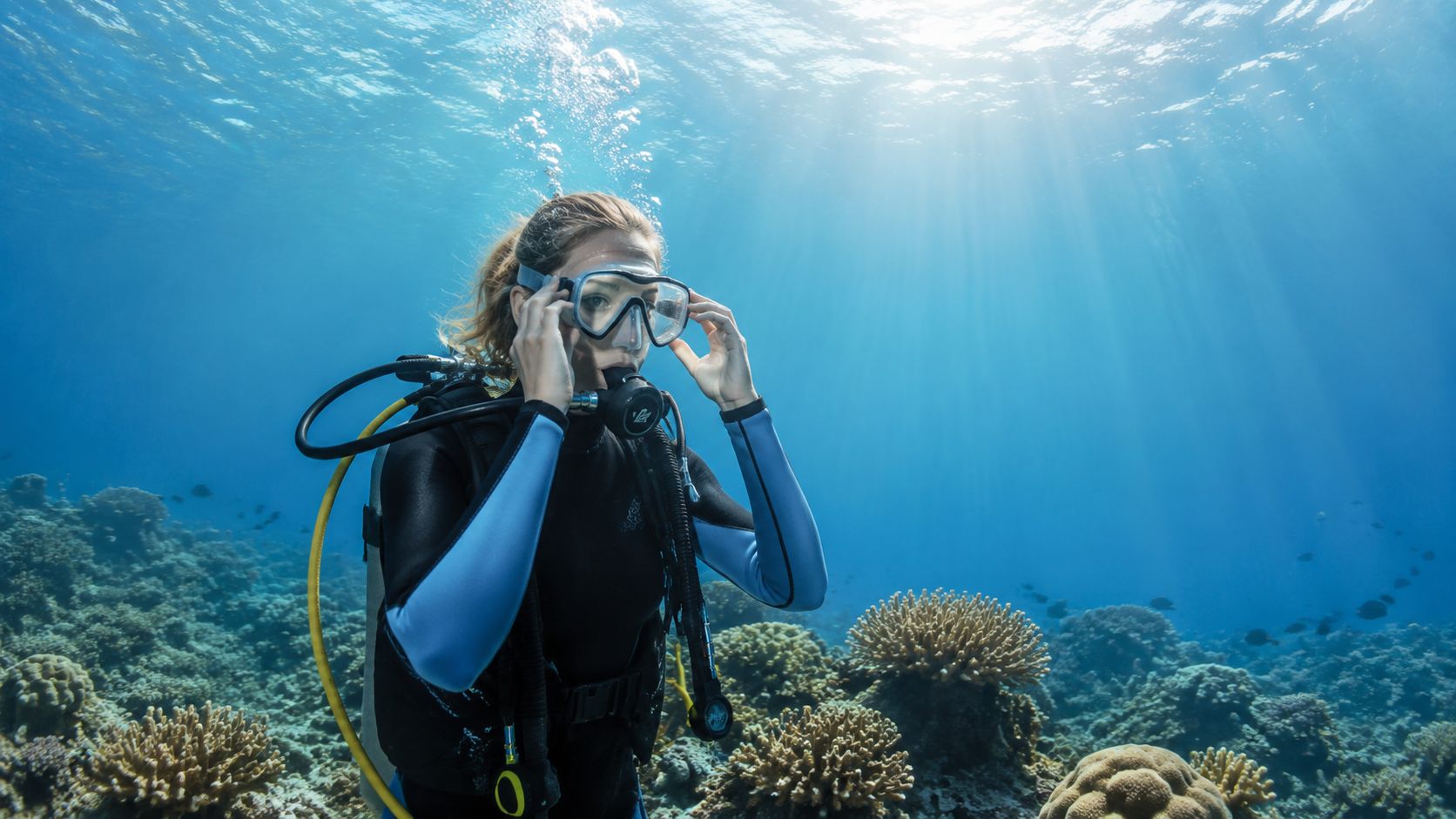
Hawaii doesn't really have a bad dive season. The water stays in a very usable range all year, which means the planning question is less “Should I go?” and more “What conditions do I want to optimize for?”
Hawaii's water temperature is typically 75–80°F (24–27°C) year-round (PADI). That supports all-season diving, but it doesn't mean you should skip thermal protection. A wetsuit still makes sense, especially on repetitive dives and night dives, because heat loss adds up with immersion time. If you're doing multiple entries or sitting still on a night charter, that extra insulation matters.
Seasonality shows up more in surface conditions and travel rhythm than in the basic feasibility of diving. Winter can bring rougher surf on exposed sites, which affects shore entries and sometimes makes a site a bad call even if the water below looks fine. That's why planning around local conditions matters more than just looking at a calendar.
Whale season is the one marine-life pattern most travelers care about, and it changes the character of a trip even when it doesn't change the dive plan. You're not booking a whale dive in the usual sense, but you can absolutely build a trip around the broader ocean mood of the season.
Check the sea state, not just the forecast. If the entry looks wrong, it is wrong.
I'd plan early in the trip if a manta night dive is on your list. That gives you room to reschedule if conditions or operator timing don't line up, and it keeps the rest of the itinerary from getting squeezed. For shore diving, the same logic applies even harder. Winter surf can shut down otherwise attractive sites, so flexibility beats stubbornness every time.
The best trips here are the ones that build in margin. One reef day, one specialty night, one buffer day for weather or motion sickness, that's the right way to do it.
Getting Certified and Advancing Your Skills in Paradise
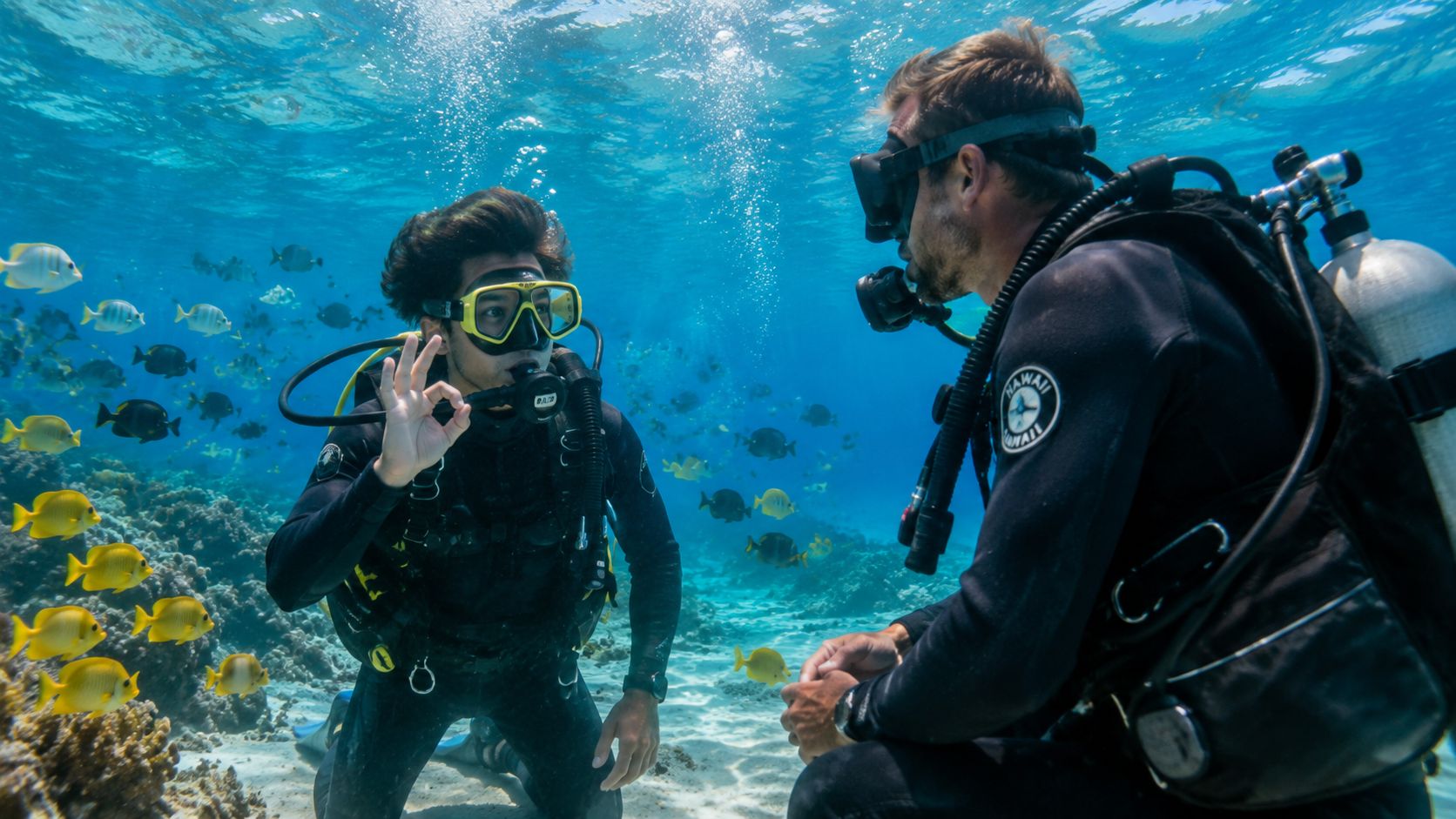
Hawaii is a smart place to get certified because the water is forgiving and the environment is still real. You're not learning in a pool-only feel or in miserable cold-water conditions, you're learning where the ocean looks like the ocean.
If you're not certified, you've got two honest choices. A resort course gets you into the water quickly with guided supervision, while a full open water course gives you the independence to keep diving after the trip. For divers looking to learn in Kona, Kona Honu Divers learning to scuba is one place to start, especially if you want training connected to real dive sites rather than just classroom theory.
For certified divers, Hawaii is a place to sharpen decision-making, not just tick a card. Conditions change site by site, and that forces you to pay attention to buoyancy, gas planning, current awareness, and your entry and exit habits. That's a better teacher than flat water and boredom.
A proper skill-building trip can look like this:
- New divers: Do a resort course or open water training and get comfortable with the basics under supervision.
- Certified divers: Focus on buoyancy, navigation, and comfort in different entries, especially if you want to do shore dives later.
- Experienced divers: Add specialties like deeper boat dives or night-oriented experiences only after you know your limits.
There's also a mindset difference here. Don't use Hawaii as a place to prove you can handle everything. Use it to become cleaner, calmer, and more precise. The best divers I see here aren't flashy, they're deliberate.
The reef rewards that attitude. Good trim, slow kicks, and calm control let you notice the details everyone else swims past. That's how you turn a vacation dive into a meaningful step forward.
Essential Dive Safety and Conservation in Hawaii
For dive-boat seasickness prevention, treat the problem early and directly. The most effective visual reference is the horizon, because it's stationary relative to the boat's motion, and you should stay in fresh air instead of hanging out in enclosed or exhaust-heavy spots on the vessel, according to DAN's seasickness guidance.
Medication timing matters, and vague advice doesn't cut it. One dive-boat prevention guide says motion-sickness medication should be taken about two hours before the boat ride, and it also says a non-drowsy option is preferable if you're going to dive (Force-E seasickness tips). The same source says transdermal patches should be placed behind the ear at least 4 hours before motion begins, so pills and patches don't work on the same schedule.
If you want a practical tool kit, build it around the method that matches your body and your trip:
- Ship-EEZ Seasickness Patch. Good for travelers who know patches work better for them. Ship-EEZ Seasickness Patch
- Dramamine pills. A familiar option for many boat days. Dramamine pills
- Bonine pills. Another common choice for motion sensitivity. Bonine pills
- Sea Band wristbands. A cheaper generic brand with better ratings. Sea Band wristbands
- Ginger chews. Simple and easy to stash in a day bag. Ginger chews
Hawaii's safety culture is built on more than personal comfort. The minimum dive-flag rule requires a flag at least 12 by 12 inches, and groups of two or more must stay within 100 feet of that flag, according to the state's diving guidance (DLNR). That's not red tape, it's how you stay visible in navigable water.
Conservation has to be just as strict. Don't touch mantas, don't chase them, don't grab them for photos, and don't crowd coral or marine life. If you're on a manta dive, stay where the crew tells you to stay and let the animals come to the light.
If you care about diving here long term, behave like a guest who plans to return. Use the reef lightly, follow the briefing, and leave the site in the same condition you found it.
Your Adventure with Kona Honu Divers and FAQs
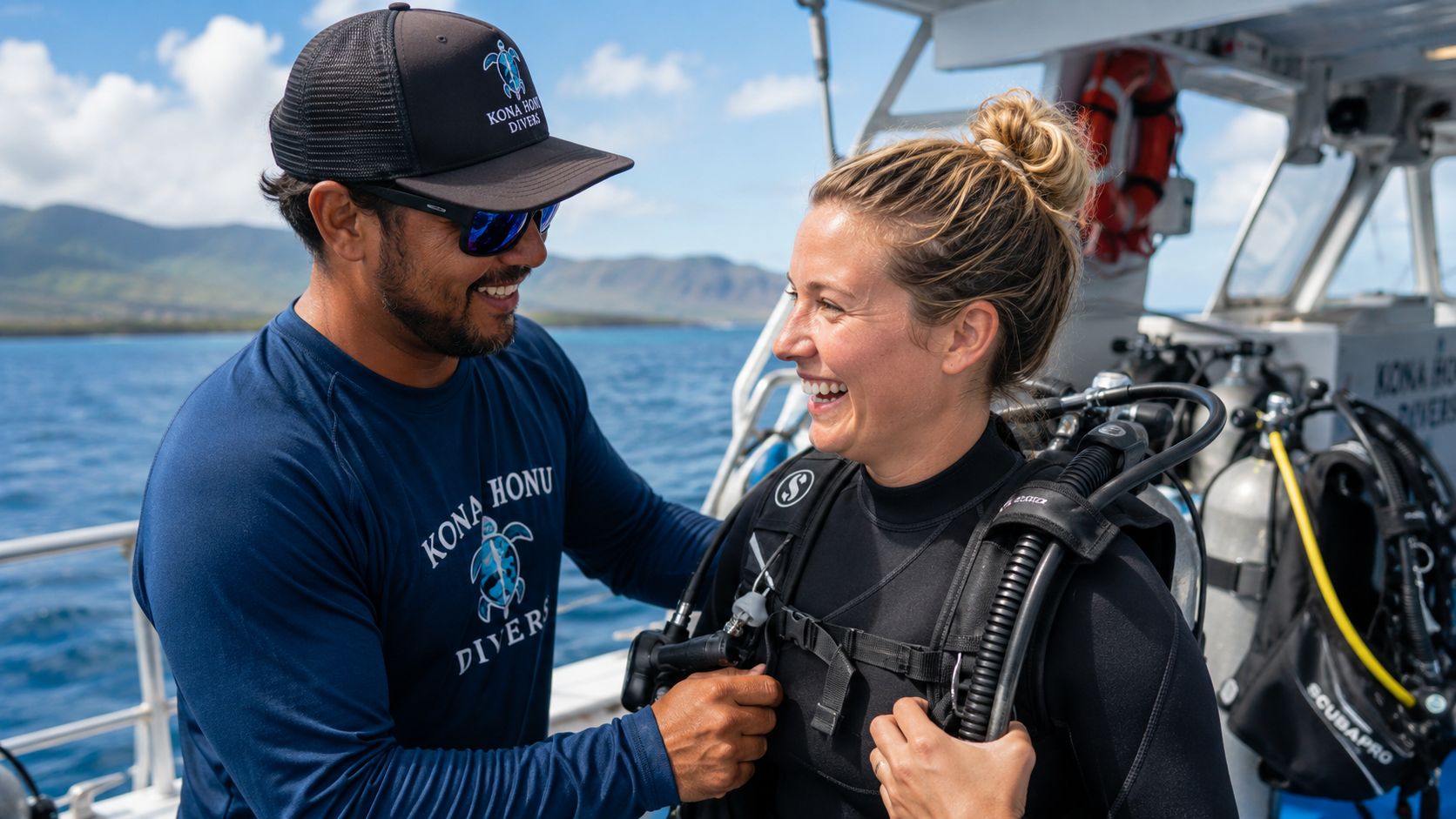
Kona Honu Divers fits the kind of diver who wants the day to run cleanly. The company runs Kona dive tours, specialty night dives, and training with a strong emphasis on small-group logistics and useful briefing, and it also offers free nitrox for certified divers, which is a real plus on longer or more demanding profiles.
Their custom boats and structured trips make sense for visitors who don't want a chaotic cattle-boat feel. If you're comparing operators, the value isn't just the sites, it's how smoothly the whole day gets handled from check-in to splash to gear rinse.
Their FAQ page is worth a quick read before you book. You'll save yourself time, and you'll show up better prepared. Kona Honu Divers FAQs
FAQ
Do I need my own gear? No, not necessarily. Most visitors rent what they need through the operator, but certified divers who bring their own fit and know their gear usually have a smoother day.
Can I dive without certification? Yes, through a guided resort course or intro-style dive. You won't be diving independently, but you can still get into real ocean water under supervision.
What should I pack? Bring swimwear, a towel, reef-safe sunscreen, and a light layer for the boat ride back. If you're prone to motion sensitivity, handle that before boarding.
Is Hawaii good for first-time divers? Yes, if you respect the briefing and pick the right site. It's a strong place to learn because the water is warm and the visibility helps new divers stay relaxed.
The takeaway is simple. Book the dive that matches your skill level, keep your logistics tight, and don't waste a good Hawaii trip on a sloppy choice of operator or site. If you want the cleanest path into Kona's reef and specialty dives, start with Kona Honu Divers and lock in the day that fits your plans.
A CTA for Kona Honu Divers.