
You landed in Kona with a certification card in your dry bag and a forecast that looked calm yesterday. This morning the west-side swell is up, a brown stain sits off the shore entry you saved, and the night manta trip you booked is the one you came for. Diving Hawaii's Big Island is reliable enough that people treat every day as a yes. It isn't. The coastline mixes easy reef, unguarded lava entries, and a small, site-faithful manta population that will not refill itself from Maui.
I would decide the dive before I decide the souvenir photos. Match the site to your card, the entry to today's surface, and the night trip to how you plan to sit still in the water. The pages below turn those three calls into a booking you can keep.
Kona Dive Sites at a Glance
The U.S. Coral Reef Task Force reports that Hawaii's reefs support more than 1,500 reef-fish species and are managed through 13 Marine Managed Areas with local or federal rules. That is why a single Kona day can stack lava rock, coral, endemic fish, and open-ocean animals along a short stretch of coast. Those managed areas can set rules on fishing, anchoring, and wildlife, so the dive is part of active protection, not an unmanaged seascape.
For most readers, Garden Eel Cove is the site to book first. It is a boat night dive, the viewing area sits in a protected pocket, and the reef around the lights is better than the alternative night site. You do not need a deep card. You do need to be comfortable kneeling or hovering after dark while animals loop overhead.
| Site | Dive type | Best for | Entry |
|---|---|---|---|
| Garden Eel Cove | Night manta dive | First-timers and photographers | Boat |
| Keauhou Bay | Night manta dive | Divers interested in female-heavy sightings | Boat |
| Old Kona Airport Marine Life Conservation District | Reef dive | Beginners and shore divers on calm days | Shore |
| Deep pinnacles | Deep drift dive | Advanced certified divers | Boat |
| Blackwater (open ocean) | Night blackwater dive | Experienced night divers | Boat |
| Lava tubes and arches | Morning 2-tank reef and lava dive | Certified divers | Boat |
How the other rows differ
Keauhou Bay is the second night feeding site. Females visit it out of proportion to the overall mix, so the two coves are not interchangeable backups. Research-minded divers may want that difference. Groups chasing a fuller feeding scene should stay with Garden Eel Cove.
Old Kona Airport is the shore option. A partially protected cove at the northwestern end of the beach is the usual step-in for snorkelers and shore scuba. Use it on a calm morning, not as a pride entry when the shelf is dumping.
Deep pinnacles, blackwater, and lava tubes sit on boat days for certified divers. Pinnacles are drift dives. Blackwater leaves the reef entirely. Tubes and arches reward a diver who can hold position without a hand on the rock.
Match each row to your certification, your night-dive log, and your comfort in current before you pay. The same coast runs gentle reef profiles and demanding drift profiles on the same morning.
Certification and Gear Rental Choices
Bring the card that matches the boat, not the card you plan to finish next month. For most regular charters, we require at least an Open Water Diver certification from PADI, SSI, or NAUI, which allows diving to 60 feet (18 meters) with a buddy. You must bring your C-card on the day.
| Trip | Minimum certification | Confirm before booking |
|---|---|---|
| Morning Introductory Scuba Dive | No certification (introductory) | Instructor-guided entry and depth |
| 2-Tank Local Morning Dive | Open Water Diver (PADI, SSI or NAUI) | Diving to 60 feet with a buddy and certification card |
| Manta Ray Night Dive | Open Water Diver | Night-dive comfort and light requirements |
| Black Water Night Dive | Open Water Diver | Night-dive experience and current conditions |
| Premium Advanced 2-Tank Trip | Advanced certified diver | Depth and drift-dive experience |
The morning introductory dive is instructor-guided, so a non-certified partner can join without a full course. If you have been out of the water, book a refresher or one of our Kama'aina dive courses before you step onto a deeper or drift profile. Our Big Island scuba certification page is the place to line that up.
Gear, service, and gas
Renting makes sense for a trip. If you dive often, bring your own mask, fins, and exposure suit so the fit is already solved. Ask that rental gear has been serviced and recently checked. A computer can be requested when you book. We confirm whether one is free that day and any small extra cost.
Nitrox extends no-decompression time and needs its own certification for most divers. We include free nitrox for enriched-air divers, so say so before the tanks are filled. We also strongly recommend dive insurance, and you should check that the policy covers the depth of the trip and an evacuation if you need one.
Pack the card, a logbook, reef-safe sunscreen, a towel, and a primary dive light plus a backup for any night boat.
Seasons, Visibility and When to Call Off a Dive
Diving in Kona is available year-round, with warm water and generally clear visibility in every season. Season changes the entry and the swell. It does not decide whether the island is "in season." Our notes on the best months to scuba dive in Hawaii walk the same calendar in more detail.
| Season | Typical conditions | Best-fit dive |
|---|---|---|
| Summer (May to September) | Usually calmer west-side water, longer shore sessions | Shore dives and beginner reef dives |
| Winter (November to March) | Swell can build on the west side, more surge at entries | Boat-based dives and experienced divers |
| Shoulder months (April and October) | Variable day to day, check the forecast | Flexible boat plans with a backup shore dive |
West-coast swell direction and wind shift by the day. A shelf that was flat last Tuesday can be a washing machine this Tuesday. Heavy rain sends runoff, triggers brown-water advisories, and can shut ocean access for a day or more while visibility collapses.
Go or no-go: "Usually calm" is a reputation, not a permit for today's entry.
Three calls before you kit up
- Shore only when the surface and the step-in are calm. If sets are breaking on the lava, that day will not magically settle between waves.
- Switch to a boat when the shore entry is rough and the harbor side is still workable. Boat sites are chosen for the morning, not for the photo you saved.
- Cancel rather than force a shore entry through surf. Pride entries are how people get hurt on rock that has no sand and no lifeguard.
Nearly all dive entries are unguarded. State guidance requires divers, snorkelers, and freedivers to use a dive flag and remain within 100 feet of it in ocean waters, as shore-diving guidance for Hawaii spells out. The go or no-go call sits with you and the crew, not with a tower.
Manta Ray Night Dives and Why Garden Eel Cove Leads
Garden Eel Cove is the superior choice for most manta night tours. The cove is protected, the viewing area is cleaner, and the reefs around the light field are better than what you get by treating every Kona night site as equal.
After dark, lights pull plankton toward the surface. Reef manta rays, Mobula alfredi, arrive and feed in slow loops above divers who stay put. Nobody baits the animals. The session is a feeding event you are allowed to watch, not a show you steer.
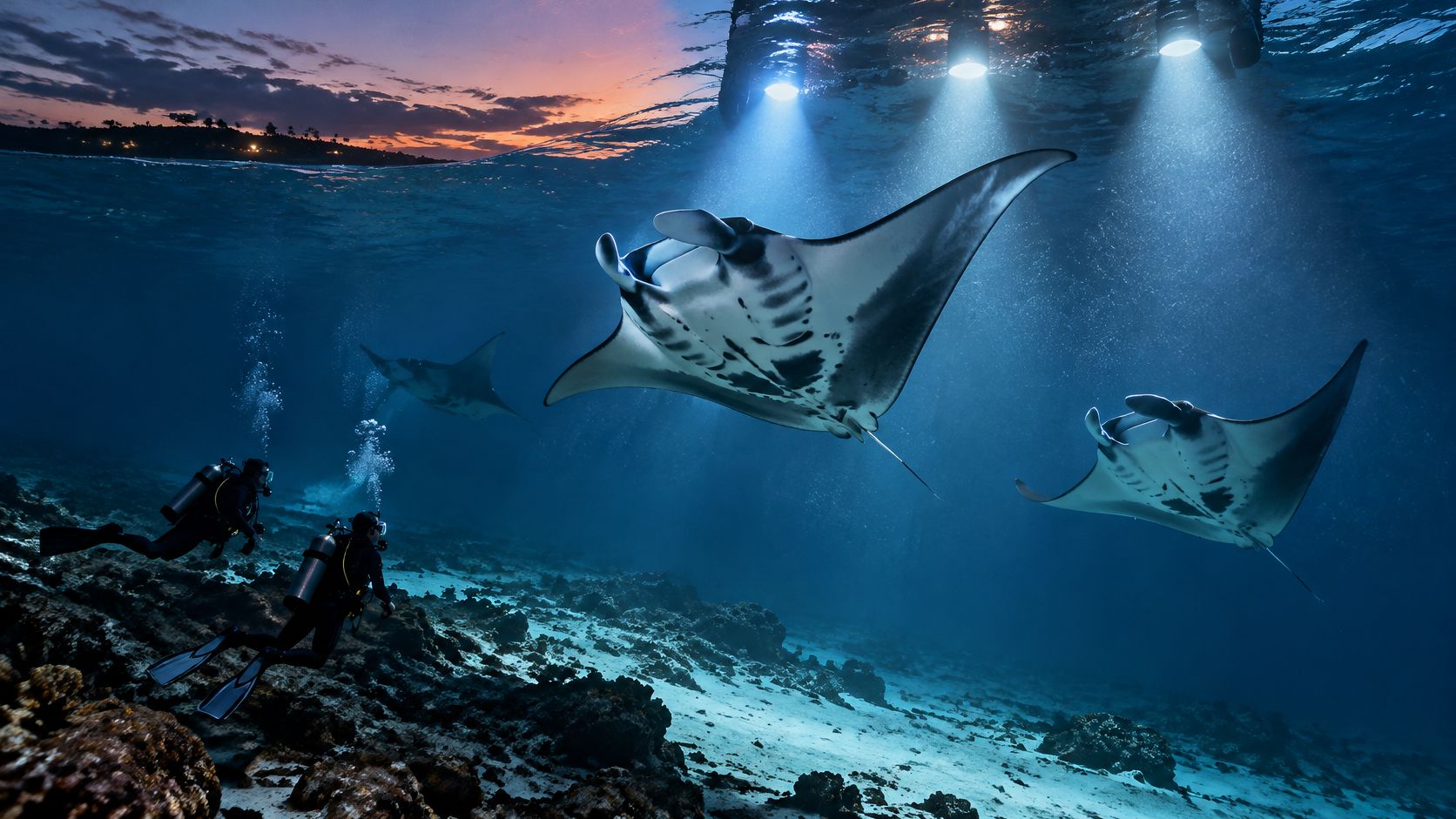
A University of Hawaiʻi study analyzed community observations from 2010 through 2022 at Garden Eel Cove and Keauhou. The set held more than 23,000 sightings of 167 individually identified manta rays. Garden Eel Cove consistently supported larger aggregations. Keauhou was visited disproportionately by females, which points to different ecological roles rather than a spare pier if one cove is windy.
Why the plankton night beats the calendar
Aggregation size tracks zooplankton density, with an overall sex ratio near 1 to 1. A quiet, plankton-rich night matters more than the month printed on your ticket. Females show high site fidelity and males move more, yet both aggregations stayed relatively stable across years of tourism during that study window. Stable does not mean unlimited. It means the cove still works when groups behave.
Pack a dive light you can aim at your own gauge, a warmer layer for the boat ride home, and the skill to hold one spot in the water column. Chasing a passing wing ruins the loop for everyone behind you.
Book the night as a 2-tank manta dive and snorkel so snorkelers can watch from the surface lights while certified divers watch from below.
Blackwater, Lava Tubes and Pinnacles for Experienced Divers
These three profiles fail for the same reason. People book the story and skip the skill check.
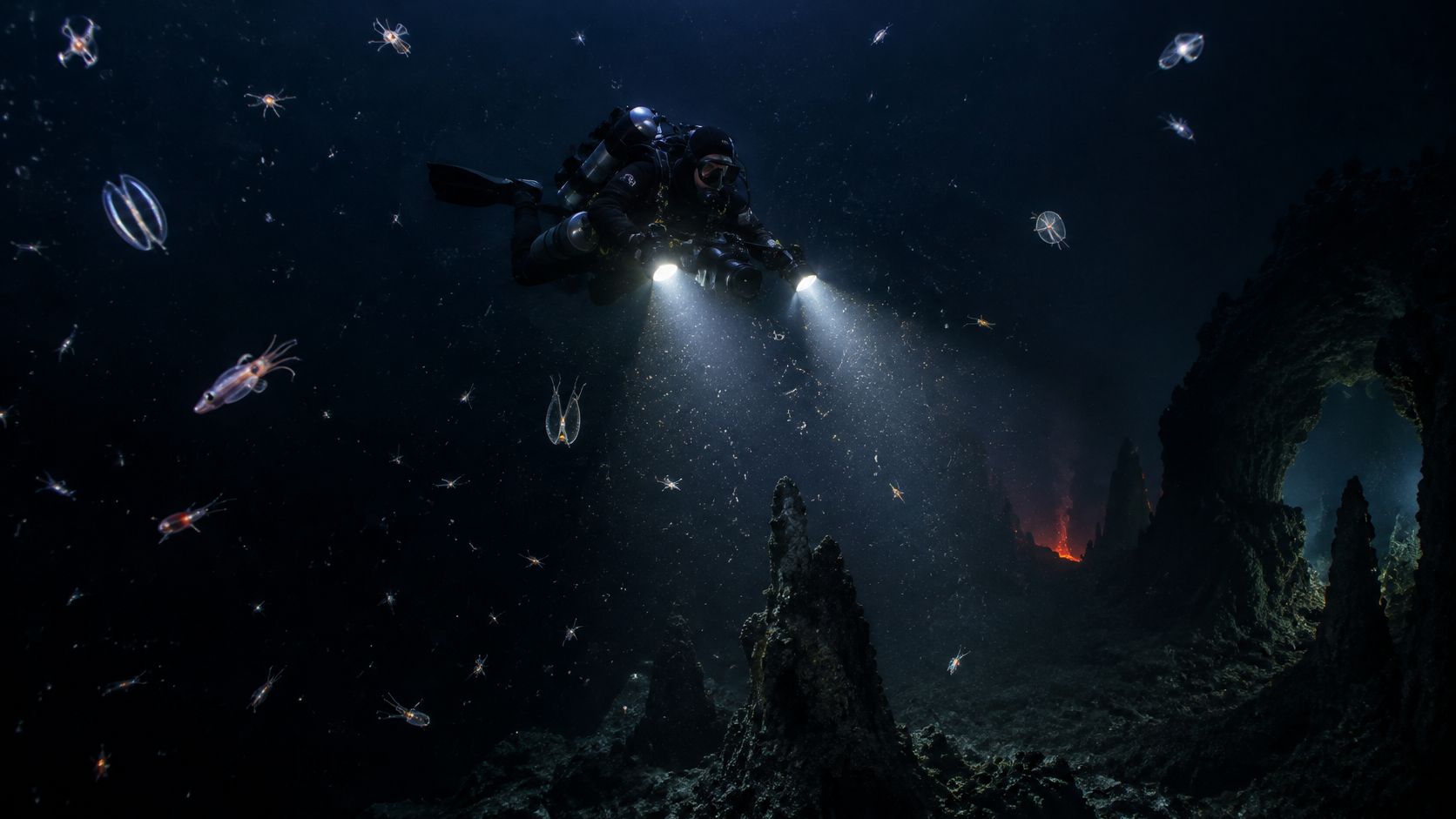
Blackwater is a night dive in open ocean, off the reef, often over very deep water. Your reference is a light, a buddy, and a line back to the boat. There is no wall to follow if you lose track of depth. Read the Kona blackwater dive notes before you treat it as a pretty add-on, and use the Black Water Night Dive page when you are ready to reserve it.
Lava tubes and arches are low-light passages in old flows. The reward is the shape of the rock. The cost is buoyancy. A fin kick on the ceiling dumps silt and ends the photo for the buddy behind you. A primary torch plus a backup is part of the kit, not a nice-to-have.
Deep pinnacles are rocky peaks where current can build without much warning. Treat the dive as a drift. Agree a turn pressure and a turn time before you leave the surface. Our advanced dive tours are built around deeper sites and drift dives, and the premium trips go to remote, pristine locations rather than the local reef circuit. Compare that with the standard 2-tank morning profile, which stays on coral gardens, lava tubes, and arches for Open Water divers. The Premium Advanced 2-tank trip is the one that asks for the deeper card.
A four-line self-check
- Current card: Advanced for the premium drift day. Open Water is the floor for blackwater, and night experience still has to be real.
- Night log: If your last night dive was a pool, pick the manta reef night first.
- Current comfort: If you hate being moved, do not pick a pinnacle drift.
- Dark signals: You should read a light OK, a problem, and a turn-around without a slate essay.
If any line is a no, take the local morning two-tank and save the specialty for a later day in the same week.
Responsible Manta Encounters and Underwater Photography
Stable night counts are not a permission slip for unlimited boats. Reporting on West Hawaii's manta group describes strong site fidelity, with females that may reproduce at the island where they were born. This relatively isolated population is not easily topped up from another island. Aggregation sizes stayed broadly stable as tourism grew, and the same reporting names boat strikes, habitat loss, and fishing-line entanglement as ongoing threats.
So drop the question "Will I see a manta?" Ask how you watch one without adding to that pressure.
What good positioning looks like
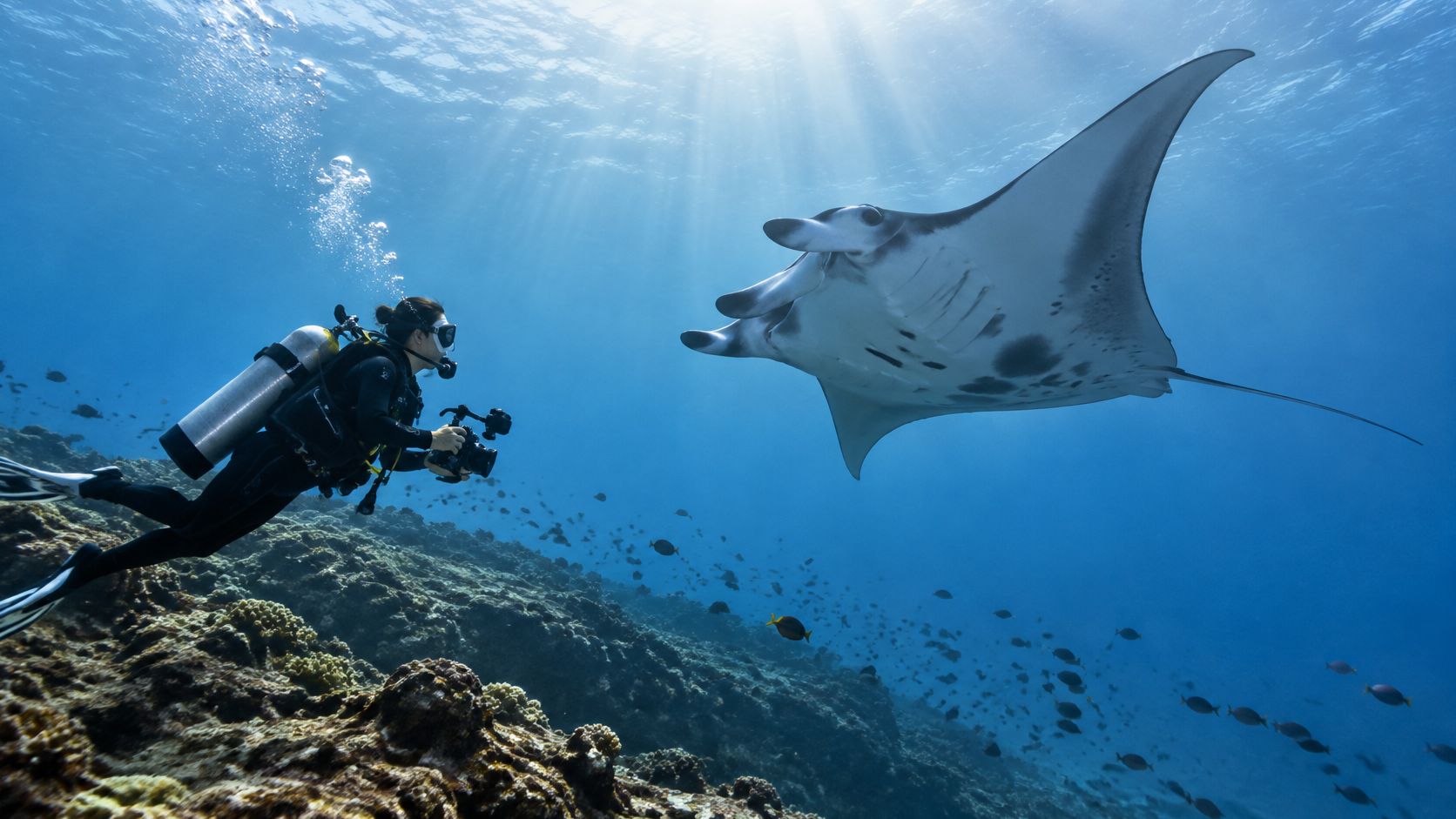
Stay in the spot you were given. A manta that has to dodge a camera dome will leave the light field, and the next group inherits an empty circle.
- Hands off. No touching, no riding, no "just a fin."
- No chase. If it leaves the light, it left. You do not follow into the dark.
- Open the column. Do not block the flight path between the surface lights and the divers on the bottom.
- Aim light at the reef or your gauges, not into the animal's eyes.
- Buoyancy first. Silt from a knee plant wrecks the shot and the feeding loop.
For cameras, use low-light settings, a stable hover, and a side-on frame. A strobe fired straight into the belly is the shot that looks dramatic on a screen and worst in the water. Our considerate diver etiquette page is the longer version of the same rules.
Photo-ID and notes on injuries, crowding, and how clean the encounter felt are useful monitoring, not trivia. If you see line, a fresh cut, or a boat that boxed the animals in, tell the crew before you leave the dock. That record is how a small local population stays visible without being used up.
Boat Features, Shore Entries and Booking Logistics
Confirm the boat before you fall in love with the site list. Ask about the dive platform, shade, a restroom, the group cap, and how many divers share one briefing. Those details decide whether a five-hour day feels roomy or like a gear pile. Our boats are set up with hot showers, shaded seating, and storage, and dive groups stay small enough that the briefing is a conversation.
Shore days versus boat days
The Old Kona Airport Marine Life Conservation District runs from the old airport out toward the Kailua Lighthouse, with a boundary 500 yards seaward. The northwestern cove is the usual shore entry. A second entry at the southeastern end uses a basin in the lava and suits calm to moderate water only. Our guide to the best shore diving on the Big Island is the checklist for that call. The entry is unguarded, so stay on land when the surface is messy.
Boat days are how you reach manta lights, blackwater, and pinnacles. Shore gear cannot get you there. Use the seasonal go or no-go rules, then pick the hull.
Mixed groups: Snorkelers and ride-alongs can join our dive boats. Tell us at booking if the party includes snorkelers so the headcount and the seating work.
Booking order that holds:
- Book early. Seats and departures move with weather and group size.
- Pick a morning departure for a first ocean day. You get the calmer window and a long surface interval before any night plan.
- Confirm pickup or harbor, the clock time, and which gear is included before you drive.
- Carry a dive flag on any ocean dive and stay near it. That rule covers snorkelers in the party too.
Private tours and multi-day packages exist when a standard departure does not fit the group. Ask by phone once the dates are real.
Sample Itineraries for Kona Dive Days
Beginner week. Day one is the morning introductory dive, instructor in the water, no card required. Day two, if the shelf is calm, is a shore dive at Old Kona Airport with a flag and an easy turn-around. Take a rest day, then join the night boat as a snorkeler or, if the intro went well and the crew agrees, stay with guided shallow time rather than inventing a deep night.
Certified week. Start with the 2-tank local morning dive on coral, tubes, and arches. Day two is the manta night at Garden Eel Cove, not a second deep day stacked on no sleep. Put a rest day after any deep or night dive before you fly or drive to altitude.
Experienced week. Spend day one on the local two-tank and watch the ocean. Day two can be the premium advanced trip if the current forecast matches your drift comfort. Put blackwater on day three only after that check, not as the arrival-night reward.
How a dive day with us actually runs
You arrive and set up gear. The briefing covers the site, the entry style, and the day's limits. Dive one is the deeper or more condition-sensitive site. You take a real surface interval. Dive two is the more relaxed profile. Snorkelers can be on that same boat. Say so when you book so we do not discover the extra masks at the dock.
Build the rest day into the reservation, not into a guilty apology after you are tired.
Book Your Kona Dive Day with Kona Honu Divers
Book with Kona Honu Divers if you want morning reef time, manta night dives, blackwater, and advanced trips from one Kona operation. We are the highest-rated and most-reviewed dive shop in Hawaii, and the schedule fits people who want that range with a full-service crew. The diving tours page lists what is on the board.
Call 808-324-4668 if a date, a certification question, or a mixed snorkel party needs a person. Read your card against the certification table, then read the season and the surf, before you lock the day.
Kona Honu Divers runs guided reef, manta night, blackwater, and advanced boat days on Hawaii's Big Island, with rentals and courses when your card or your time out of the water needs a reset. That is the practical way to plan diving Hawaii's Big Island around real entries, real limits, and a manta population worth leaving undisturbed. Visit Kona Honu Divers to match a departure to your certification and the water you will meet.