
You're probably doing what most divers do before a Hawaii trip. You've got multiple tabs open, every operator says their dives are amazing, every manta tour sounds identical, and nobody is being straight with you about when conditions provide good value for your money.
So here's the blunt version from a dive instructor's perspective. The Big Island is one of the most rewarding places you can dive, but you'll get a much better trip if you plan around seasonality, operator fit, and dive type, not just pretty marketing photos. Good timing gets you clear water and smooth nights. Bad timing can turn a bucket-list manta dive into a murky, disappointing boat ride.
If you want an unforgettable trip, plan for the water that Kona provides, choose dives that match your comfort level, and stop pretending every advanced experience is suitable for everyone.
Understanding Diving on the Big Island
You land in Kona, throw your bag in the hotel, look out at the lava coastline, and it doesn't scream “lush tropical reef.” Then you hit the water and the whole island makes sense. The volcanic topography continues underwater, and that's what gives diving Big Island its character. You're not just swimming over coral heads. You're moving through lava formations, reef fingers, drop-offs, and terrain that feels raw and alive.
The scale of the local dive scene matters too. The Big Island brings in over 150,000 dive tourists annually and supports about 100,000 certified scuba dives each year through more than 50 professional dive shops and charters, according to Kona Honu Divers' Big Island scuba overview. That level of traffic tells you two things. First, this isn't a fringe destination. Second, the infrastructure is built for everyone from first-timers to seasoned divers.
Why Kona works so well
The west side is the practical center of diving Big Island because it gives divers consistent access, warm water, and short runs to productive sites. Water temperatures typically stay around 75–80°F (24–27°C) on the island, as detailed in that same Big Island scuba diving guide. That means you're not planning your whole trip around a tiny weather window.
A lot of destinations make you work hard for a good dive day. Kona usually doesn't.
Practical rule: If you want reliable diving with the least logistical friction, stay on the Kona side and book boats that can adapt sites to conditions.
What divers usually underestimate
They focus on fish lists and ignore geography. That's a mistake. The Big Island's coastline puts deep water surprisingly close to shore, which is a major reason this place supports everything from easy reef dives to pelagic night diving. It also explains why the island has such a broad reputation among recreational divers and more experienced travelers.
If you're still deciding whether this destination fits your trip, read this breakdown on whether the Big Island is good for scuba diving. It answers the right question. Not “Is Hawaii nice?” but “Is this island built for divers?” Yes, it is.
Top Dive Sites and Signature Experiences
The Big Island has plenty of good sites. A few experiences define the trip. If you try to do everything, you'll dilute the best parts. Pick the dives that match your goals and your comfort in the water.
The headline experience is obvious. The Kona manta night dive is famous because it earns it. The Manta Ray Night Dive along the Kona coast has an 85–90% sighting reliability rate, with divers often seeing 10 or more rays per session in protected bays like Garden Eel Cove, according to this Kona diving overview.
Comparison of Key Big Island Dive Sites
| Site | Depth Range | Highlights | Best Season |
|---|---|---|---|
| Garden Eel Cove | Roughly 15–50 feet based on manta dive conditions at Garden Eel Cove | Manta night dive, protected setting, stable viewing area | May through October for the strongest overall visibility conditions |
| Kealakekua Bay lava tubes | Varies by operator and conditions | Lava formations, reef structure, scenic daytime diving | Usually stronger when seas are calmer |
| Popular reef walls | Varies by site | Reef fish, turtles, volcanic topography, relaxed profiles | Best when local seas are settled |
| Blackwater dive | Open ocean over 6,000 feet of water, as noted in this blackwater overview | Pelagic larvae, jellies, alien-looking deep ocean life | Best on calm nights with divers who are comfortable after dark |
Garden Eel Cove gets my vote
If your trip includes the manta ray night dive, choose Garden Eel Cove if you can. It's the superior option because the site is protected, the viewing area is better organized for divers, and the surrounding reef structure helps create a more stable plankton zone. That matters because manta encounters here aren't random luck. The local setup supports repeatable feeding behavior.
The Kona manta explanation notes that the site's soft currents and reef formations help create a reliable aggregation zone for plankton, and divers may see up to 23 mantas per session. That's exactly why I'd prioritize this site over a less protected alternative.
If manta diving is high on your list, book through a dedicated manta ray dive tour page and read this overview of diving Kona on the Big Island.
Garden Eel Cove isn't just famous. It's practical. Protected location, better viewing, better odds of a calm, organized experience.
Kealakekua and reef wall diving
Day diving on the Big Island is where the island's volcanic personality comes through. Kealakekua-area diving and other reef wall sites give you the classic lava architecture people imagine when they think about Kona diving done right. These are the dives for photographers, newer certified divers, and anyone who wants reef structure without the intensity of a specialized night charter.
What stands out isn't one single “must-do” wall. It's the consistency of the underwater terrain. You'll see ledges, lava fingers, coral growth, and pockets where marine life stacks up naturally.
Blackwater is not a casual add-on
The blackwater dive is one of the most unusual experiences on Earth, but don't let anyone sell it as just another fun night dive. This is open-ocean diving at night over 6,000 feet of water, and the same Scuba Diving Big Island blackwater overview states that it requires a logbook of 25+ entries.
That requirement exists for a reason. You need buoyancy control, composure in darkness, and enough experience not to unravel when there's no reef, no shoreline reference, and nothing below you but black water.
If that kind of diving appeals to you, book a dedicated Blackwater Dive tour. If it doesn't, skip it without shame. Plenty of excellent divers have no interest in hanging over the abyss at night.
Best Season and Conditions for Diving Big Island
The biggest planning mistake I see is people treating Kona as if every month delivers the same dive conditions. It doesn't. The island is divable year-round, but visibility and sea state change enough to shape the whole trip.
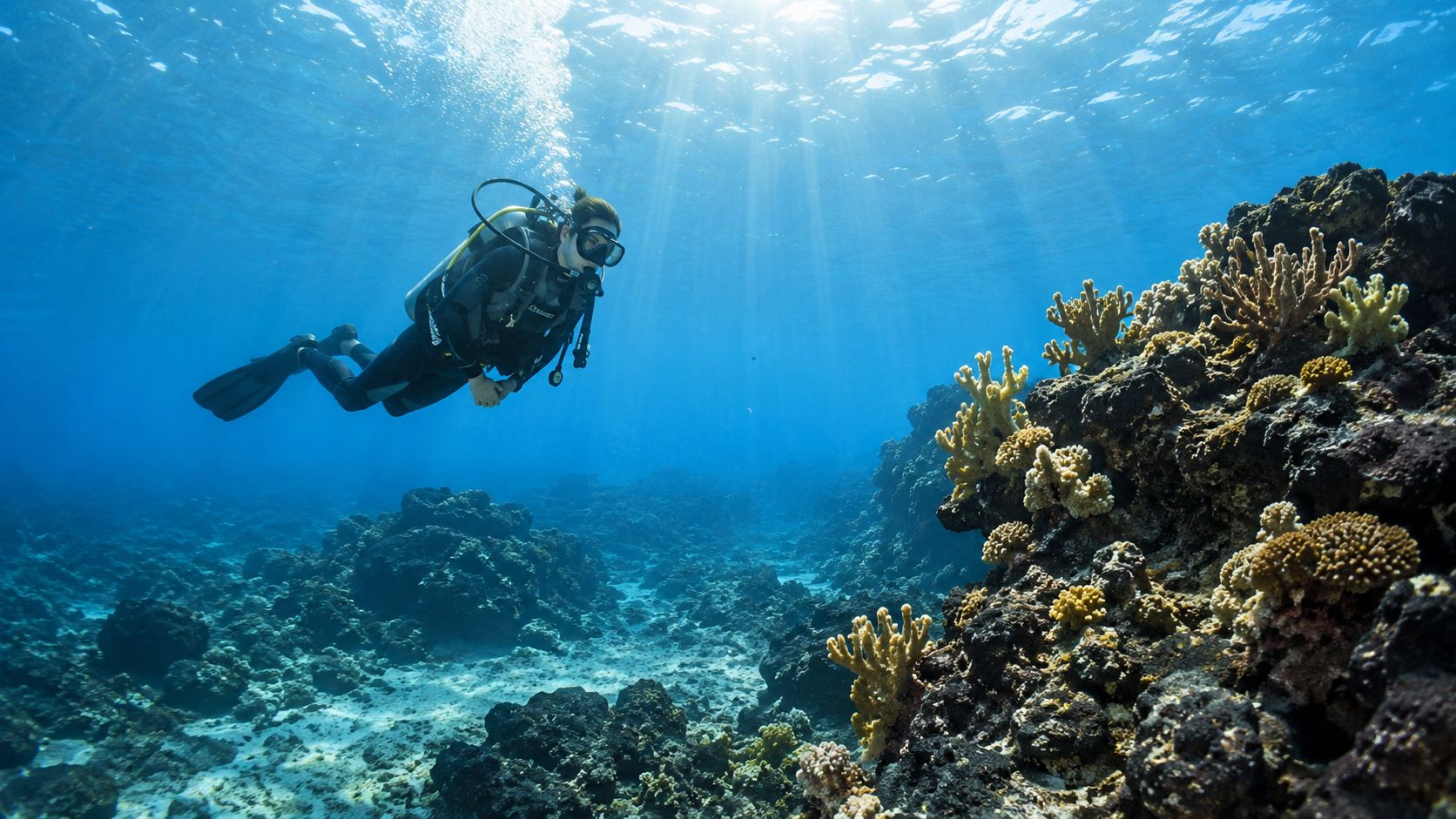
The key fact to remember is simple. Winter storms from November through April can push Kona visibility below 30 feet, while summer visibility averages 80–120 feet, according to this visibility guide for Big Island scuba diving. That affects more than photo quality. It changes how impressive reef dives feel and can reduce the odds of a memorable manta night.
My seasonal recommendation
If you want the cleanest all-around experience, target May through October. That's the sweet spot for calm water, strong visibility, and easier logistics for day boats and night boats alike.
Winter still has worthwhile diving, but I wouldn't sell winter as equal. It's not. You can absolutely have a great trip, but you need realistic expectations. A storm cycle can knock visibility down fast.
How I'd plan by trip goal
- For manta-focused travelers: Prioritize late spring through early fall. Better visibility makes the whole light-based feeding scene much more dramatic.
- For reef divers and underwater photographers: Summer is the easy choice. Clear water improves both navigation and enjoyment.
- For blackwater-curious divers: Pick the calmest part of the year you can manage. Flat surface conditions matter as much as what happens underwater.
If your dates are flexible, don't ask “When can I go?” Ask “When will Kona show me its best water?” That question saves trips.
Month-by-month in plain English
You don't need a complicated chart. You need a practical read.
- Winter into early spring: Potentially good, but vulnerable to storms, runoff, and reduced visibility.
- Late spring: Usually where things start lining up well.
- Summer: Best overall combination of calm seas and clear water.
- Early fall: Still strong, often a very smart booking window.
- Late fall: Conditions can stay good, but volatility starts creeping back in.
Water temperature stays comfortable enough that most visitors can focus on dive quality, not survival. But don't let warm water fool you into sloppy planning. Visibility is the hidden variable that separates a decent Big Island trip from a memorable one.
What to Expect on Day and Night Dives
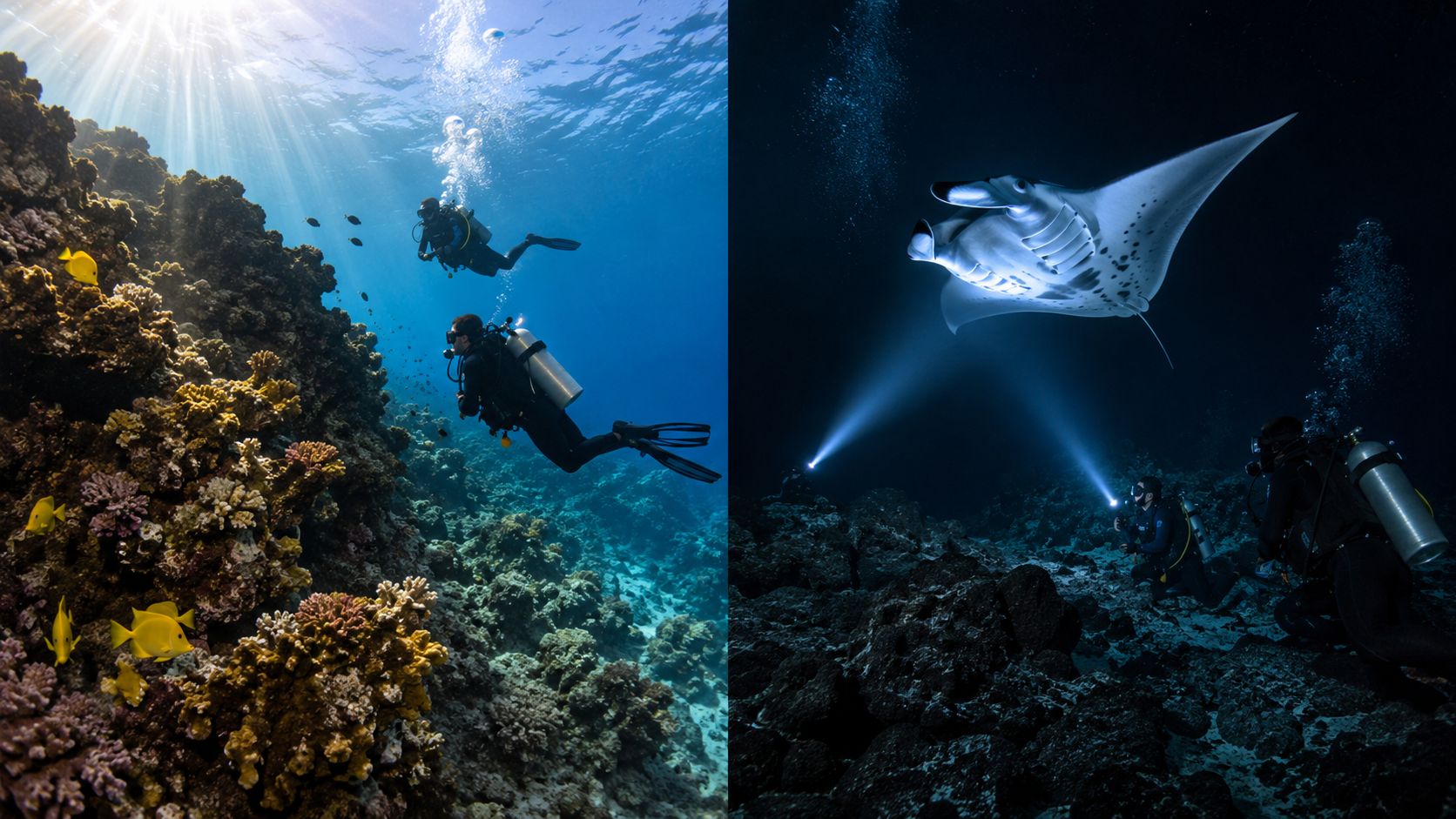
A Kona day dive and a Kona night dive feel like two different sports. Both are excellent. They just ask for different energy from you.
Day dives feel easy when the boat runs well
A typical morning starts with check-in, gear setup, a site briefing, and a direct explanation of the entry, conditions, and marine life expectations. Good crews keep this efficient. You don't want theatrical speeches. You want clear instruction on depth, current, navigation style, and what the reef is doing that day.
Once you descend, the first thing many divers notice is how the lava formations shape the dive. You're not drifting over a flat aquarium. You're moving across terrain with texture. Reef edges, cracks, fingers of rock, and pockets of life give the dive natural rhythm.
A standard day usually includes:
- Boat briefing and site orientation
- Controlled descent with ear equalization early
- Main portion of the dive along reef or wall structure
- Gradual return with gas and buddy checks
- Safety stop and clean exit
Night dives demand calmer heads
Night diving strips away visual clutter. That's part of the appeal. It's also why some divers love it and others tense up.
On a manta dive, the sequence is usually straightforward. You descend, settle into position, keep your body stable, and let the lights do the work by drawing plankton into the water column. Then the mantas show up and start feeding through the beams. That's the moment everyone remembers.
If you want a deeper sense of how those encounters work, this manta ray diving in Hawaii guide is worth reading before you book.
Stay still, keep your fins controlled, and let the animals own the stage. The divers who flail the least usually see the most.
Blackwater feels psychological before it feels technical
A blackwater dive changes your reference points completely. There's no reef under you, no bottom to glance at, and no shoreline context. You descend into suspended darkness and focus on the light field, your team, and your own composure.
That's why I tell divers to judge themselves before booking. If ordinary night dives already spike your anxiety, blackwater will amplify that. If you're relaxed, attentive, and comfortable with buoyancy in darkness, it can be one of the most fascinating dives you'll ever do.
Here's the simple split:
| Dive Type | What it feels like | Who it suits |
|---|---|---|
| Day reef dive | Scenic, relaxed, terrain-focused | Most certified divers |
| Manta night dive | Still, theatrical, animal-focused | Divers comfortable after dark |
| Blackwater dive | Abstract, intense, pelagic-focused | Experienced divers with strong composure |
Certifications Training and Choosing an Operator
Most bad dive bookings happen for one reason. Divers choose an operator by price or by the nicest website, instead of by fit. That's backwards. You should book based on training quality, site match, and operational clarity.
If you're not certified, the cleanest route is to sort out training before chasing specialty dives. If you want to start properly, look at Open Water certification on the Big Island. A real course gives you options for the rest of the trip. It also makes your underwater experience less stressful and a lot more rewarding.
What to check before you book
Don't overcomplicate this. Ask direct questions.
- Instructor depth of experience: You want people who teach regularly, not crews that treat training like an afterthought.
- Boat and site fit: Some operations are built for new divers. Others are better for experienced guests who want faster-moving charters.
- How they handle advanced trips: This matters most for blackwater and other specialized dives.
One fact matters here. Blackwater dives require a logbook of 25+ entries and take place over waters 6,000 feet deep, and first-timers often don't get enough clarity on the night-dive risks and cancellation realities, according to this Big Island blackwater overview. If an operator is vague when you ask about comfort level, bail out and book elsewhere.
My recommendation on operator selection
Choose the crew that gives the clearest answers, not the slickest branding. For example, Kona Honu Divers dive tours include day trips, manta dives, and blackwater options, and the company states it has 200+ years of combined experience, free nitrox, custom boats, and early-bird discounts through its published business information. Those are concrete things to evaluate.
If you're a more experienced diver looking for longer-range or more demanding profiles, a dedicated advanced long-range dive tour makes more sense than forcing yourself onto a beginner-friendly boat.
Ask how the crew groups divers. Ask how they screen people for blackwater. Ask how much time they spend briefing, not just selling.
Gear Packing and Safety Tips
Most divers overpack the wrong stuff and forget the items that affect comfort. On the Big Island, your gear strategy should focus on fit, familiarity, and night-dive readiness.
Pack for the diving you're actually doing
If you're booking ordinary reef dives, keep it simple. If you're doing manta or blackwater trips, upgrade your preparation.
Bring or confirm:
- Exposure protection: A suit that matches your comfort in 75–80°F water.
- Personal mask: If you own one that fits well, bring it. Rental masks are fine until they aren't.
- Primary and backup lights: Essential for night diving. Don't rely on luck or a half-charged light.
- Surface signaling gear: Especially important if you're doing anything beyond standard beginner-style reef diving.
- Dry bag and spare layer: Boat rides feel colder after sunset.
Seasickness is preventable if you stop being stubborn
A lot of divers ruin the first dive of the day because they wait to see if they'll get seasick. That's dumb. If you're prone to motion sickness, manage it before the boat leaves the harbor.
One practical fix is seat selection. Sitting in the center of the dive boat minimizes seasickness by reducing rolling motion and easing inner ear strain, according to this seasickness prevention guide for dive boats.
If you want options for prevention, review this guide on the best sea sickness medicine for diving and consider packing one or more of these:
- Patch option: Ship-EEZ Seasickness Patch
- Classic medication: Dramamine pills
- Another pill option: Bonine pills
- Non-medication approach: Sea Band wristbands
- Simple backup: Ginger chews
If you get sick underwater
Don't panic, and don't rip out your regulator.
According to Girls That Scuba's sea sickness safety explanation, if you vomit underwater you should keep your regulator firmly in your mouth, because the mouthpiece still allows vomit to pass while maintaining your air supply. That's a basic safety mechanic, and it matters.
If you feel nausea building underwater, signal your buddy, stay calm, and control your breathing first. Fast, panicked ascents create bigger problems than seasickness.
Local safety habits worth following
- Respect marine life: Don't chase mantas, turtles, or anything else for a photo.
- Use conservative judgment: If the entry, current, or surface conditions look wrong, skip the dive.
- Be honest about night comfort: Manta is one thing. Blackwater is another.
- Hydrate early: Fatigue, dehydration, and seasickness feed each other.
The divers who have the smoothest trips aren't always the most experienced. They're usually the ones who prepared properly and didn't try to prove anything.
Pricing Packages Booking Tips and Suggested Itineraries
Let's keep this honest. Dive pricing on the Big Island varies by operator, boat style, group size, and whether you're booking a standard day charter or a specialty night dive. Since package prices change and I'm not going to invent numbers, the smart move is to compare what's included rather than obsess over the first listed rate.
What actually creates value
Cheap isn't automatically good. Expensive isn't automatically premium.
Look at these booking factors instead:
- Trip type: Standard reef charters are the baseline. Manta and blackwater usually require separate planning.
- Included gear and gas: Nitrox, lights, rental gear, and guide structure change value fast.
- Group style: Smaller in-water groups usually mean a better experience, especially at night.
- Harbor logistics: Staying close to departure points saves stress and early-morning chaos.
Three itineraries I'd actually recommend
Weekend manta-focused trip
Arrive, settle in, and avoid stacking too much into the first day. Book a relaxed day dive first if you want a checkout-style warm-up, then do the manta dive on your second evening. That sequence works because your buoyancy and trim feel sharper after a daytime refresher.
Three-day balanced trip
This is the sweet spot for most travelers. Do one reef day, one manta night, and keep one flex slot for weather, rest, or a second daytime charter. That gives you enough variety without turning vacation into a checklist.
Longer advanced-focused trip
If you're experienced and want the memorable version of diving Big Island, build around reef dives first, then add blackwater or a longer-range advanced charter near the middle of the trip when you're settled and not fatigued. Leave your final full day conservative so you're not rushing after demanding dives.
Booking tips that save headaches
A few practical rules matter more than people think.
- Book specialty dives early. Manta and blackwater trips can fill before standard charters.
- Leave one open slot. Weather, fatigue, or visibility can justify a shuffle.
- Don't stack every night dive back-to-back. You'll enjoy them less when you're tired.
- Stay near the departure harbor if diving is the main point of the trip. Convenience improves the entire experience.
When to combine experiences
Families and mixed groups often do better when not everyone has to scuba every day. Some travelers dive one morning, rest in the afternoon, then regroup for dinner or shoreline exploring. Others split interests entirely, with divers focusing on scuba while non-divers choose snorkeling or sightseeing.
That's a better trip than forcing everyone into the same schedule.
Frequently Asked Questions
How do I handle ear equalization if there's current?
Equalize before you feel pressure, not after. Start on the surface, continue on descent, and don't let current rush you. If the descent line feels crowded or hurried, pause and sort your ears out early. Good equalization is about timing, not toughness.
Should I book blackwater if I'm newly certified?
Usually, no. A certification card doesn't automatically mean you're ready for open-ocean night diving. If you're still task-loaded with buoyancy, navigation, or basic comfort after dark, blackwater is the wrong place to push yourself. Build experience on day dives and ordinary night dives first.
What should I do if visibility drops during my trip?
Adapt instead of forcing the wrong dive. If conditions get murky, ask your operator for the most protected site options and be willing to change priorities. A lower-visibility reef dive can still be enjoyable. A low-visibility manta night may not deliver what you came for. Flexibility matters more than stubborn scheduling.
How should I plan dive times around Kona sunsets?
Night dives aren't just “late dives.” They have their own timing, logistics, and surface conditions. Don't book a packed daytime itinerary, skip hydration, rush dinner, and expect to feel composed for a night charter. Keep your afternoon lighter on days when you're doing manta or blackwater. You'll dive better and enjoy the experience more.
If you want a trip that's organized around real conditions, sensible training, and the dives that matter, book with Kona Honu Divers. Their schedule covers the core Big Island experiences most travelers come for, from reef diving to manta and blackwater trips, and it's a straightforward place to start planning without guesswork.