
Kona's six-year manta monitoring program recorded 25,444 sightings of 118 identified reef manta rays at Manta Heaven and Manta Village, establishing the coast as a repeatedly used feeding area rather than a place that depends on chance encounters. For divers, the choice is whether to plan around a protected-bay manta encounter, deep volcanic topography, or pelagic blackwater migrations, because site conditions and operator discipline shape what you can safely experience.
The popular shorthand is that Kona means clear water and guaranteed mantas. The water can be remarkably clear, and the mantas are a genuine draw, but neither fact tells you whether a particular shore entry is safe, a night dive is well organized, or a deeper site matches your experience. Those decisions matter more than a bucket-list label.
Kona's leeward coast often offers workable diving conditions, but its underwater terrain is not a flat, sheltered reef. Volcanic flows created tubes, arches, pinnacles, and reef shelves, with deep water close to shore. Think of it as an underwater mountain range dropped into a bathtub: the lee can feel calm at the surface, while the bottom falls away into dramatic formations.
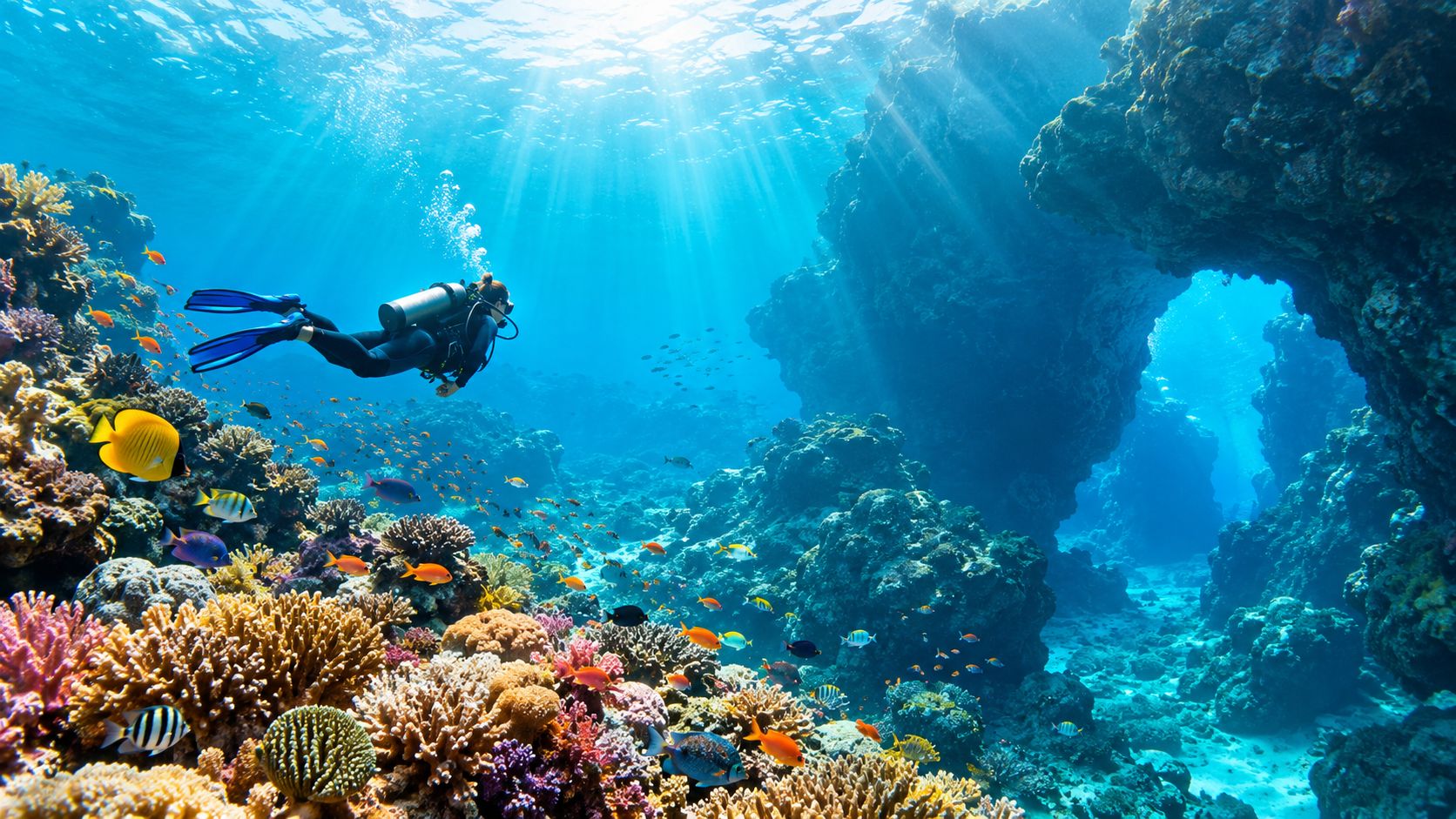
In clear conditions, visibility can exceed 100 feet, making the reef bright and spacious, but a diver still needs to read the site. Thermal layers can feel different at depth, and the coast's protected geography doesn't eliminate swell, surge, or current. The water's low-nutrient character helps keep reefs clear, while pelagic visitors are less like background scenery and more like encounters that depend on timing and conditions.
Kona therefore rewards divers who choose by site character, not only by headline wildlife. A relaxed reef dive, a manta viewing setup, and an open-ocean night dive ask for different comfort levels, equipment, and in-water habits. A sensible plan starts with the outcome you want, then checks whether your training and the day's conditions support it.
The Four Signature Experiences Every Kona Diver Should Know
Kona's signature dives aren't interchangeable. Each has a different visual environment, level of task loading, and reason to go.
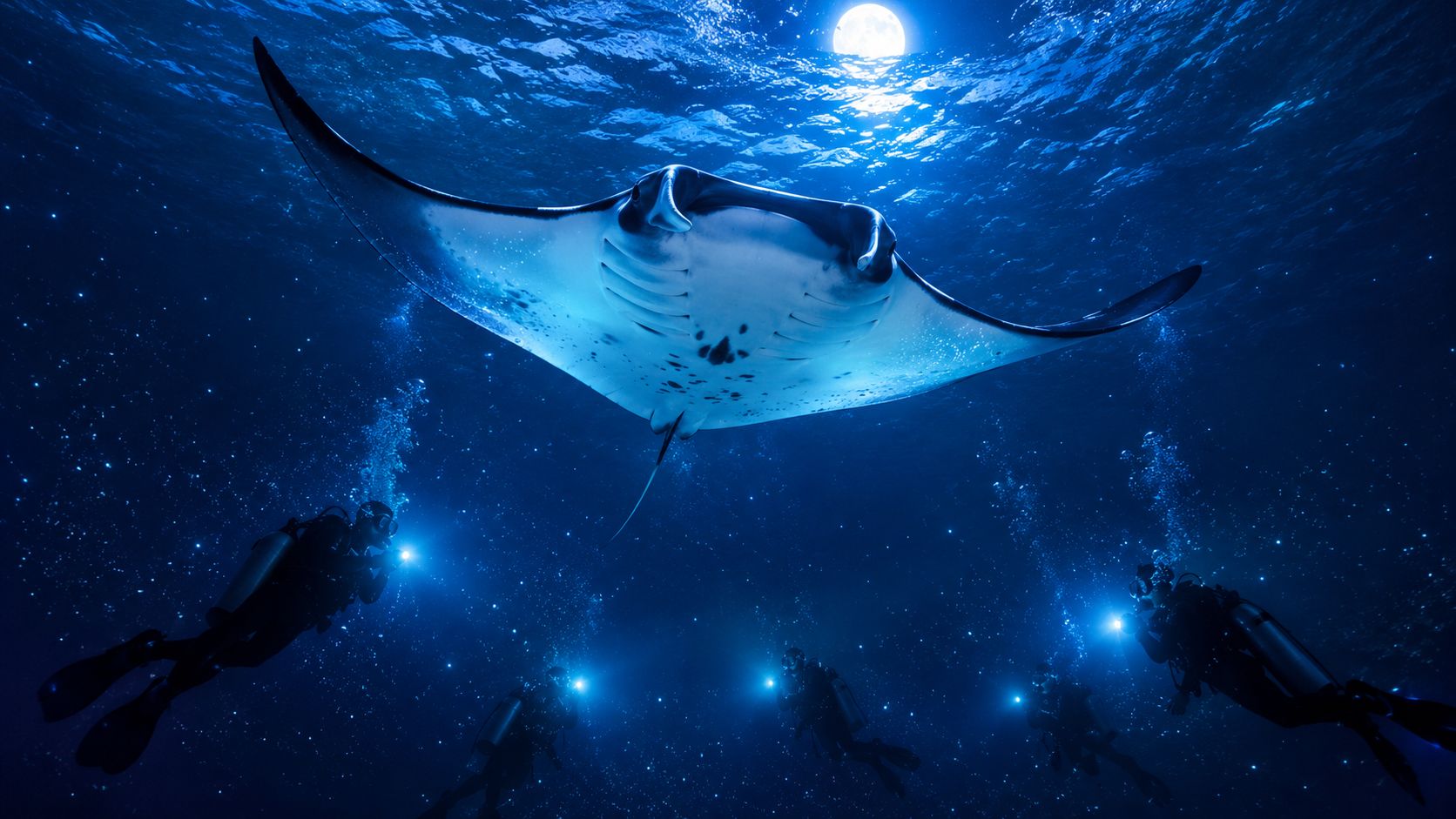
Manta night dive: This is a stationary feeding encounter, not a night reef tour. Lights concentrate plankton in the water column, and mantas approach to filter-feed. Divers settle on the bottom and look up, while snorkelers generally remain at the surface. You need to be comfortable at night, hold position without touching the reef, and follow the crew's light and ascent instructions.
Blackwater: This is open ocean after dark, not a dive over a reef. Divers hang from a downline and watch for pelagic life moving up from depth. The absence of a bottom can feel disorienting if you rely on terrain for reference, so this suits divers with strong buoyancy, night-diving comfort, and the ability to stay composed in open water. Review the Kona blackwater dive experience before deciding whether that environment fits you.
Lava tubes: These formations offer a more enclosed setting. The appeal is the change in light and shape as you move along volcanic structure, but overhead features make buoyancy and awareness essential. Carry a reliable light and don't enter or continue through a feature beyond the briefing and your training.
Pinnacles and deeper offshore sites: These dives bring topography, open water, and the possibility of pelagic life together. They demand more comfort with depth, current, and navigation than a sheltered reef. A steady diver who can manage buoyancy and gas without constant attention will get more from them than someone still occupied with basic task management.
A useful trip rhythm is to start with a familiar reef profile, then add a specialty dive once you're settled and rested. Choose the experience for the conditions and your readiness, not because it sounds more adventurous.
Why Garden Eel Cove Is the Stronger Manta Dive Site
The encounter depends on more than whether mantas arrive. Garden Eel Cove, also called Manta Heaven, is generally easier to manage because its protected-bay setting and broad sandy bottom give divers and snorkelers clearer places to stay while keeping the central water column open for manta movement.
| Attribute | Garden Eel Cove (Manta Heaven) | Manta Village |
|---|---|---|
| Exposure | More sheltered, with calmer conditions reported | More exposed to swell |
| Typical viewing depth | Roughly 35 to 40 feet | Roughly 40 to 50 feet or deeper |
| Bottom | Broad, sandy viewing area | Less even, rockier bottom |
| Viewing geometry | Divers can settle low while mantas circle overhead | Less uniform area for positioning |
| Crowd management | Organized positioning is important at busy times | Exposure and bottom unevenness add handling demands |
The sandy “amphitheater” helps crews keep divers low and reduce crowding in the water column where mantas feed and turn. Manta Village can still provide an encounter, though its exposure and uneven bottom make group positioning less straightforward.
Garden Eel Cove can also get crowded. Reports describe as many as 10 boats and approximately 80 divers and snorkelers at once. In those conditions, the briefing matters: divers should know where to settle, how to aim lights, and how to leave room when a manta approaches from an unexpected direction. Keep lights directed as instructed, and never reach toward or block a manta's path.
Compare the dedicated Kona manta ray dive by asking how the crew manages positioning, lighting, and group movement at Garden Eel Cove. A well-run encounter depends on clear guidance and divers following it, not on choosing the more sheltered site.
Reading the Conditions Before a Kona Shore Dive
“Kona is easy diving” is only half a useful briefing. The leeward coast can offer sheltered water, but a shore diver still has to cross sharp lava and judge the entry and exit in real time. Conditions at the beach are not guaranteed by a calm boat ride offshore.
Old Kona Airport is described by Hawaiʻi's Division of Aquatic Resources as having partially protected entries, shallow lava fingers extending to about 50 feet, and varied marine life. The same official guidance warns that sharp lava and coral complicate entries, while dangerous swell and currents can accompany storms in both summer and winter. Check the Old Kona Airport marine-life conservation area guidance before treating the site as an easy walk-in.
Run a beach-side go/no-go check
- Entry pattern: Watch several sets. If waves break across the route you need to use, don't assume a quiet moment will last.
- Exit route: Identify where you'll leave before gearing up. If the exit requires a difficult scramble over wet lava, reassess.
- Buddy plan: Agree how you'll stay together through entry, descent, and exit. Lava fingers and poor visibility can separate divers quickly.
- Surge and current: Ask whether you can maintain control without grabbing coral or rock. If not, choose another site or skip the dive.
- Recent rain and visibility: Runoff can reduce visibility near shore. If you can't clearly see your route or buddy, the planned dive may no longer be appropriate.
A boat crew can select a different site when conditions change. A shore diver must make that decision before entering, with no crew repositioning the dive for them. Use the Big Island shore-diving guide as a planning reference, then verify the actual beach conditions on the day.
Practical rule: “Easy Kona diving” describes favorable conditions when they exist. It isn't permission to enter when the shoreline says no.
Choosing the Right Boat, Charter, and Trip Length
The right charter is the one that fits your experience, priorities, and the day's conditions. A group two-tank morning trip offers guided reef diving on a shared schedule. The crew selects sites based on conditions and the divers aboard, so you trade a custom route for less planning and time in the water. It's a practical choice for solo travelers, couples, and divers who are comfortable sharing the boat and briefing.
Specialty trips call for a closer look at the plan. Blackwater dives and advanced pinnacles involve unusual environments or more demanding profiles. Before booking, ask what experience and buoyancy control the trip requires, how the crew manages the line or site, and what happens if conditions no longer suit the group. A clear answer matters more than the boat's size.
A private charter provides privacy and flexibility, but it does not guarantee better conditions or diving. Consider one for a family with mixed needs, photographers who want a custom pace, or a group whose plan does not fit a standard departure. Traveling alone, or mainly looking for more time underwater? A scheduled group trip plus another dive day may suit you better.
Boat amenities affect comfort between dives. Shaded seating offers a break from direct sun, while storage helps keep personal items and camera gear organized. A hot shower can make a long surface interval more comfortable. Confirm what the boat provides before you book; setups vary.
For more challenging terrain, compare the advanced dive trip with the broader Kona diving tour options. Choose based on your logged experience, current comfort, and preferred pace, not on the word “advanced” alone.
Certifications, Courses, Gear, and Nitrox in Kona
Think about training in terms of what you want to do, not the number of cards in your wallet.
If you're new to scuba, a supervised introductory experience lets you try breathing underwater without committing the trip to a full certification course. A full entry-level course takes longer but gives you the foundation to join certified dives. Ask how much of the instruction happens in confined water, what the open-water sessions include, and whether the schedule leaves room for the rest of your vacation.
Returning divers should be honest about how recently they've been underwater and which skills feel rusty. A refresher can rebuild comfort with buoyancy, mask clearing, equipment checks, and buddy procedures before you add night or deeper profiles. An Advanced Open Water course may help prepare you for a broader range of sites, but a certification card doesn't replace recent experience or sound judgment.
For advanced divers, courses and specialties should address a real gap. Enriched-air training is useful if you intend to use nitrox; a nitrox certification course covers the knowledge needed to plan that gas appropriately. Night or deep specialties can also build relevant skills, though operators may still set their own participation criteria for specific trips.
Rental equipment should fit and function, not merely be present. Ask to check the regulator, BCD, computer, fins, and mask before departure. If a mask leaks or your fins cause discomfort, say so before the briefing ends. Bring a familiar mask if you own one, since fit can make a noticeable difference to your concentration underwater.
Nitrox and dive packages can change the value of a multi-day plan for divers who already have the required training and expect to do several dives. Compare what the package includes with your actual itinerary. If you're only doing a single boat day, convenience may matter more than a bundle; if you're stacking dives, ask whether gas, rental equipment, and course needs are handled clearly.
Conservation, Crowding, and How to Spot a Good Operator
An impressive encounter is not the only measure of a manta tour. Capacity, lighting, and diver behavior determine whether the viewing setup leaves the animals room to feed and whether people can stay safely positioned.
Kona's manta tourism began with organized encounters in the late 1980s and early 1990s, when hotel lighting attracted plankton near shore. Early operators reportedly ran only a few boats each week; by 2015, reporting described at least 20 boats at a site during busy periods and more than 200 divers and snorkelers entering the water in an evening. The same reporting described more than 400 people nightly across the two main sites during high demand. These figures illustrate why a wildlife encounter that grows in popularity needs rules and active site management, not just good intentions. Historical reporting on Kona manta tourism and crowding.
Hawaiʻi prohibited the harvest or take of manta rays in state waters in 2009. That protection matters, but it doesn't by itself prevent physical disturbance from careless viewing. NOAA's manta guidance supports giving animals open water and avoiding contact with marine life, while the agency's monitoring work shows how regularly the rays use Kona's principal sites. NOAA's manta-ray monitoring study.
Ask how the crew handles the encounter
- Light placement: Does the briefing explain where lights point and how the crew concentrates plankton without directing beams into approaching animals?
- Group position: Do divers stay low, with snorkelers above, while leaving the central water column open?
- Behavior rules: Does the crew clearly enforce no touching and no chasing?
- Capacity decisions: Will the operator pause, relocate, or decline entry if crowding or conditions make the encounter unsafe?
- Movement and contact: Does the crew explain how to avoid blocking manta routes and keep fins away from coral and the bottom?
Human contact can cause injury, and crowding can create collision or entanglement risks. An advocacy organization, Hawaiʻi Ocean Watch, has reported injuries attributed to humans among regularly observed mantas, but that claim should be treated cautiously rather than as a regulator's measurement. The broader practical point stands: a responsible crew prioritizes animal movement and diver safety over forcing an entry.
Read the responsible diver etiquette guidance and ask what happens if the site is over capacity. A crew willing to call off or change a dive is making a sound operational decision.
Planning Your Trip, Booking, and Underwater Photography
A good Kona itinerary leaves room for conditions to change. Plan around your energy and experience rather than trying to fit in every signature dive. Treat the manta dive as a focused evening, and book open-ocean blackwater only if your night-diving and buoyancy skills are ready for it.
| Day | Morning | Afternoon | Evening |
|---|---|---|---|
| First dive day | Easy reef dive or guided orientation | Rest and check equipment | Keep the evening open |
| Second dive day | Two-tank boat trip | Recover and review conditions | Optional low-key activity |
| Third dive day | Pinnacle or lava-formation dives suited to your experience | Rest, hydrate, and prepare lights | Manta dive as a standalone outing |
| Fourth dive day | Flexible reef or advanced trip | Allow time to adjust plans | Blackwater only if your experience and operator criteria fit |
Kona's leeward waters can make diving practical throughout the year, but swell and weather still affect shore entries and exposed sites. Winter overlaps with whale season, though sightings are never guaranteed. Book the specialty dives you care about early enough to compare operators, then keep some flexibility so the crew can choose a safer site if conditions shift.
Set up camera gear before the briefing, and keep the system simple. A wide-angle lens suits manta encounters better than a tight focal length that makes framing each pass difficult. Follow the crew's lighting protocol, and keep beams out of an approaching manta's eyes. For blackwater photography, practice strobe placement and camera settings before entering open water. Familiar controls leave more attention for buoyancy and the line.
A practical booking sequence
Choose the type of dive first: reef, manta, blackwater, or a deeper site. Compare operators by how clearly they brief the dive, manage groups, and check equipment, and whether they change plans when conditions do not cooperate. Before booking, confirm that your certification and recent experience fit the trip, and check gear requirements and meeting logistics.
Kona Honu Divers runs morning two-tank trips, advanced and specialty outings, and courses. Use the operator's trip information to match an outing to your logged experience, not just its label, then check availability for your dates. Ask any operator how site choices are made and what conservation practices the crew expects divers to follow before paying.
Before departure, confirm the meeting harbor and time, check that your certification and experience suit the trip, and understand the cancellation and site-change policies. Pack a primary and backup light for night dives, review buddy and lost-buddy procedures, and be ready to skip a shore entry if the surf or exit route looks unsafe.
Kona Honu Divers offers guided reef and advanced trips, manta and blackwater dives, courses, and private charters. Review the options at Kona Honu Divers and choose a trip that fits your experience and comfort in the water.