
Big Island scuba diving is not a single famous dive. It's a whole set of decisions, and the wrong one wastes a trip. The Big Island sits inside a mature dive market, with over 150,000 dive tourists annually and more than 50 dive shops and charters, while Hawaii overall sees over 1.5 million scuba dives each year across 215+ licensed dive shops Kona Honu Divers market overview. That's why the right question isn't “What's the best dive?” It's “What kind of diver are you, and what are you trying to book?”
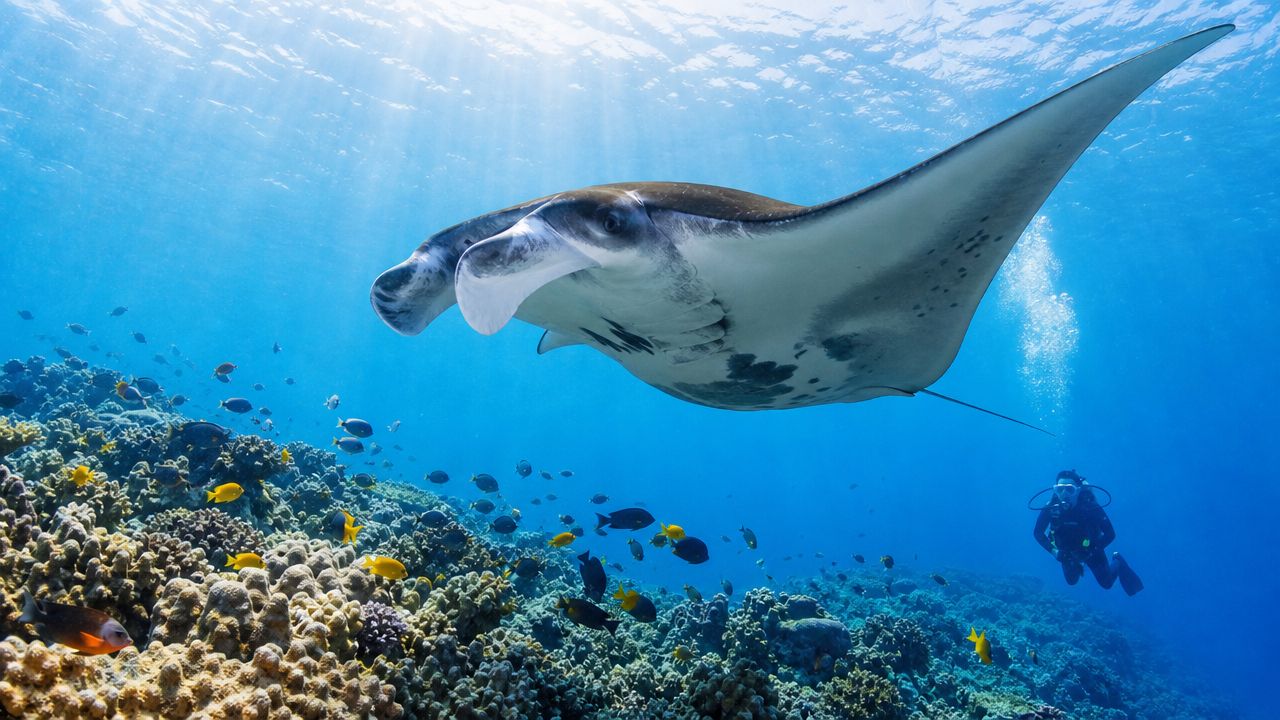
If you want the straight story, here it is. Kona is the hub, the manta ray night dive is the signature booking, and the best day trips depend on whether you're new, comfortable in current, or ready for deeper, more remote sites. A diver who books by hype instead of by skill level usually ends up either underwhelmed or overmatched.
Bottom line: Big Island scuba diving rewards divers who match the site to their certification, not the other way around.
For a quick reality check on whether the island fits your plans, start with this Big Island diving overview.
Why Big Island Scuba Diving Deserves Its Reputation
The Big Island earns its reputation because it gives you range, not just pretty reef. In one trip, you can pair classic lava-formed reef diving with a signature pelagic encounter that people fly here specifically to see. That matters, because more than 1,000 unique dive sites means the island doesn't run out of options when conditions shift or when a diver wants something more advanced Kona Honu Divers dive map overview.
Kona is the center of gravity
Kona is where most visitors should focus. The west side has the best concentration of boat operations, the most useful site rotation, and the strongest mix of beginner, intermediate, and advanced diving. Hilo and the Kohala side still matter, but they play supporting roles for divers who already know what they want and are willing to work around different conditions.
The island's volcanic terrain creates arches, lava tubes, ledges, and drop-offs that don't feel generic. That's the key difference from a lot of island diving, where you get one or two styles of reef over and over again. Here, the same trip can be calm and shallow one day, then more technical or current-sensitive the next.
Don't book by famous name alone
Many visiting divers get it wrong. A site can be famous and still be the wrong site for your certification, comfort level, or travel schedule. The right decision is usually about risk tolerance, depth, and what you want to see, not just the headline name.
The island's draw is simple, though. It gives you manta rays, classic reef systems, lava features, and night diving without pretending all four are the same experience. That's why a smart plan starts with your goals, then matches the site.
Top Dive Sites on the Big Island by Experience Level
Don't treat the Big Island like a list of must-do spots. Treat it like a menu organized by diver skill. That's the only way to use the island well, because a shallow reef, a deeper wall, and a remote advanced site are not interchangeable, even if they're all “good dives.”
The broad site inventory is huge, but the useful split is simple. Beginners should stay with calm, shallow reef systems near Kona. Intermediate divers should target structured sites such as Kealakekua Bay and other lava-formed reef areas. Advanced divers should think about pinnacles, drift-style sites, and long-range boat options that reward better buoyancy and more comfort in changing conditions.
Where each level belongs
Beginners need easy entries, predictable conditions, and straightforward navigation. Intermediate divers can handle a little more depth and more structure, which is where the island's lava geology starts paying off. Advanced divers get the most from deeper, more remote, or more current-sensitive sites, especially when they're paired with operators that can reach them.
A lot of consumer content skips this part and sells the same big-name sites to everyone. That's bad advice. A new diver doesn't need to “earn” a difficult entry. A strong diver shouldn't waste a trip on the most sheltered site if they're ready for something more interesting.
| Site | Depth Range | Conditions | Recommended Level |
|---|---|---|---|
| Shallow Kona reef sites | Qualitative only | Calm, straightforward, boat-friendly | Beginner |
| Kealakekua Bay | Qualitative only | More structure, better for divers with comfort underwater | Intermediate |
| South Point area | Qualitative only | More demanding, site-dependent | Advanced |
| Manta Ray Village and Manta Heaven | 30 to 100 feet Kona Honu Divers guide | Night dive, controlled light circle, stationary observation | Open Water with night comfort |
| Garden Eel Cove | 15 to 50 feet Kona Honu Divers manta guide | Calm bay conditions, high-probability night encounter | Open Water with proper briefings |
If you're brand new, use this beginner dive guide as your filter before you spend money on the wrong charter. The point is to book the dive that fits your day, not the site that sounds coolest on Instagram.
The Manta Ray Night Dive and Why Garden Eel Cove Wins
The manta dive is the one experience divers remember from the Big Island, and it's popular for a reason. The setup is simple, but the effect is dramatic. Operators place lights at roughly 35 feet to draw plankton into the water column, and the mantas feed through the bright zone in repeated passes Scuba Diving's Kona manta guide. That's why the dive feels controlled instead of chaotic.
Garden Eel Cove is the better booking
Garden Eel Cove is the stronger choice, and I'd book it before Keauhou Bay if I had the option. The site is more protected, the viewing area works better for a light-circle setup, and the reef geometry gives divers and snorkelers cleaner sight lines. When the conditions line up, you're not fighting the site. You're just watching mantas come through.
The working depth is typically 15 to 50 feet, which makes the dive approachable while still feeling special Kona Honu Divers manta dive page. Operators report 85% to 90% encounter success at the site, and strong nights can see up to 23 mantas same source. Another Kona guide says the broader encounter success rate hovers around 85% to 90% and describes feeding at roughly 30 to 100 feet Kona Honu Divers Big Island dive guide. The Manta Pacific Research Foundation has cataloged more than 270 individual manta rays in the Kona study area, which explains why this isn't random luck DAN Kona report.
What you actually do on the dive
You don't chase mantas. You hold position, keep your lights where the operator wants them, and let the animals work the feeding lane. Divers kneel or settle in place, breathe slowly, and keep their hands to themselves. That's the whole playbook.
If you want the manta trip, book the dedicated two-tank manta dive and snorkel tour. If you want the operational background behind why Kona is the right place for it, read this manta-ray dive guide.
Certification, Health, and Experience Requirements
Don't assume every Kona trip is open to every diver. The island has a wide comfort range, but the operator still needs a baseline that matches the site. For ordinary reef diving, Open Water certification is the normal floor. For deeper pinnacles, remote long-range trips, and more demanding shore conditions, you should arrive with Advanced Open Water or equivalent logged experience.
Night diving is a separate question. The manta dive is approachable, but it still isn't the place to fake comfort in the dark. Operators commonly want recent night experience or a proper pre-dive briefing that shows you know how to stay calm, keep your light disciplined, and stop fidgeting in the water.
If you haven't been diving in a while, be honest. A refresher is cheaper than a bad dive.
Health screening is not paperwork theater
Kona operators ask about the same issues for a reason. Equalization problems, asthma, cardiac history, and pregnancy all affect whether a dive is safe for you. If any of those apply, talk to your doctor before you fly, not after you've already paid for the boat.
That's especially true if you plan on doing multiple days or mixing day dives with night dives. The water time itself may feel easy, but fatigue, pressure changes, and repetitive diving add up. A diver who ignores those basics usually gets clipped by a headache, congestion, or a dive they can't comfortably finish.
Before you show up, bring the right paperwork and be ready for the standard operator flow. Bring your certification card, logbook, any note showing your recent dive count, and a signed medical statement if one is required. If you want a full training path or a refresher before booking the harder trips, this learning-to-scuba page covers the entry points most visitors use.
Seasonal Conditions and When to Book Each Dive
Big Island diving is seasonal in a practical sense, not a marketing sense. The calmest Kona surface conditions usually run April through September, and that's the easiest stretch for boat comfort and clear, relaxed manta nights Kona Honu Divers season guide. If you want the least drama, that's the window to favor.
Winter changes the trade-offs
Winter brings bigger south swells, and that can make shore entries or exposed sites less forgiving. It also overlaps with the season when whale encounters are possible, which is a bonus for many divers but not a reason to overbook difficult conditions. In other words, winter can be good, but it demands more flexibility.
The east side behaves differently from Kona, and that matters if you're chasing a specific site or mixing your diving goals with a mainland-style itinerary. The Hilo side can work for the right diver, but it isn't where I'd send a first-timer who just wants easy wins. The coral and nearshore environment are also under pressure from climate-linked stress and shoreline change, so “good conditions” shouldn't be assumed without checking the day's reality NOAA coral and ocean reporting.
Book the plan, not just the dive
The smartest move is to book the manta dive in any season, then pair it with day dives that fit the forecast and your logbook. A traveler with limited time should build in a rest day or at least one flexible slot. If you try to stack too many dives into too few days, you lose the ability to pivot when the ocean says no.
For timing, this is the clean rule. Manta dive anytime, day dives by season, shore sites by conditions. That keeps you from paying for a famous site you can't enjoy properly.
Choosing an Operator and Building Your Itinerary
Pick the operator before you pick the dream itinerary. Boat size, shade, guide ratio, gear maintenance, and how hard the crew works to keep the group tight matter more than marketing copy. For a manta trip, I'd want a 1:6 ratio or better. For day diving, I'd still want a shop that doesn't treat divers like cargo.
A few real decision points matter more than glossy photos. Ask whether the boat has shade and room to gear up comfortably, whether the shop does in-house maintenance, and whether the crew can explain the day's site rotation without vague promises. If nitrox is available, that helps on multi-day plans, and a clear safety record matters more than any slogan.
What to book based on experience
A first-time diver should book a two-tank shallow reef day and stop there. An intermediate diver should add the manta night dive, because that gives you the island's signature experience without overcomplicating the trip. An advanced diver should look at the long-range two-tank option and, if the calendar lines up, a blackwater night dive.
One practical operator choice worth knowing is Kona Honu Divers, which runs small-group boat diving, free nitrox for qualified divers, and a blackwater dive program. That doesn't make it the only answer, but it does make it a useful fit for divers who want a tighter group and a more technical experience.
Copyable itineraries
- 3-day plan: Day 1, two-tank reef dive. Day 2, manta night dive. Day 3, rest or shore-based snorkeling.
- 5-day plan: Two reef days, one manta night, one flexible weather day, one easy recovery day.
- 7-day plan: Two reef days, one manta night, one advanced or long-range day, one blackwater dive if available, and buffer time for weather.
If you're ready to book now, start with Kona scuba diving tours for the standard options, or jump straight to the premium advanced two-tank trip if you already know you want deeper, more remote diving.
Packing, Seasickness, Safety, and Local Etiquette
Bring less junk, but bring the right stuff. The operator will handle tanks, weights, and the big logistics. You should bring a good mask if you already trust yours, fins if you're picky, a rash guard, reef-safe sunscreen, and whatever motion-sickness remedy works for you. The ocean doesn't care if you “usually don't get seasick.”
If motion sickness is part of your life, don't wait until the dock. The concrete options people use are the Ship-EEZ Seasickness Patch (product link), Dramamine pills (product link), Bonine pills (product link), Sea Band wristbands (product link), and ginger chews (product link). Night returns and open-water crossings can trigger nausea even in people who feel fine on shore.
Safety starts before entry
Never show up dehydrated. Listen to the briefing, use the surface marker as instructed, and don't improvise around the boat plan. The manta dive in particular rewards calm divers who can stay put and follow directions without drama.
Touching marine life is off limits. That applies to mantas, sea turtles, and anything else that's clearly not there to be handled. Local rules and basic respect both point the same way, especially around DLNR expectations, manta no-touch behavior, and the cultural care expected at Kealakekua Bay.
Practical rule: If the site, the swell, or your energy level feels off, skip the dive. A bad decision in Kona is still a bad decision.
Questions worth asking before you book
- How big are the groups? Smaller groups usually mean less chaos and more actual time with the guide.
- Who maintains the gear? You want a shop that fixes problems before they hit the boat.
- Do you run nitrox or specialty trips? That tells you whether the operator serves simple vacations or serious dive plans.
- What happens if the ocean changes? Good operators give you a real alternate, not a sales pitch.
FAQ
Is Big Island scuba diving good for beginners? Yes, if you book the right site. Start with shallow, calm reef diving, not advanced shore entries.
Is the manta dive worth it? Absolutely. It's the island's most dependable signature dive and the one most visitors should prioritize.
Should I book Kona or Hilo? Book Kona unless you already know you want east-side conditions and a specific operator there.
Can I do the manta dive without being an expert? Yes, but you should be comfortable in open water and ready to follow a tight briefing.
A CTA for Kona Honu Divers. If you want a clean Kona plan without guessing, book the reef day, the manta night, or the advanced trip that fits your certification, then let the crew match the site to the conditions on the day you're here.