
Table of Contents
- What Makes It So Different
- How It Compares With The Manta Dive
- Who Should Book It
- Why It Belongs On A Kona Itinerary
Kona is the easy answer to the Big Island divers Kona Hawaii question. The diving here suits first-timers and logbook veterans alike, with warm water, clear visibility, and lava-formed reefs framing every trip.
Why Kona Is Hawaii’s Premier Diving Destination
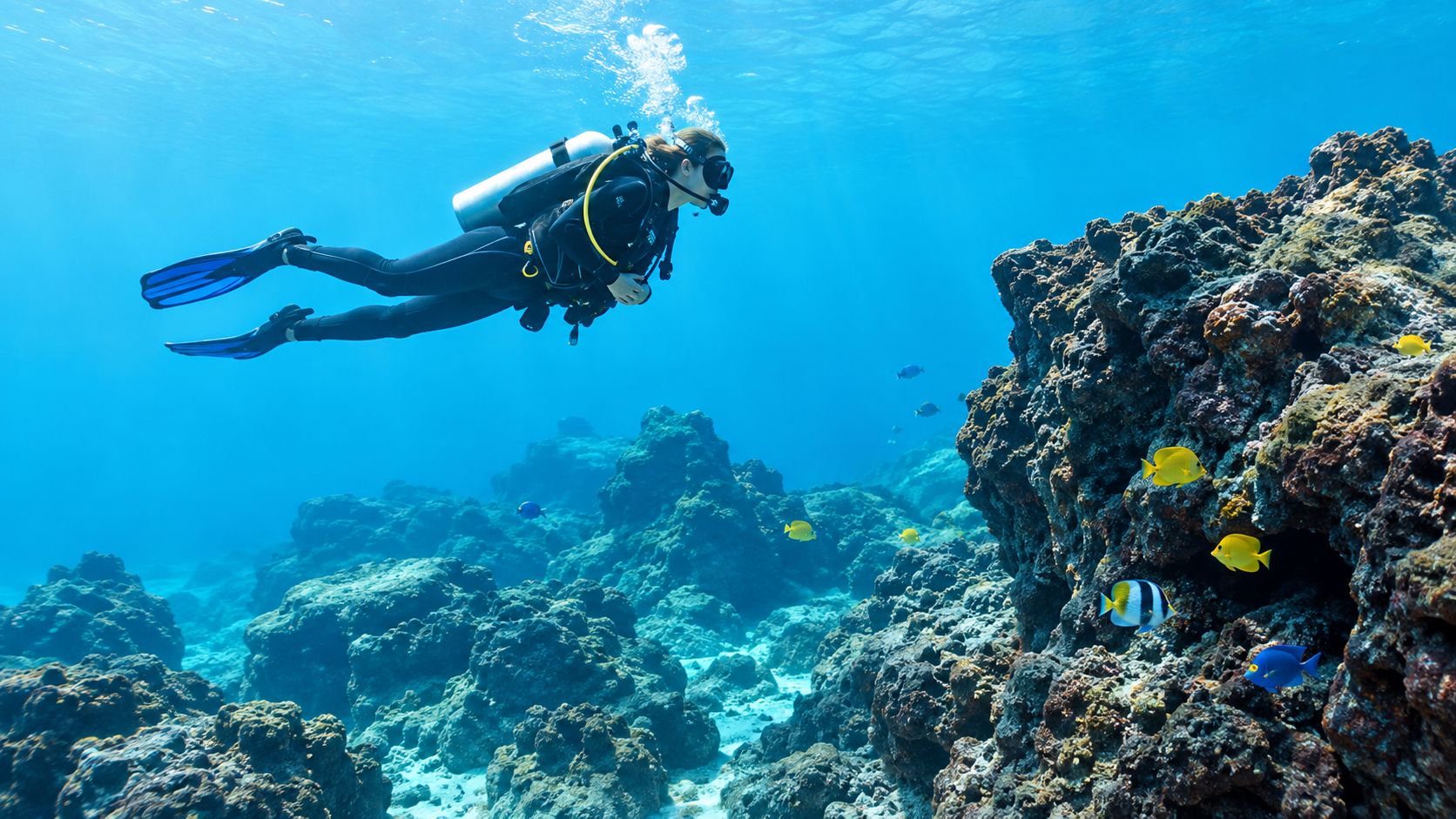
Kona’s west side sits in the shadow of the island’s mountains, so the ocean is often calmer and clearer than the windward side. That matters more than you’d think. A good dive day feels like driving on a smooth road; rough water turns a simple outing into work.
Kona Honu Divers built its reputation on making that smooth ride even better. The team brings over 200 years of combined industry experience, custom boats, well-maintained gear, and small groups capped at six divers. Their two-tank morning trip runs about 70 minutes per dive, so you get more time to settle in and enjoy the reef.
If you want a dive trip that feels organized from dock to splashdown, Kona is where the planning starts paying off.
A few reasons divers keep choosing this coast:
- Volcanic terrain creates arches, lava tubes, and ledges that look sculpted by hand.
- Resident marine life includes turtles, eels, reef fish, manta rays, and seasonal pelagics.
- Flexible options work for beginners, certified divers, and advanced divers alike.
- Night diving is famous here, especially the manta ray dive and blackwater trips.
| Reason | Details |
|---|---|
| Water conditions | Usually warm, clear, and calm on the Kona side. |
| Marine life | Mantas, turtles, reef fish, and deep-water species. |
| Skill range | From resort courses to advanced long-range dives. |
| Value | Packages, discounts, and free nitrox add real savings. |
For travelers comparing operators, Kona Honu Divers dive tours stand out because the lineup covers almost every style of Kona diving without feeling rushed.
Who Kona Fits Best
Kona works well if you want a relaxed first ocean dive, but it also rewards experienced divers who want something stranger and deeper. Think of it as one coastline with several doors, each opening to a different kind of adventure.
If you’re building a full trip, start with a morning reef dive, add a manta night dive, and finish with blackwater or advanced sites. That mix is what makes Kona feel complete rather than repetitive.
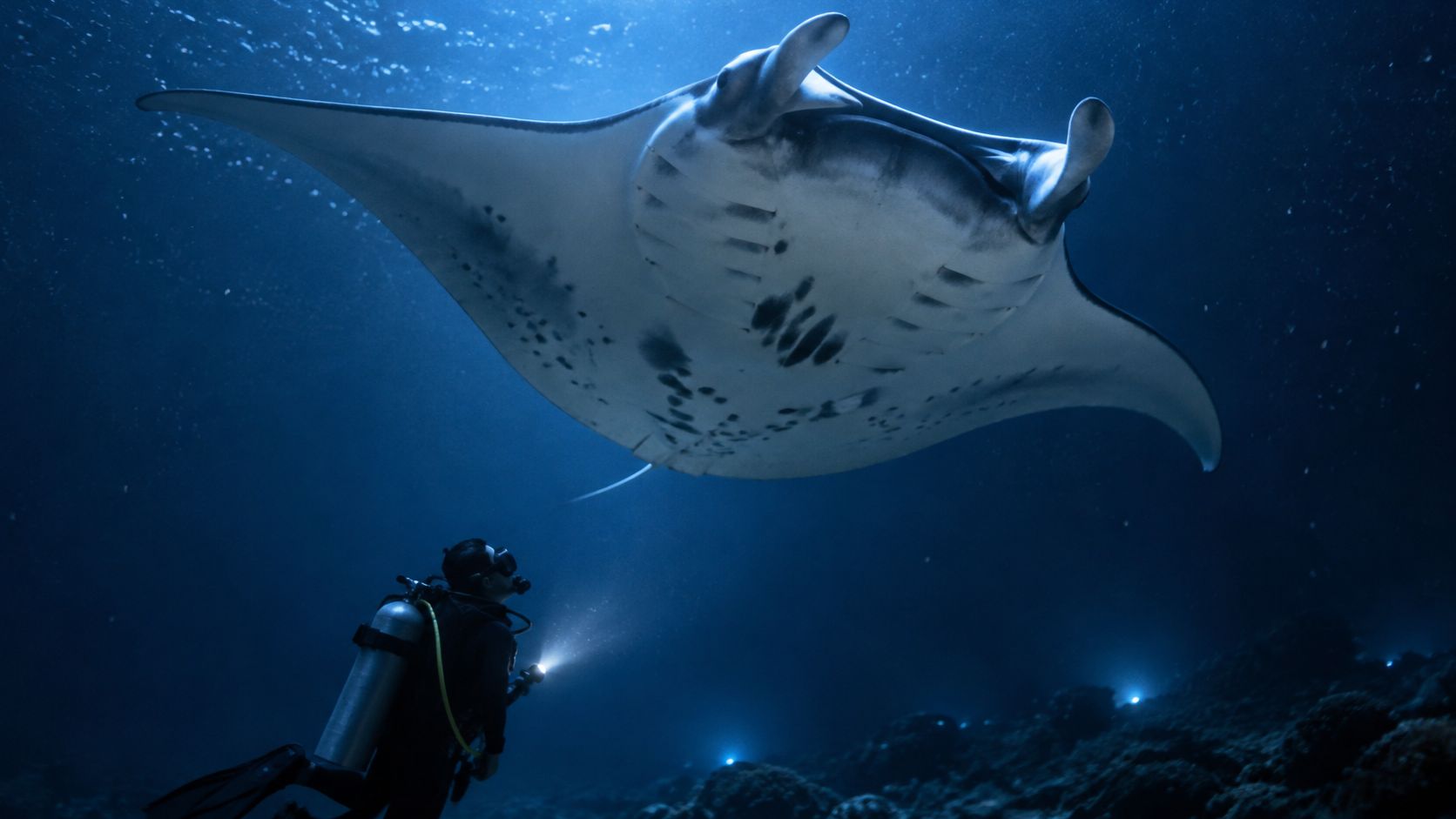
The manta ray night dive is the trip that turned Kona into a bucket-list scuba destination. Picture a dark theater, then swap the stage for the sea, and the performers are giant manta rays with wingspans that can reach 16 feet.
The setup is simple. The payoff is not. Divers settle near the bottom while lights shine upward, plankton gathers like confetti in a spotlight, and mantas sweep through in slow, looping passes.
Why Garden Eel Cove Stands Out
For this tour, Garden Eel Cove is the better call. Its protected location usually means a steadier setup, a better viewing area, and reefs that feel healthier and more interesting than many exposed alternatives.
That matters, because the site frames the whole encounter. Rather than fighting awkward surge or bad angles, you get a cleaner line of sight and more room to watch the mantas move.
The best manta dive feels less like chasing wildlife and more like letting the ocean bring the show to you.
Kona's resident population of more than 450 individual rays makes the odds excellent, and a 76% resighting rate means plenty of divers meet familiar animals again. For a closer look at how to behave around them, see our guide to responsible and considerate diver etiquette.
What Happens During The Dive
The sequence is easy to follow. Lights attract plankton, plankton attracts mantas, and the mantas feed in graceful circles that look almost choreographed.
- Manta Village is typically about 35 feet deep, which keeps the experience accessible.
- Manta Heaven usually sits around 50 to 60 feet, still within reach for certified recreational divers.
- Both sites reward calm buoyancy, since drifting too much can break the view for everyone.
Because the dive is shallow, the real challenge is staying still and watching. That restraint is what lets the scene unfold, like holding the last seat at a front-row concert.
Who It Suits Best
Certified divers who are comfortable in open water usually adapt fast, even on a first night dive. The key is respecting the brief and moving slowly, because manta encounters only feel intimate when the group stays controlled.
If you're picking an operator, think less about speed and more about comfort. A good crew gives you time to settle, walks you through the light board setup, and helps you focus on the animals instead of the logistics.
For travelers searching Big Island divers Kona Hawaii, this is the trip that often becomes the highlight, because it combines access, spectacle, and a real chance to see a Kona icon up close.
Put another way: if you want one dive that defines your Big Island trip, book the manta ray night dive and let Kona's most famous residents do the rest.
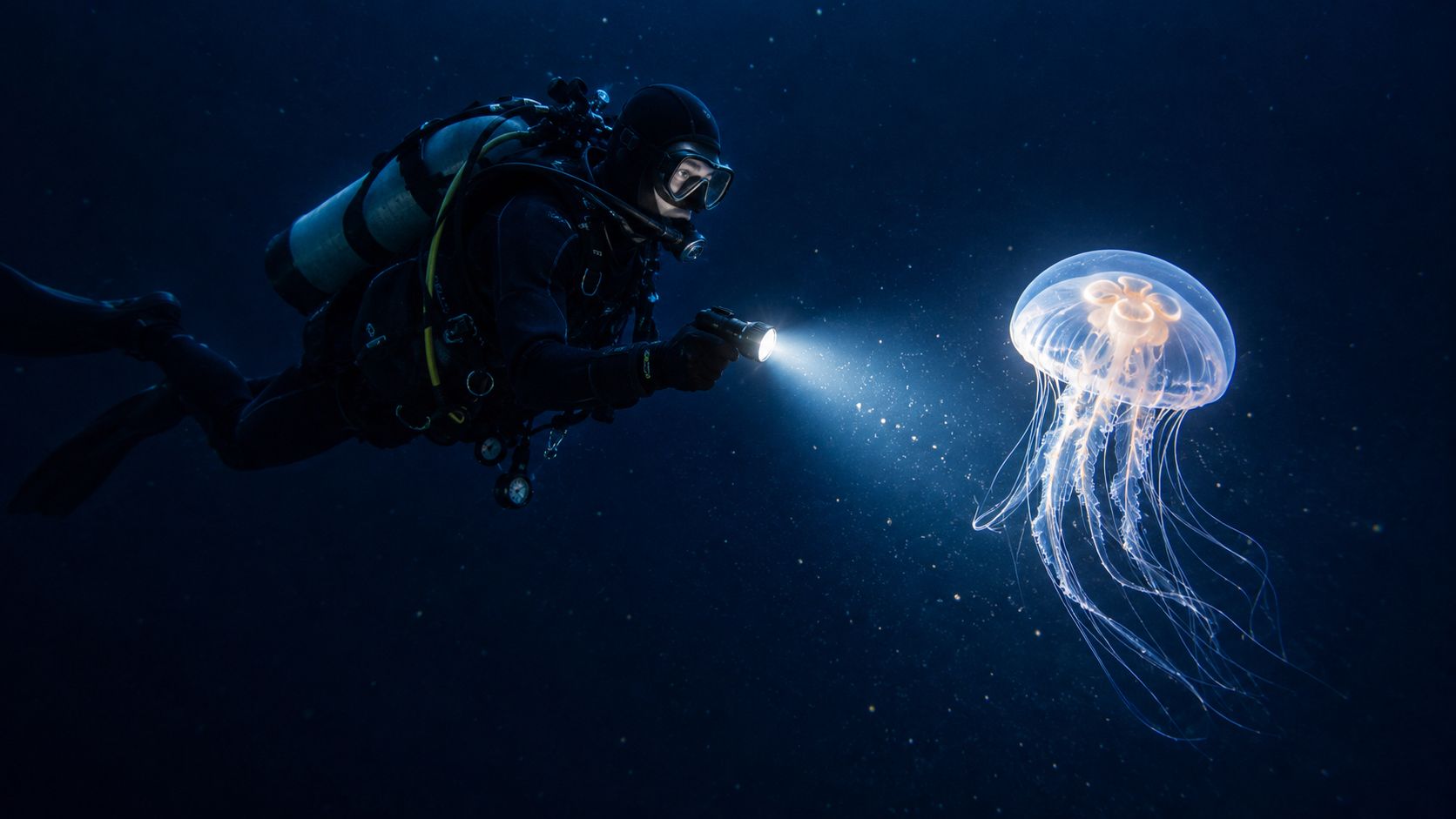
Blackwater diving turns the open ocean into a drifting laboratory of light and shadow. Instead of a reef under your fins, you hover over deep water and watch larval fish, transparent jellies, and other pelagic drifters rise after dark.
That is why Kona stands out. The coast drops into deep water close to shore, so this style of dive is practical here when it is rare elsewhere.
What Makes It So Different
Think of the manta dive as a stage show and blackwater as the backstage entrance. The action is quieter, stranger, and sometimes more surprising, because you are meeting creatures that most divers never see at all.
The feeling is simple to describe and hard to forget. Your light only reveals a small circle, while the rest of the ocean stays black and enormous.
Blackwater diving rewards calm divers who are comfortable with open water, darkness, and slow, deliberate buoyancy.
If that sounds appealing, our blackwater diving guide goes deeper into the gear, timing, and safety setup.
How It Compares With The Manta Dive
The manta night dive is about one spectacular animal in a predictable place. Blackwater is about discovery, with each minute offering a different surprise.
- Manta dive, best for dramatic wildlife viewing and strong photo opportunities.
- Blackwater dive, best for curious divers who want the weird, tiny, and rare.
- Night reef dive, best for seeing sleeping turtles, eels, and active reef life after sunset.
For many visitors, the choice comes down to mood. If you want a show, choose mantas. If you want mystery, choose blackwater.
Who Should Book It
Kona Honu Divers keeps this trip for experienced divers, because the ocean here asks for self-control. Expect strict requirements, a detailed briefing, and a strong focus on buoyancy, light discipline, and staying close to the team.
A few practical checkpoints help decide if you are ready:
- You are comfortable in open water at night.
- You can hold position without drifting.
- You can manage your gear without help.
- You want a challenge, not a casual sightseeing swim.
For the right diver, that challenge feels like floating through outer space with a dive light. For everyone else, Kona's reef and manta trips may be the better fit.
Why It Belongs On A Kona Itinerary
A balanced Big Island dive trip often mixes one daytime reef outing, one manta night, and one deeper adventure. That combination gives you variety without repeating the same scene twice.
If you are searching for Big Island Divers Kona Hawaii, blackwater is the trip that shows how far Kona goes beyond the usual reef vacation. Book the experience that matches your confidence level, then let the night ocean show you something most divers only read about.
Diving in Kona during the day feels like opening a storybook carved from lava. Each reef tells a different chapter, whether it's arches, tubes, or sand flats where turtles graze like regulars at a quiet park.
Kona Honu Divers keeps the daytime side of things simple. Their two-tank morning charter leaves Honokōhau Harbor, runs about five hours, and gives certified divers 70-minute dives — longer than the Kona average.
What A Typical Morning Feels Like
The boat ride is part commute, part preview. You settle in, listen to the briefing, and watch the coastline slide past before the first giant stride.
Once you're underwater, the reef often feels like a volcanic city. Lava ridges work like alleyways, coral heads become crosswalks, and fish traffic moves in every direction at once.
A good Kona day dive is less about rushing from site to site and more about letting one reef reveal its layers.
That pace matters, and it's why the crew keeps groups small. With six divers per group, you get room to ask questions, fine-tune your buoyancy, and actually enjoy the site instead of trailing a crowd.
Reefs, Turtles, And Other Daily Encounters
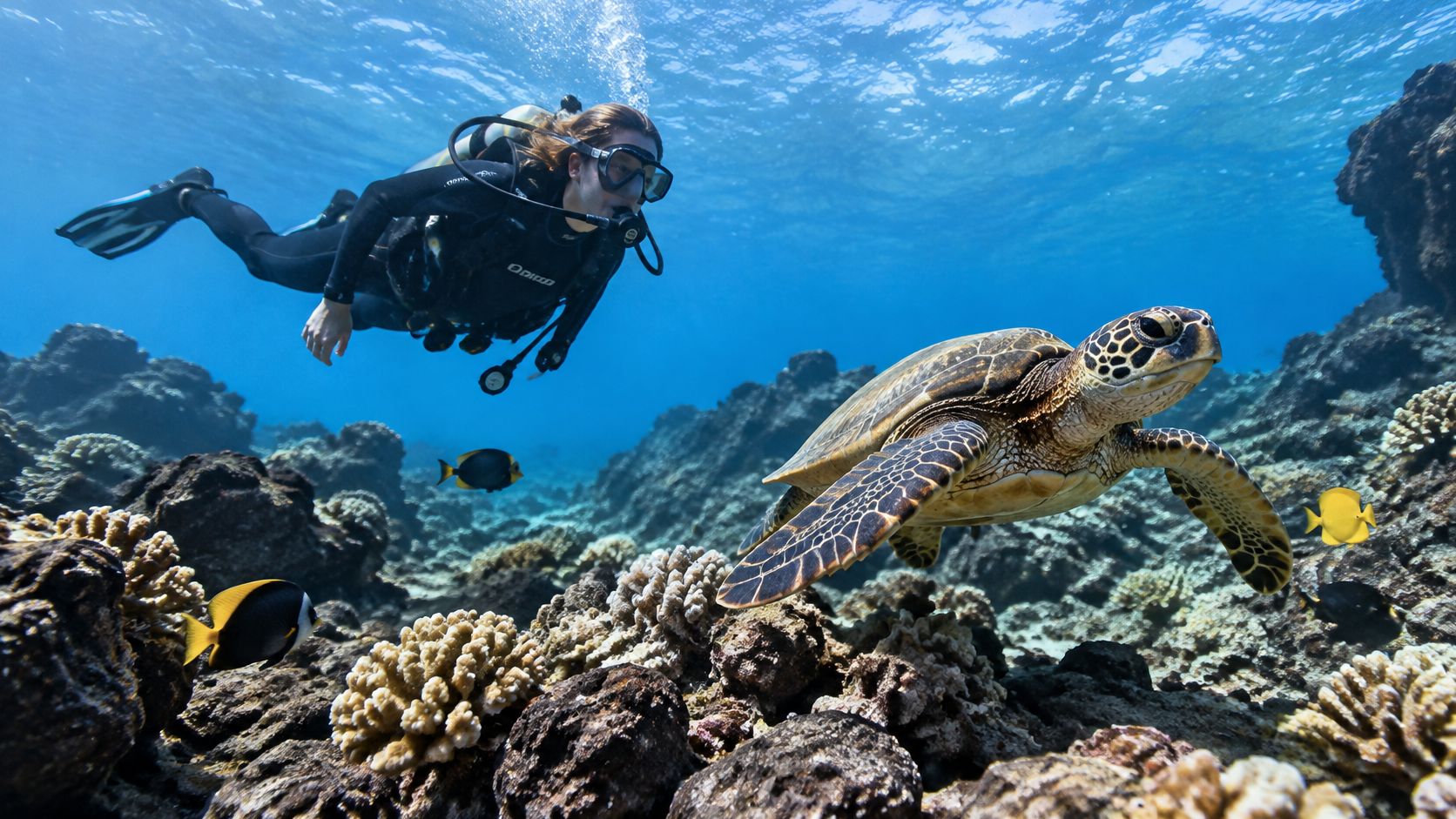
Kona's daytime sites usually deliver Hawaiian green sea turtles, plenty of reef fish, and the occasional spinner dolphin cruising by. Out here, the volcanic topography creates ledges and swim-throughs that feel genuinely wild rather than built for tourists.
Typical daytime highlights include:
- Turtles resting near cleaning stations or gliding along the reef edge.
- Butterflyfish, wrasse, and tangs keeping the scene in constant motion.
- Lava tubes and arches that give each dive a three-dimensional feel.
- Clear water windows that make navigation easier and photos cleaner.
If you want more background on shore options between boat days, take a look at our guide to the best shore diving on the Big Island. It pairs nicely with a boat trip, since it helps you weigh the island's two most common ways to get underwater.
How The Trip Options Compare
A quick look at how the day trips stack up:
| Trip Type | Experience Level | Duration | Highlights |
|---|---|---|---|
| Two-Tank Morning Dive | Certified divers | About five hours | Classic Kona reef variety |
| Specialized Reef Exploration | Certified divers | Varies by site | Lava formations and fish life |
| Advanced Long-Range Trip | Experienced divers | Longer day | Remote reefs and deeper terrain |
That lineup keeps Kona Honu Divers flexible for mixed groups. A newer diver can book a standard reef trip, while a seasoned diver can head farther offshore for more of a challenge.
Value And Booking Perks
The pricing side is just as practical. Early diver discounts and free nitrox for Enriched Air-certified divers can make a real difference over a multi-day stay.
Think of nitrox like a longer battery for your bottom time, especially when you're planning more than one dive a day. That extra cushion matters most when you want to repeat the same quality without feeling rushed.
For travelers piecing together a full Kona dive week, the day trip is the anchor. Add a manta night dive after it, then decide whether a blackwater or advanced charter fits your comfort level.
If you want one day trip that feels easy, scenic, and worth repeating, start here — and book your reef dives early, because the best spots and dates tend to go fast.
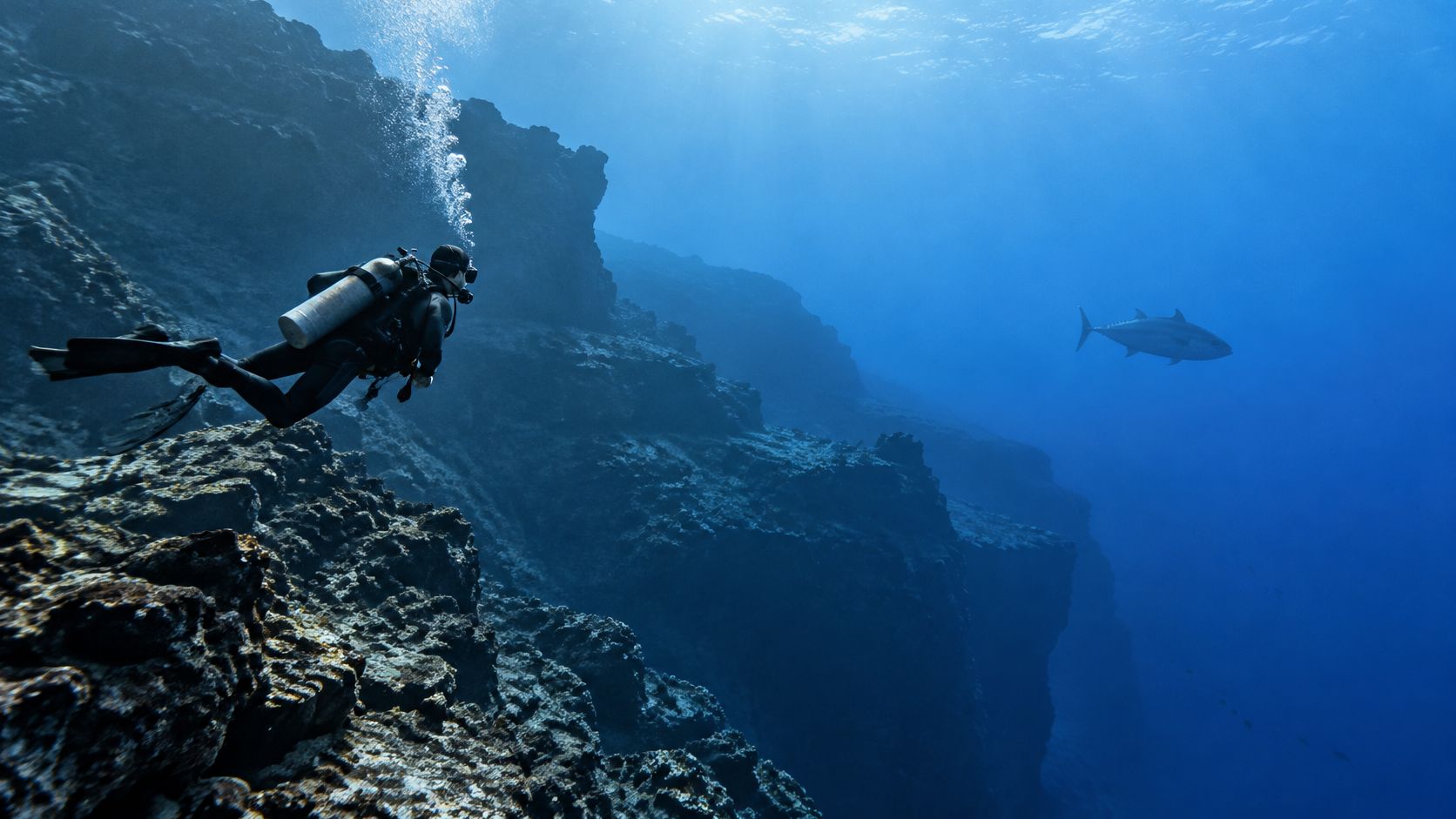
For divers with some experience under their belt, Kona stops feeling like a beach vacation and starts feeling like a deep toolbox. The advanced long-range dive tour runs farther down the coast, where the sites are quieter and deeper, and far less forgiving than your standard reef run.
That extra distance changes everything. Currents pick up, bottom time becomes precious, and the dive only stays fun when buoyancy and gas management are already second nature.
What Makes These Dives Different
Picture a regular morning charter as a drive to the next town, and an advanced charter as a mountain pass. Both are beautiful. The second one just asks for sharper attention and a steadier hand.
These trips suit divers who want more than pretty coral. Expect steeper lava walls, bigger reef structure, and the occasional pelagic visitor that hangs farther offshore than the usual turtle-and-fish crowd.
The reward isn't just depth. It's access to sites that feel wilder and far less crowded.
A strong Kona itinerary often pairs one of these with a blackwater night dive or a manta dive, so you get contrast along with the challenge. And for planning your gas choices, our guide on the benefits of nitrox diving is worth a read.
Who Is Ready For It
Advanced diving isn't about ego. It's about readiness. You want to be comfortable handling your gear in current, descending and ascending without fuss, and staying calm when a site asks for quick decisions.
A good self-check looks like this:
- Certification at the level your operator requires.
- Recent dives, so your skills are fresh instead of rusty.
- Solid buoyancy, especially near reef edges and drop-offs.
- Self-reliance, because remote sites reward divers who stay composed.
Still rebuilding confidence? Start with a standard day trip. That way the advanced charter feels like the next step rather than a leap into the dark.
How To Fit It Into A Kona Week
The smartest plan is usually a ladder, not a sprint. Start with a morning reef dive, add the manta night dive, then save your deepest or most demanding charter for when your body has settled into island rhythm.
A sample flow could look like this:
- Day one, easy reef diving to dial in your weighting.
- Day two, manta night dive for a signature Kona experience.
- Day three, advanced long-range or blackwater, depending on comfort level.
That sequence works because each dive warms up a different skill set. It's like stretching before a hard hike. The body performs better when it knows what's coming.
For Big Island divers Kona Hawaii, these trips are the line between a good vacation and a memorable one. Book early, bring your strongest dive habits, and pick the charter that matches your real experience rather than your wish list.
Preparation is what separates a smooth Kona dive from a sloppy one. With Big Island Divers Kona Hawaii trips, the basics are simple, but getting them right makes the whole day feel easier.
Kona Honu Divers supplies the heavy stuff, including tanks, weights, and core dive gear. You should still bring your own swimwear, towel, reef-safe sunscreen, and a dry change of clothes.
Certification And Skill Level
Most boat dives here are for certified divers, but there are also introductory options for beginners who want a guided first taste. Think of it like learning to surf on a soft board before moving to a full shortboard, the ocean is the same, but the support changes.
For standard day trips, you should be comfortable in open water and ready to follow a detailed briefing. Advanced trips ask for more experience, especially on night dives and remote sites.
A good dive day starts before the boat leaves the harbor, because your comfort level shapes everything that follows.
If you have not dived recently, a refresher is smart. In Kona, that habit is not overcautious, it is what keeps a fun vacation from turning into a stressful one.
Safety On The Boat And In The Water
Every trip starts with a pre-dive briefing that covers entry, descent, spacing, signals, and what to do if the dive changes. The crew also gives you a plan for the ascent, which is especially important on night dives and deeper sites.
The structure is straightforward:
- Listen to the site briefing and ask questions early.
- Check your gear before you gear up.
- Confirm the buddy plan and turn pressure.
- Stay close to the divemaster and surface with reserve gas.
A strong crew acts like a traffic controller underwater, keeping everyone moving in the same direction without crowding the road. That support matters most when visibility shifts or the current picks up.
What To Pack
| Item | Why It Matters |
|---|---|
| Swimwear | You will want it on before boarding. |
| Towel | Dry off quickly after the dive. |
| Sunscreen | Protects you during the boat ride. |
| Light jacket | Helps after wind or spray. |
| Certification card | Required for certified diving. |
| Water bottle | Keeps you comfortable between dives. |
For night dives, add a flashlight and fresh batteries. For longer days, pack snacks if your operator allows them.
Seasickness Prevention
Boat rides can be bouncy, so it helps to prepare before you feel sick. Popular options include Ship-EEZ Seasickness Patch, Dramamine pills, Bonine pills, Sea Band wristbands, and ginger chews.
If you know you are prone to motion sickness, choose the option that works best for you and take it early. That small step can save the rest of your day.
Last-Minute Booking Check
Before you head out, confirm your pickup time, harbor location, and what gear is included. If you are booking one of the most popular Kona dives, it pays to reserve early.
For a straightforward way to plan your trip, check the Kona Honu Divers diving tours and lock in the experience that fits your certification, your comfort, and your vacation pace.
If you're weighing your Big Island divers Kona Hawaii options, the questions that actually matter tend to be the practical ones. Certification, depth, season, and seasickness decide whether a trip feels effortless or exhausting.
Do I Need To Be Certified
For most boat dives, yes, you need an open water certification or equivalent. If you're not certified, a resort course can still get you underwater on a guided dive, which is a good entry point if you want to try Kona without committing to a full class.
Think of certification like a driver's license for the reef. You can ride along sooner, but independence comes after training and practice.
What Depths Should I Expect
Kona dives range from shallow to advanced. The manta dive is often around 35 feet at the shallower site, while other reef dives and advanced trips can go deeper, depending on conditions and your experience.
| Dive Type | Typical Depth Feel | Best For |
|---|---|---|
| Manta Night Dive | Shallow to moderate | First-time night divers |
| Standard Reef Dive | Moderate | Certified recreational divers |
| Advanced Long-Range Dive | Deeper and more demanding | Experienced divers |
When Is The Best Time To Dive
Kona is diveable year-round, but conditions often feel best from spring through fall when surf is lower and visibility is strong. Winter can still be excellent, though water may cool to about 74°F near shore, so a 3mm wetsuit or hooded vest helps.
Marine life changes by season, too. Manta rays are a famous year-round draw, while winter can bring bigger swells and seasonal whale sightings from the boat.
The best month is often the one that matches your comfort level, not just the postcard weather.
What If I Get Seasick
Boat motion can surprise even strong swimmers. If you're prone to seasickness or morning sickness, try Ship-EEZ patches, Dramamine, Bonine, Sea Band wristbands, or ginger chews before boarding.
For the smoothest first day, eat lightly, hydrate early, and take any preventative well before the boat leaves the harbor.
Kona Honu Divers makes it easy to choose the right trip, from reef dives to manta nights and advanced adventures. Check the current schedule and book your next dive here: https://konahonudivers.com/diving-tours/?ref=blog