
You're probably trying to sort out a Kona dive trip that's equal parts exciting and confusing. One tab says manta ray night dive, another says blackwater, and a third promises easy reef diving, but what you really need is a straight answer on which trips are worth your time, which ones fit your certification, and which operators run a tight boat.
Big Island divers Kona don't need more hype. They need a local read on what each dive feels like, who it suits, and how to avoid the usual mistakes, like booking the wrong site for your comfort level or showing up unprepared for Kona's changing conditions.
Why Kona Is a Bucket-List Dive Destination
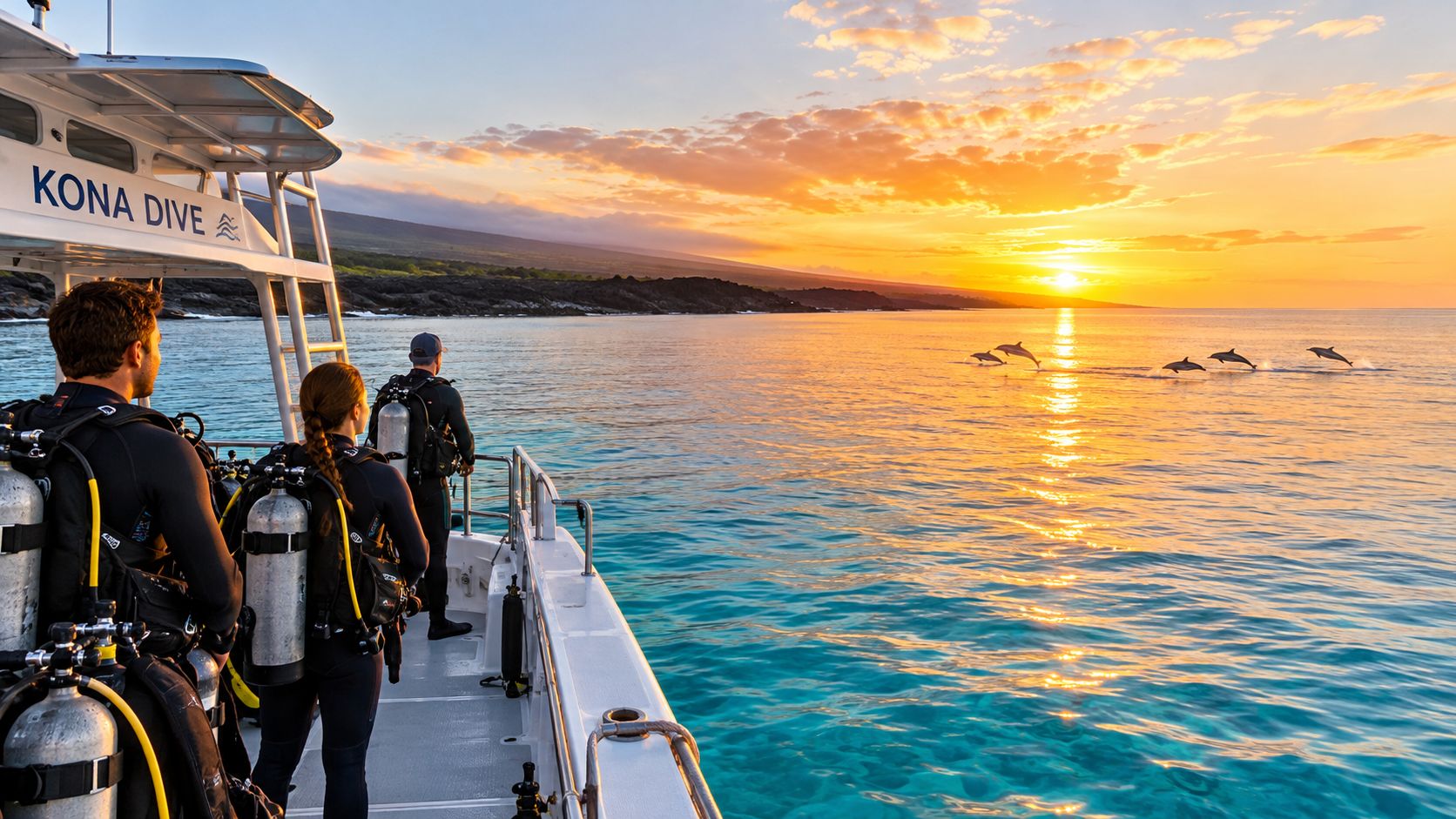
You step onto a Kona boat at sunrise and the coastline looks almost too clean to be real, black lava under a pale sky, calm water, and the kind of deep blue that tells you open ocean is close by. That's the appeal here. In one visit, you can do a reef dive in the morning, a manta night dive after dark, and a blackwater pelagic run if you're experienced enough to handle it.
Why that matters for planning
Kona is not just a pretty place to get wet. It gives you a rare range of dive styles without forcing you to burn half your vacation in transit. The hard part is choosing the right mix, because the wrong booking can turn a great day into a mediocre one.
The article's job is simple. It helps you pick the right site, the right operator, and the right preparation so you're not guessing once you're already on the dock. If you only care about easy daytime reef dives, your needs are different from someone chasing mantas or open-ocean nightlife.
What to decide before you book
You need to answer three questions first. Do you want relaxed reef diving or something more specialized, like manta or blackwater? Are you comfortable with night conditions and open water? And do you want a boat that runs a broad schedule or one that keeps group sizes tighter?
Practical rule: Don't book Kona as if every dive is interchangeable. A good day on the wrong trip still feels wrong.
For shore-diving context, I'd also keep this handy: Big Island shore diving basics. That's useful if you're mixing boat dives with independent days and don't want to overcommit too early.
The Core Kona Dive Experiences Compared
Kona's main dive formats each solve a different problem. Reef dives are your bread and butter, manta night dives are the signature wildlife experience, blackwater is the advanced open-ocean play, and long-range two-tank trips are for divers who want to trade convenience for more ambitious sites. NOAA documented that a well-monitored Kona catalog contained photographs of 146 individual reef manta rays, while Maui observers recorded 290 unique individuals during 2005–2009 with no photographic matches to the Kona group, supporting the view that Kona mantas form a highly distinct, locally structured population (source).
Fast comparison
| Experience | What You Do | Min Age | Min Cert | Best For |
|---|---|---|---|---|
| Daytime reef dive | Explore lava reefs, ledges, and fish-filled sites in daylight | Varies by operator | Open Water for guided boat diving | Newer divers, families, photographers |
| Manta night dive | Watch mantas feed in the illuminated plankton zone | Varies by operator | Often Open Water or guided intro depending on operator | First-time Kona visitors, wildlife fans |
| Blackwater dive | Drift in open water over deep ocean after dark | Adult-only on advanced trips | Advanced and recent night-dive experience | Experienced divers who want something unusual |
| Premium long-range two-tank | Run to deeper or less-frequented sites with a more advanced setup | Varies by operator | Advanced-level expectation | Confident divers who want stronger adventure value |
Which trip fits which diver
A daytime reef dive is the safest bet if you want easy buoyancy, familiar light, and a relaxed pace. It's also the least mentally demanding, which matters if you haven't been in the water for a while. If your partner or family isn't as serious about diving as you are, this is the format that usually keeps everyone happy.
Manta night diving is the opposite. The marine life payoff is immediate and dramatic, but the boat, light discipline, and group positioning matter more than people expect. If you want a clear operational framework for that choice, see whether to snorkel or dive with mantas.
Blackwater belongs in the advanced bucket. There's no point pretending otherwise. The dive is open water, dark, and technical enough that you should only book it if you're calm on a line, comfortable with buoyancy, and not the kind of diver who panics when the bottom disappears.
The long-range two-tank trip is the best fit for divers who want more site variety and more serious underwater terrain. If you already know you prefer bigger water, stronger current awareness, and less touristy sites, that's the lane to look at.
The Manta Night Dive and Garden Eel Cove Advantage
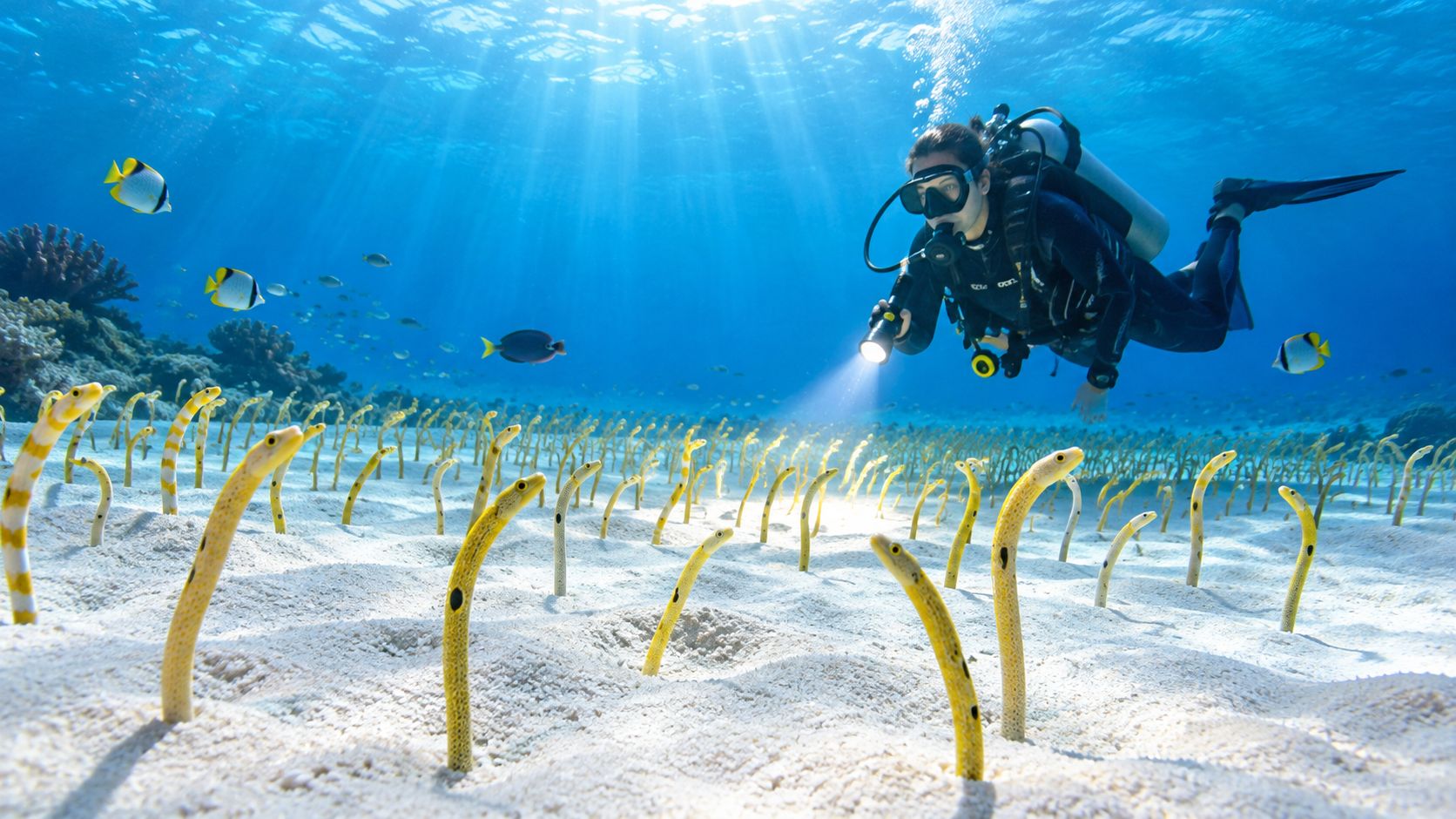
The manta dive is Kona's headline act, but site choice decides how good the night really feels. Garden Eel Cove gives you a more controlled setup, clearer viewing, and less chaos than the busier aggregation points. The dive lights pull plankton into the water column, and that is what brings the mantas in.
How the feeding works
Reef manta rays gather after dark because artificial lights concentrate plankton in the illuminated water column. NOAA's status review explains that reef mantas are often in the upper 10 meters during the day, then can descend to roughly 200 to 450 meters at night, with some individuals going beyond 1,000 meters. That shift lines up with zooplankton rising after dark, which is why the mantas show up where the light is, not where the reef looks prettiest.
The boat setup follows from that. You are not feeding the mantas. You are creating a plankton zone and then staying clear while the animals feed through it. Once you understand that, your behavior gets sharper fast.
The conduct that matters
Hold your light above you and aim it upward if you're diving. Stay on sand, rubble, or boulder bottoms. Don't sit on live coral, and don't drift into the feeding lane.
That is the standard. Divers should never chase, grab, ride, block, or touch the rays. Snorkelers should keep their lights pointed downward and stay at the surface instead of dropping into the feeding column. Manta rays have a protective mucus coating, and bad contact can damage it while also disrupting the feeding pattern.
Crowding is the other reality people skip over. A 2025 report described boats competing for space and snorkelers colliding at Kona manta sites, with proposed management reducing activity at Keauhou and Makako Bays from roughly 70 operators to about 24 (source). Judge the operator, not just the photos.
For trip selection, the booking path tied to this format is Kona Honu Divers' manta dive and snorkel page. If you are still debating snorkel versus scuba for mantas, reread the manta comparison page before you book.
Blackwater Diving in Open Pacific Night
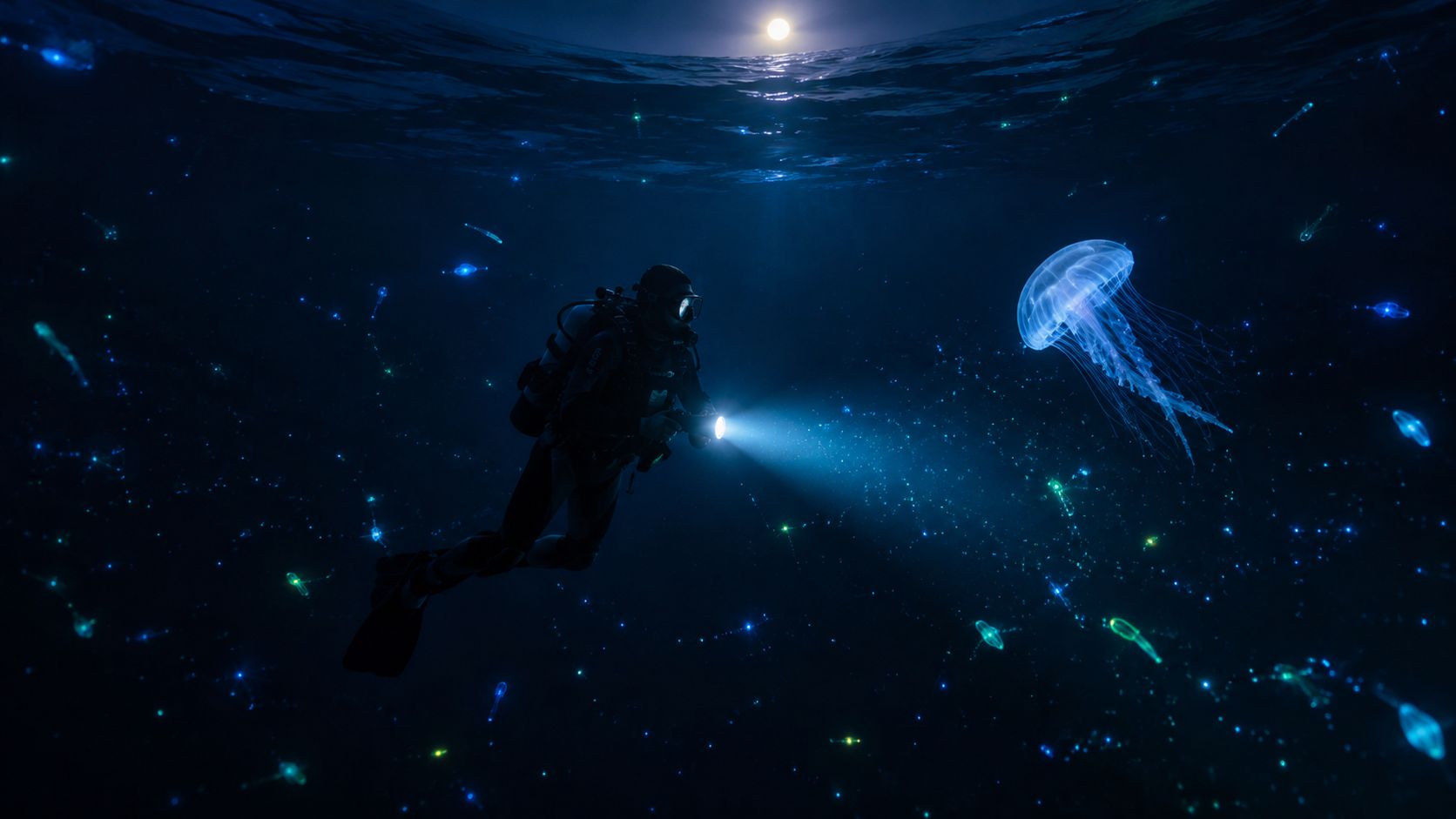
Blackwater diving sounds extreme because it is extreme, but not in the fake, macho way. The challenge isn't depth in the usual reef sense. It's hanging in open water after dark while gelatinous and bioluminescent animals rise from hundreds to thousands of feet below the surface.
What you actually need to control
Divers Alert Network describes Kona as unusually favorable because deep water sits close to shore and sea conditions are predictably calm, while the migrating assemblage includes many tiny, transparent animals that demand buoyancy discipline and careful light use (source). That's precisely why Kona works for this dive. The ocean floor isn't the goal, the water column is.
You need stable trim in a featureless black space. You need redundant lighting. You need to monitor depth and gas continuously because there's no reef wall to anchor your sense of place. And you need to resist the urge to swing your light around like you're searching a parking lot.
How to do it without making it worse
Keep your hands and fins out of the hanging column. Small organisms are fragile, and good lighting can tempt divers to overwork the beam just to get a better look. That's a mistake.
Use light as a tool, not a flashlight party. Strong illumination helps you see more, but it also raises the chance of accidental contact with delicate planktonic life.
This is an advanced charter, not a curiosity add-on. The blackwater dive booking page is where you go if you're already comfortable with night diving, open water, and the discipline that open-ocean drifting demands.
If you're shopping for the more demanding end of Kona diving, the long-range advanced option belongs on your radar too, but only if your buoyancy and gas habits are already solid.
What Sets Kona Honu Divers Apart
A lot of Kona dive companies can get you in the water. Fewer can keep the day smooth from check-in to rinse-down without making you solve their problems for them. What stands out here is the operational setup, not the slogans.
The practical advantages
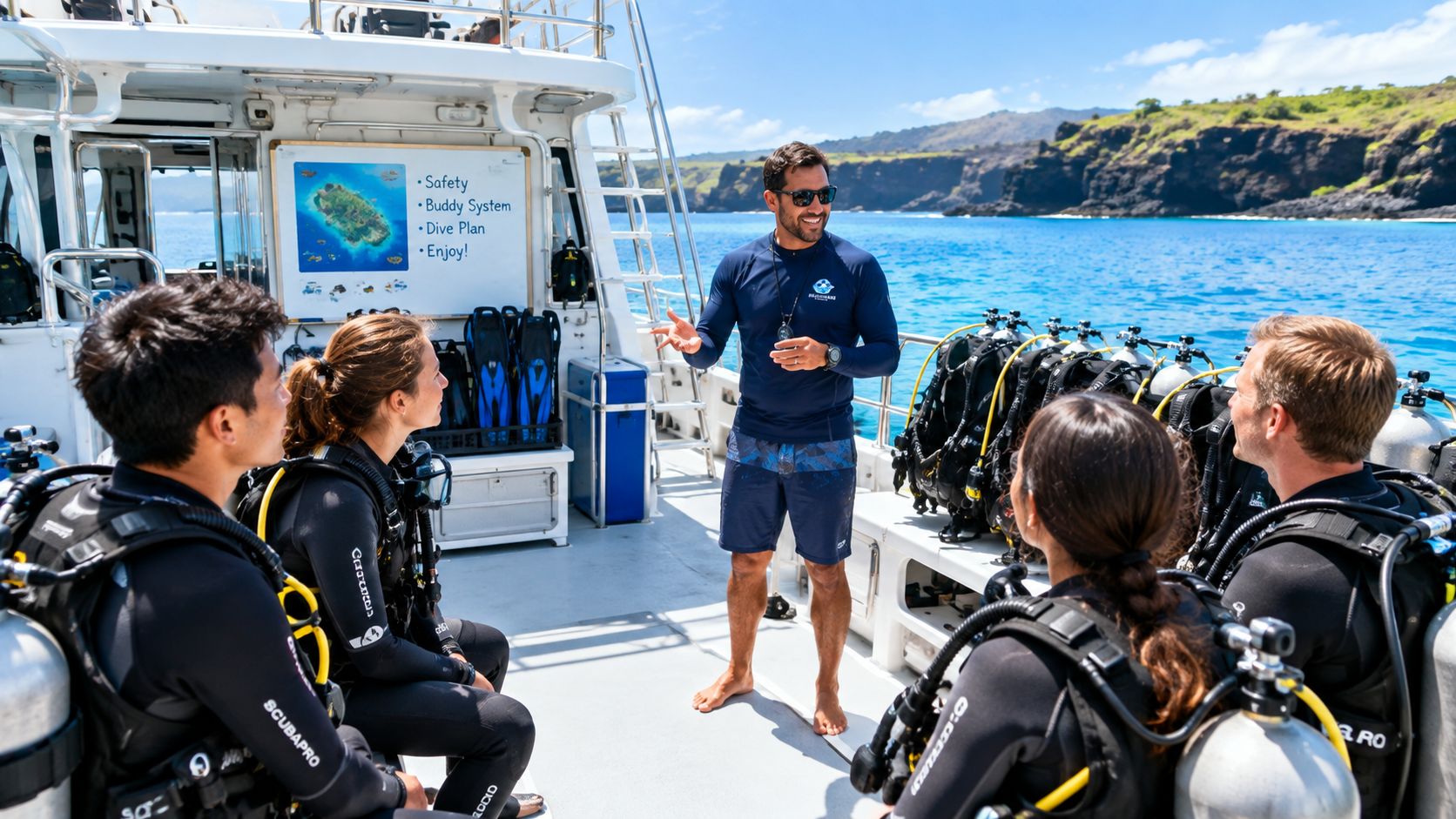
Kona Honu Divers' team holds more than 200 years of combined industry experience, supports early-bird discounts and free nitrox as part of its package structure, and runs custom dive boats with a maintained gear fleet across day, night, and specialty trips. That matters because a clean operation usually shows up in the boring places, like load order, gear condition, and how a crew handles a changing schedule.
The bigger value is consistency. If you want reef diving, mantas, blackwater, or a specialty day, having one operator handle the moving parts cuts down the chance of crossed wires. That's especially useful for visitors who don't want to stitch together a trip across multiple shops.
How that translates to the day
A good dive day isn't about luxury. It's about not wasting energy on friction. A boat that's set up for the job, with crew who know the local conditions and gear that's been kept in rotation, makes the whole experience cleaner.
For readers who like to vet operators through other divers first, the review collection is here: Kona Honu Divers reviews.
Logistics, Certifications, and What to Bring
Kona boat dives usually leave from the Kailua-Kona side, and the right move is to read your confirmation carefully instead of assuming every shop uses the same harbor. If you've booked a guided boat dive, bring your certification card, be honest about your recent dive history, and know whether your chosen trip expects Open Water, Advanced Open Water, or a more specialized logbook profile.
What to pack and what not to forget
Your bag should be simple. Mask, fins, towel, reef-safe sunscreen, and a light layer for the boat deck. Wetsuit rental is available, so don't overpack if you're flying in light.
If motion sickness is part of your history, handle it before symptoms start. CDC travel-medicine guidance lists meclizine or dimenhydrinate for mild-to-moderate short-term motion exposure lasting six hours or less, with a scopolamine patch for moderate-to-intense exposure, and Divers Alert Network warns divers not to try a medication for the first time immediately before a dive (source). A light meal 45 to 60 minutes before boarding is smarter than showing up empty and hoping for the best.
If you want to prep in a more deliberate way, these are the motion-sickness options people reach for:
- Patch option: Ship-EEZ Seasickness Patch
- Pill option: Dramamine pills
- Pill option: Bonine pills
- Wristband option: Sea Band wristbands
- Ginger option: Ginger chews
Certification and readiness checks
Your certification level needs to match the trip, not your optimism. If you've been out of the water for a while, a refresher is the smart call before booking something more demanding. If you're aiming at advanced or night options, make sure your buoyancy and gas habits are solid before you commit.
For a direct certification reference, use the Open Water certification page. That's the baseline most new divers should understand before trying to push into more specialized runs.
Safety, Conservation, and Staying Trip-Ready
Kona's reputation for calm water makes people overconfident. Don't be one of them. A site can feel friendly overall and still be a bad idea on a given day if surf, swell direction, or entry conditions turn ugly.
Read the day, not the brochure
Check swell direction and height, rain-related water-quality advisories, entry and exit difficulty, current exposure, and whether the site exceeds your comfort level. That's the go/no-go filter, and it beats any generic “good conditions” claim. The west side can look calm from shore and still be the wrong call if the entry is exposed.
That same discipline applies to wildlife conduct. Keep reef-safe sunscreen in the mix, avoid fin contact with reef or animals, and give Hawaiian spinner dolphins and monk seals respectful space. If you're not sure where the behavioral line is, responsible diver etiquette is the mindset you want.
Seasickness and travel timing
Eat lightly before boarding. Time your patch or pill according to the label and medical advice. Use wristbands or ginger if that's what keeps you steady, but don't improvise on the dock.
Lodging choice matters too. Staying near Honokohau Harbor or Kailua-Kona shortens the pre-dive scramble and keeps you from burning energy before you even get on the boat. That's a small comfort on paper and a big one at 6 a.m.
The same logic matters for more ambitious divers. The premium advanced two-tank trip is the lane for experienced people who want deeper, less-frequented sites and know they can handle the pace.
Practical rule: If the sea state changes your mood before the trip starts, downgrade the plan. A smarter day beats a stubborn one.
Booking Checklist, Conditions Call, and FAQs
Kona isn't always calm just because the island has a calm reputation. A smart diver checks conditions before treating any booking as locked in, especially if the plan involves a shore entry, a night dive, or a site with more current exposure. If the swell is wrong, the entry is ugly, or the comfort level doesn't match the site, move the plan instead of forcing it.
Booking checklist
- Choose the right date range. Match the trip to your vacation window, then leave room for a weather shift.
- Confirm certification and medical readiness. Bring your card, and don't ignore recent health changes.
- Plan for motion. Decide on patch, pill, wristband, or ginger before departure.
- Pack light but correctly. Mask, fins, towel, sunscreen, and a layer for the boat.
- Verify meeting point and timing. Don't assume every Kona boat leaves the same harbor.
- Check the day-of conditions. If surf, entry, or current looks off, change the plan.
FAQs
Can non-divers join manta trips? Yes, manta snorkel-style trips are common, and they're a strong option if someone in your group doesn't want scuba gear.
How does Garden Eel Cove compare with Manta Village? Garden Eel Cove is the cleaner, more controlled choice for most visitors, while Manta Village is tied more closely to the longer research record and local aggregation history.
What does an advanced diver gain from the long-range trip? More ambitious sites, less crowded water, and a better fit for divers who want a stronger challenge than a standard reef charter gives them.
Kona Honu Divers runs reef dives, manta trips, blackwater dives, and advanced charters with a crew that knows these waters inside out. If you want a Kona dive day that feels organized, conservative about safety, and built around the way the island dives, Kona Honu Divers is worth a close look.